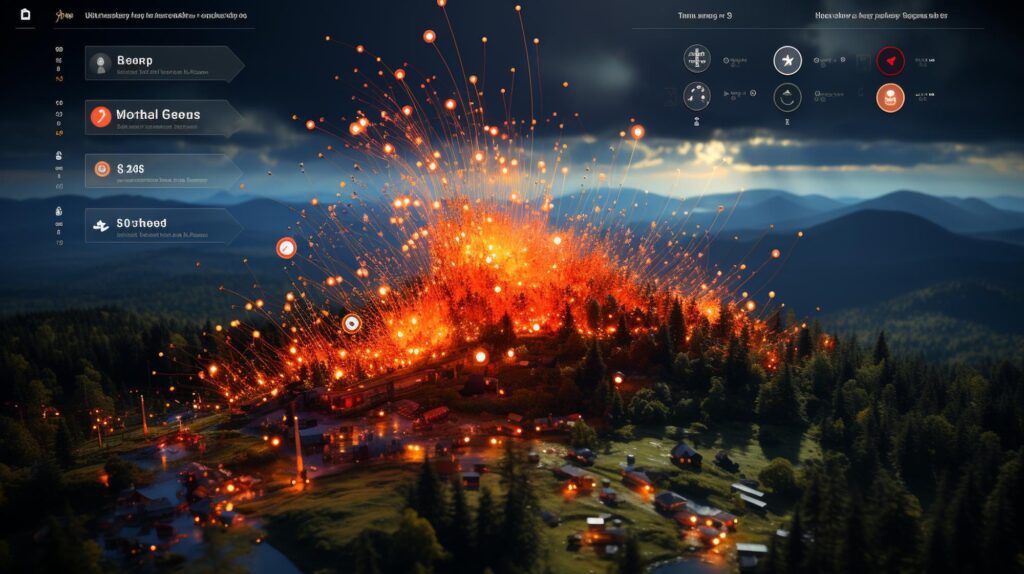
In wildfire-prone regions of the Western United States, including Arizona, artificial intelligence-powered cameras are being deployed to detect early signs of smoke, enabling faster responses to potential fires. For example, in Arizona’s Coconino National Forest, AI systems flagged what appeared to be smoke on a camera feed well before fires could spread widely. These AI-driven camera networks are installed by utilities such as Arizona Public Service and are actively integrated into wildfire monitoring efforts by forest services and firefighting teams. The technology assists in identifying the onset of fires, such as the Diamond Fire, allowing firefighters to mobilize more rapidly. This preemptive approach is crucial in regions where wildfires can escalate quickly due to dry conditions and climate change impacts.
The use of AI in this capacity demonstrates a broader trend where government agencies and private utilities leverage intelligent surveillance technologies to improve disaster prevention and management. Detecting smoke early through automated analysis reduces reliance on human spotting and supports quicker emergency responses, which can save lives and reduce property damage. These AI systems represent an innovative step in fire risk management, complementing traditional methods while enhancing situational awareness across vulnerable landscapes. As wildfires continue to pose significant threats, the integration of AI-driven detection promises to be an important component in protecting communities and ecosystems across the Western US.
Frequently asked questions
How are AI systems used in wildfire detection?
AI systems are deployed to detect early signs of smoke, enabling faster responses to potential fires.
What is the significance of AI in fire risk management?
The use of AI in fire risk management complements traditional methods and supports quicker emergency responses.
Which organizations are integrating AI technology for wildfire monitoring?
Utilities like Arizona Public Service and forest services are actively integrating AI-driven camera networks into their wildfire monitoring efforts.