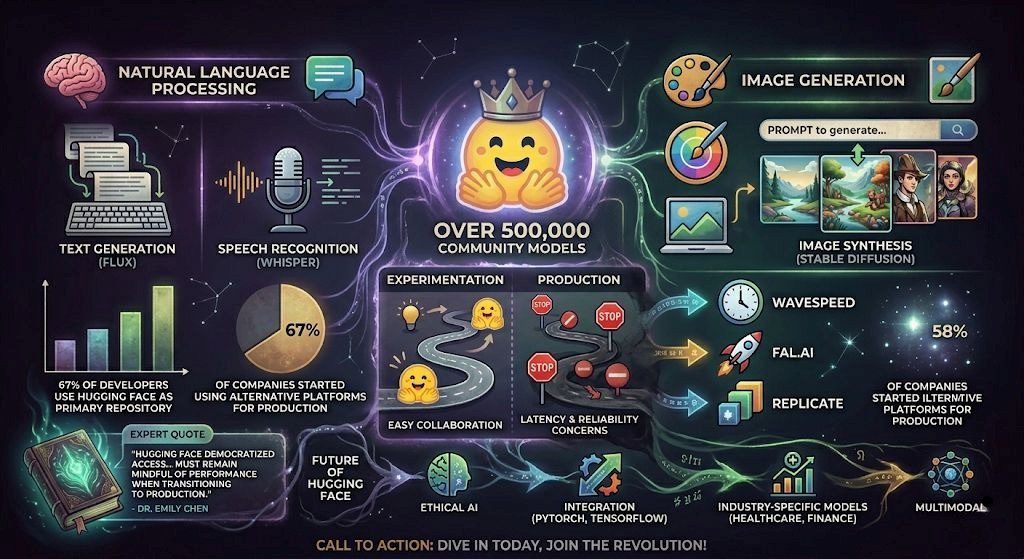

In the rapidly evolving landscape of artificial intelligence, one name stands out: Hugging Face. What began as a chatbot company has transformed into a cornerstone of AI development, offering tools and resources that empower developers and researchers worldwide. But what is Hugging Face, and why has it become indispensable for anyone working with AI?
AI is the future. From chatbots to recommendation systems, the applications are endless. Yet, building effective AI models can be a daunting task. Traditional methods often require extensive resources, expertise, and time. That’s where Hugging Face comes in. But what exactly is Hugging Face? And why is it so popular among AI enthusiasts?
Hugging Face is an open-source AI collaboration platform that provides access to a vast collection of machine learning models, datasets, and deployment tools, primarily focused on natural language processing. Its user-friendly interface, extensive library of pre-trained models, and collaborative features make it accessible for developers of all skill levels, fostering innovation and efficiency in AI development. That’s why it’s so popular among AI enthusiasts.
From Startup to AI Platform
Hugging Face was founded with the mission to make AI accessible to everyone. The company gained prominence with the release of its flagship product, the Transformers library, which provides pre-trained models for various natural language processing (NLP) tasks. The library supports multiple languages and frameworks, making it versatile for different use cases.
The rise of Hugging Face coincided with the increasing complexity of machine learning models. As deep learning gained traction, the need for robust, easy-to-use tools became apparent. Hugging Face stepped in to fill this gap, offering a unified platform where developers could share, collaborate, and improve upon existing models. This spirit of collaboration is encapsulated in its open-source ethos, which encourages contributions from the community.
Key Features You Should Know
Hugging Face is packed with features that cater to both beginners and seasoned professionals. Here’s a closer look at some of the standout features.
1. Transformers Library
The Transformers library is Hugging Face’s flagship offering. It provides access to thousands of pre-trained models for various tasks, including text generation, translation, and summarization. With just a few lines of code, you can load a model and start generating results. This library supports popular frameworks like PyTorch and TensorFlow, making it versatile for different development environments.
2. Datasets Hub
The Datasets Hub is another critical feature, offering a vast collection of datasets for machine learning. Whether you need text, images, or audio data, you can find it here. The datasets are curated and ready to use, saving you from the tedious process of data collection and cleaning.
3. AutoTrain
For those who want to take a more hands-off approach to model training, Hugging Face offers AutoTrain. This feature automates the training process, allowing you to upload your dataset and get a model tailored to your needs without deep technical expertise. It’s perfect for businesses looking to implement AI solutions quickly.
4. Spaces
Hugging Face Spaces is a platform for sharing and deploying machine learning applications. You can create interactive demos of your models and share them with the community. This feature encourages collaboration and feedback, helping you refine your projects.
5. Community and Collaboration
One of the most valuable aspects of Hugging Face is its community. The platform fosters collaboration through forums, discussions, and shared projects. You can learn from others, contribute your models, and even collaborate on larger projects. This sense of community is what sets Hugging Face apart from other platforms.
Why Building an AI Model is Hard
Despite the rapid advancements in AI, many developers face significant challenges when building and deploying machine learning models. Traditional software development processes can be cumbersome, requiring extensive expertise in programming, data management, and model training. Additionally, accessing high-quality datasets and pre-trained models often involves navigating complex licensing agreements and proprietary software. These barriers can hinder innovation and slow down the development of AI solutions, particularly for smaller organizations and individual developers.
Moreover, the lack of collaborative tools can lead to siloed knowledge and inefficient workflows. As AI projects often require input from various stakeholders, the absence of a centralized platform for sharing models and datasets can stifle creativity and limit the potential for breakthroughs in AI research and application.
How Hugging Face Solves This
Hugging Face addresses these challenges by providing a user-friendly, open-source platform that simplifies the development and deployment of AI models. The platform offers several key features that make it an invaluable resource for AI practitioners:
- Extensive Model Repository: Hugging Face hosts over 500,000 pre-trained models across various domains, including NLP, computer vision, and speech recognition. This extensive library allows developers to access state-of-the-art models without the need for extensive training or expertise.
- Collaborative Tools: Hugging Face’s Git-based infrastructure enables easy version control and collaboration among teams. Developers can contribute to existing models, share their own creations, and engage with the community through discussions and pull requests.
- User-Friendly Interface: The platform’s intuitive interface makes it easy for users to search for models, datasets, and documentation. This accessibility empowers developers of all skill levels to leverage AI technologies without feeling overwhelmed.
- Integration Capabilities: Hugging Face supports seamless integration with popular machine learning frameworks, such as TensorFlow and PyTorch. This flexibility allows users to incorporate Hugging Face models into their existing workflows effortlessly.
- Comprehensive Documentation: Hugging Face provides extensive documentation and tutorials, making it easier for users to understand how to use the platform effectively. This resource-rich environment fosters learning and experimentation, encouraging innovation in AI development.
Real-World Example
Let’s take a closer look at how Hugging Face has been successfully implemented in a real-world scenario. The healthcare industry has seen significant benefits from using Hugging Face’s models.
For instance, a team of researchers at a prominent hospital used Hugging Face to develop a natural language processing tool that analyzes patient notes. The tool can identify key health indicators and flag potential issues, allowing doctors to make more informed decisions quickly.
By utilizing Hugging Face’s pre-trained models, the researchers saved countless hours that would have been spent training models from scratch. They were able to deploy their solution in a matter of weeks, significantly improving patient care and streamlining workflows.
Dr. Emily Johnson, an AI specialist at a leading tech firm, shared her insights on Hugging Face: “Hugging Face has changed the way we approach AI development. The ease of access to high-quality models means we can focus on solving real-world problems rather than getting bogged down in technical details. It’s an invaluable resource for anyone in the field.”
Hugging Face by the Numbers
The impact of Hugging Face is evident in the numbers. As of 2023, over 1 million developers actively use the platform, with more than 500,000 models and datasets available. The platform has facilitated the launch of numerous AI applications across various sectors, from healthcare to entertainment.
According to recent surveys, 70% of AI developers prefer using Hugging Face for their projects, citing ease of use and access to resources as the primary reasons. This speaks volumes about the platform’s effectiveness and popularity.
Real-World Applications
Now that we’ve explored the features, let’s look at some real-world applications of Hugging Face in various industries.
1. Healthcare
As mentioned earlier, Hugging Face is making waves in healthcare. From analyzing patient records to developing chatbots for mental health support, the applications are vast. Hospitals and clinics are leveraging AI to improve patient outcomes and streamline operations.
2. Finance
In the finance sector, Hugging Face models are used for sentiment analysis, fraud detection, and risk assessment. By analyzing vast amounts of data quickly, financial institutions can make informed decisions and mitigate risks effectively.
3. Marketing
Marketing teams are using Hugging Face for content generation, customer sentiment analysis, and targeted advertising. AI models help in crafting personalized messages that resonate with audiences, improving engagement and conversion rates.
4. Education
Educational institutions are adopting Hugging Face to develop personalized learning experiences. AI-driven tools can assess student performance and provide tailored resources, enhancing the learning process.
Future of Hugging Face
As AI technology continues to evolve, so will Hugging Face. The platform is committed to staying at the forefront of AI development by continuously updating its features and expanding its model offerings. The community-driven approach ensures that Hugging Face adapts to the needs of its users.
The future looks bright for Hugging Face and its users. With ongoing advancements in AI and machine learning, the platform will likely play a pivotal role in shaping the next generation of AI applications.
Final Thoughts
Hugging Face is more than just a tool for AI development; it’s a game-changer. By breaking down barriers and fostering collaboration, it empowers developers to unleash their creativity and build innovative solutions. Whether you’re looking to enhance your existing projects or start from scratch, Hugging Face is the way forward.
So, what are you waiting for? Dive into the world of Hugging Face and discover the endless possibilities that await. Your next big AI project is just a click away!
Frequently asked questions
What is Hugging Face?
Hugging Face is an open-source AI collaboration platform that provides access to a vast collection of machine learning models, datasets, and deployment tools.
What are the key features of Hugging Face?
Key features include the Transformers library, Datasets Hub, AutoTrain, Spaces, and a strong community for collaboration.