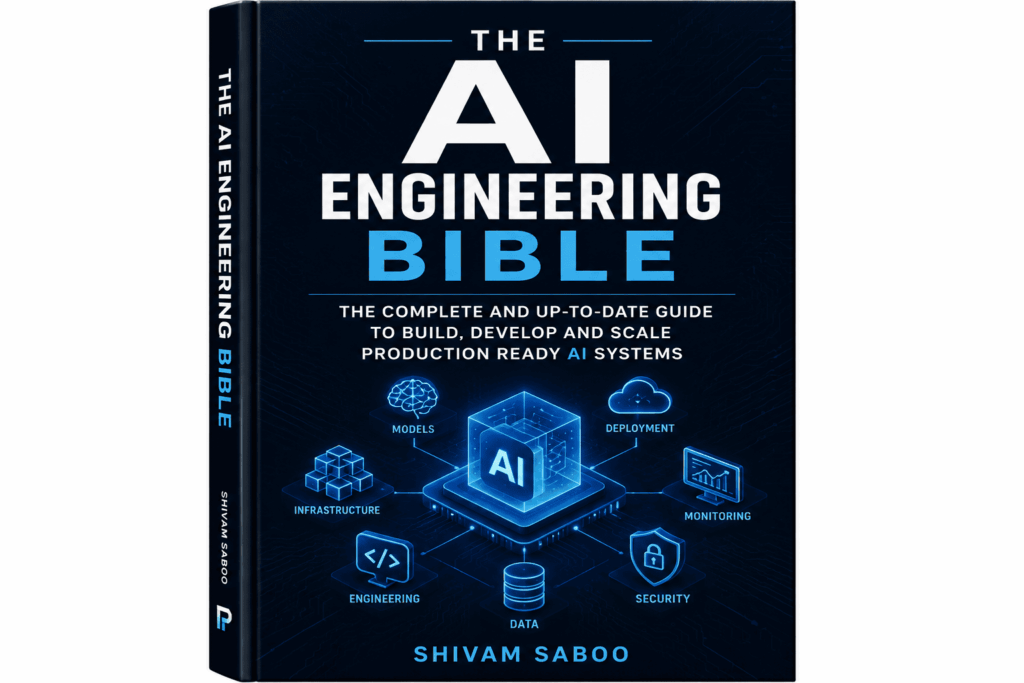
The AI Engineering Bible: The Comprehensive Reference to Create, Improve and Expand AI Programs Ready for Production provides a systematic manual for the creation of AI systems that can operate successfully beyond the initial design stage. Rather than dwelling merely on the theory of machine learning, the volume hints at the ways to create, launch and manage AI systems in practice. The contents include the entire AI life cycle from developing architecture and models to launching and maintaining security and optimisation systems.
Why Should Readers Read It?
It connects AI experimentation and production implementation.
You will become acquainted with popular AI technologies such as Large Language Models (LLMs), Retrieval-Augmented Generation (RAG), AI agents, and vector databases, as well as MLOps. It shows how these technologies can be employed in business applications.
If you are working on your own AI projects or supervising an engineering team, you will find useful tips to get effective, stable, and efficient AI systems in operation.
Key Takeaways
The text points out that the use of AI technologies needs more than just properly functioning systems. In addition to sound systems, the achievement of positive results also depends on the systems being used effectively after their development and deployment. Readers will learn that artificial intelligence demands a proper set of technologies and practices for the successful use and maintenance of systems.
FAQs
Who is this book intended for?
The book has been written for AI engineers, software developers, machine learning engineers, data scientists, technology entrepreneurs, and technology leaders interested in developing and deploying production-ready AI solutions.
Is the book appropriate for novices?
Yes, while having some programming experience is an asset, the book lays out AI engineering principles in an organised and pragmatic way that is useful for both novices and seasoned professionals.
Frequently asked questions
Who is this book intended for?
The book is written for AI engineers, software developers, machine learning engineers, data scientists, technology entrepreneurs, and technology leaders.
Is the book appropriate for novices?
Yes, the book lays out AI engineering principles in an organised way useful for both novices and seasoned professionals.