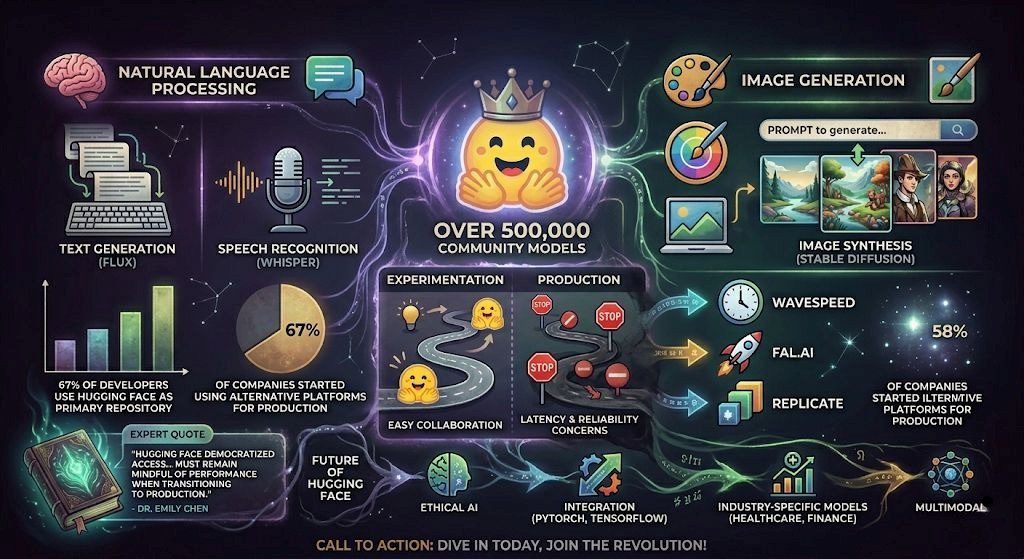
Downloads are not the point anymore. The useful question is which model actually changes a real workflow. This month’s list runs from multimodal assistants to generative audio, from local text models to a veteran embedding engine still pulling a quarter-billion downloads.
The ranking tracks experiments builders are running right now, treating download counts as interest—not a guarantee that something will survive production.
1. DeepSeek-V4.1-Flash
What It Does
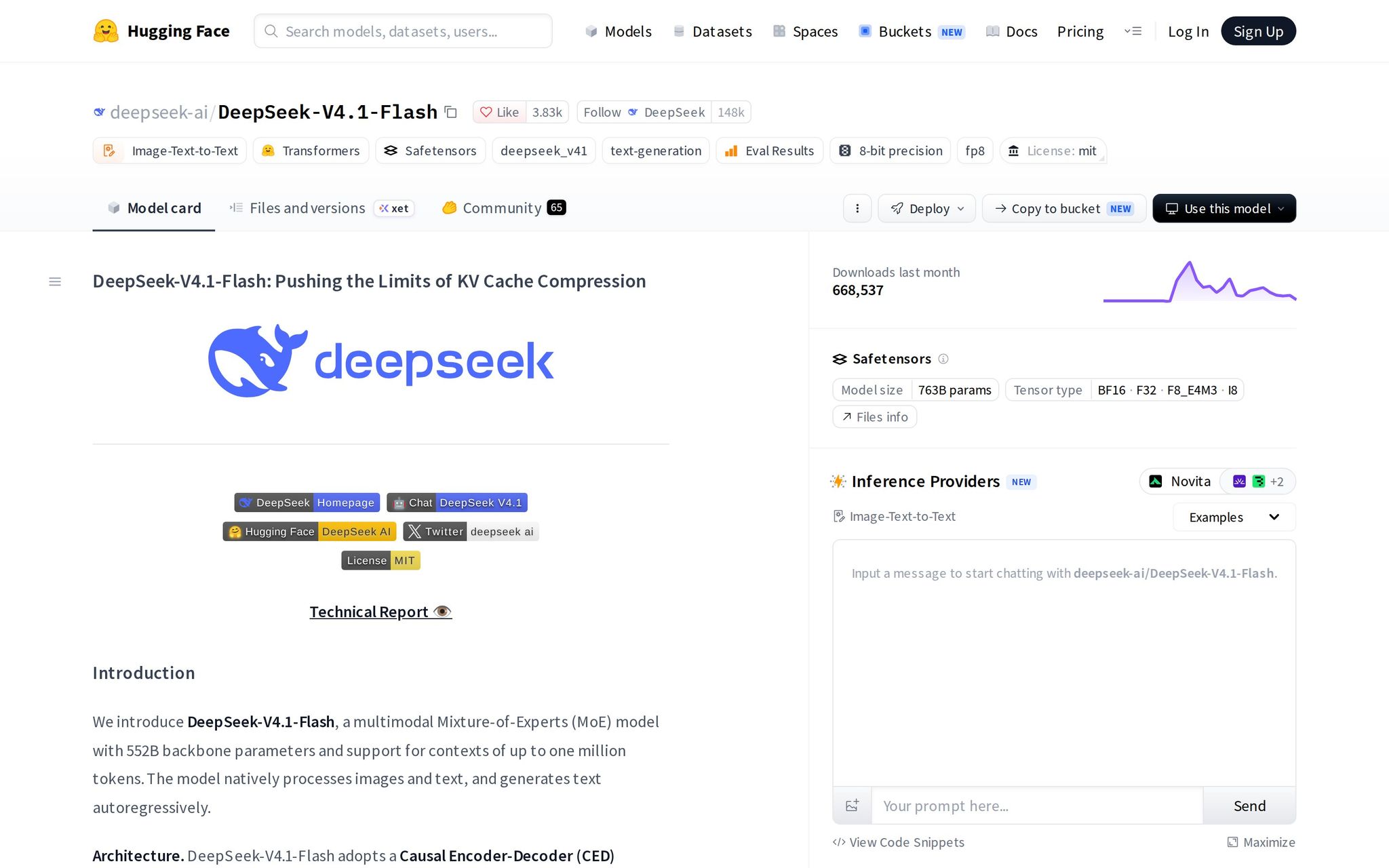
A multimodal model that works with pictures and words. Use it to inspect an image, answer questions about it, or build an assistant that combines screenshots with text instructions.
Why It's Trending
Modified on September 10, 2026, its page shows 429,865 downloads, 3,236 likes, and a trending score of 1,009. The strongest starting point in this month’s group.
Key Capabilities
- . Understand images and answer questions about them
- . Generate or draft written responses
- . Load through the common Transformers library
- . Run in 8-bit or FP8 formats for size reduction
- . Connect to supported hosted endpoints
Best For
- . Builders prototyping screenshot-aware assistants
- . Anyone testing image-and-text workflows
- . Developers comparing reduced-precision serving
What Makes It Different
It separates from text-only choices with its image-and-text pipeline. Its MIT license is also more permissive than YuE2-3B’s noncommercial license.
Hardware Requirements
The model page tags 8-bit and FP8 formats, but it doesn’t specify a local memory requirement.
How to Try It
Open the Hugging Face model page and load it with Transformers or a compatible endpoint. The page itself is the quickest place to inspect its evaluation results and setup files.
Things to Consider
- . License: MIT.
- . Hardware: local memory needs are not published.
- . Model limitations: image accuracy and failure cases aren’t described.
- . Safety: no evaluation is provided.
Our Verdict
The strongest practical starting point here for developers prototyping image-and-text assistants, provided they test its answers on their own visual data rather than trusting download momentum.
Hugging Face: https://huggingface.co/deepseek-ai/DeepSeek-V4.1-Flash
2. Ternary-Bonsai-2-27B-gguf
What It Does
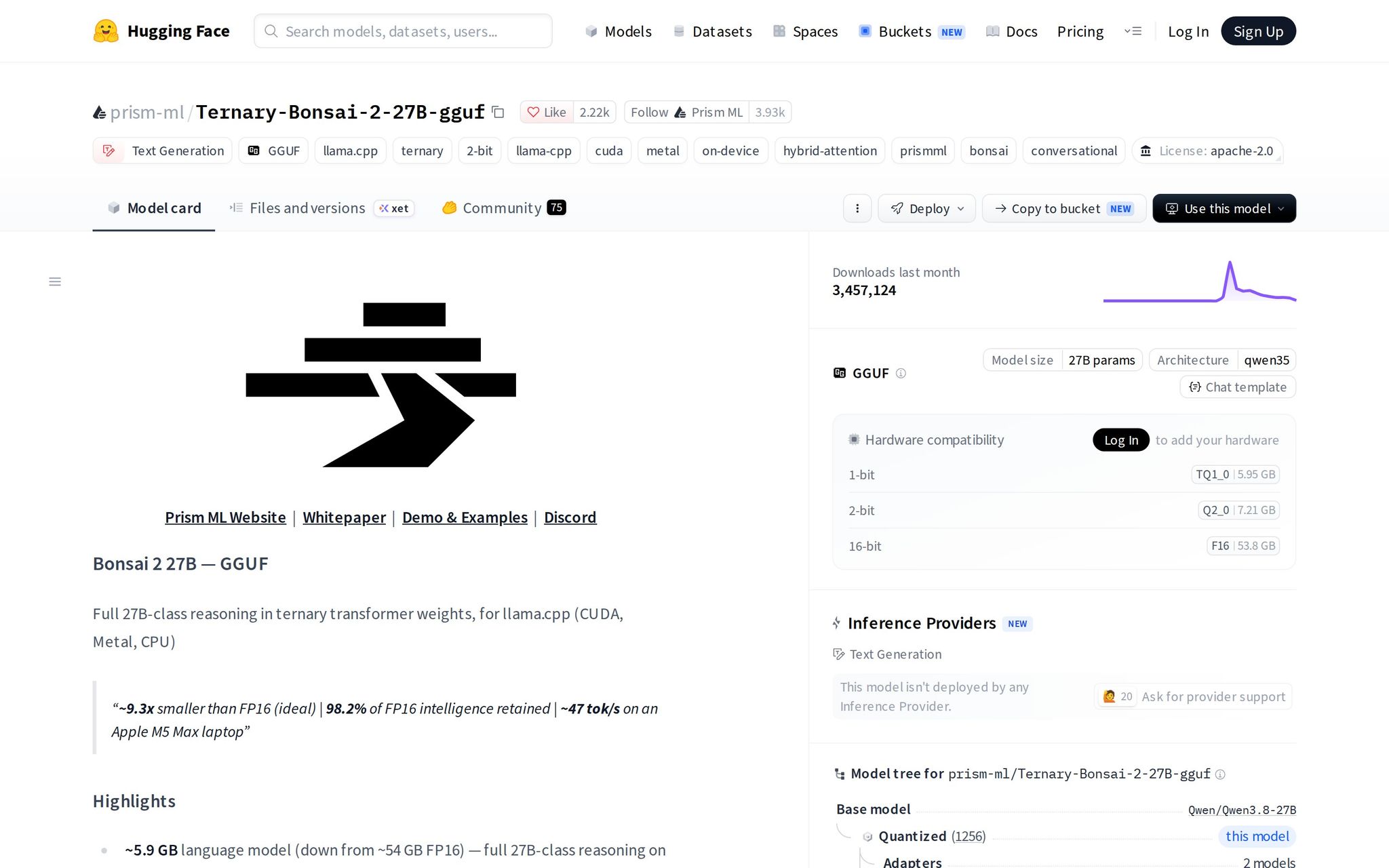
A text-generation model packaged for local tools. Its 2-bit format reduces the numbers stored for the model, letting you experiment with a large language model on a local setup instead of a hosted service.
Why It's Trending
Updated September 17, 2026, with 405,609 downloads, 1,029 likes, and a trending score of 980. Strong momentum for a model built for on-device use.
Key Capabilities
- . Generate and revise text responses
- . Load in GGUF format for local runtimes
- . Run inference in a heavily compressed 2-bit format
- . Use with the popular llama.cpp execution path
- . Target Apple Metal or NVIDIA CUDA software paths
Best For
- . Developers prototyping private local assistants
- . Builders testing compressed language models
- . Experimenters comparing 2-bit and ordinary model formats
What Makes It Different
Its 2-bit, ternary format distinguishes it from MiniCPM5-2B. Its GGUF packaging targets llama.cpp-style local use rather than only Transformers.
Hardware Requirements
The tags list CUDA, Metal, and on-device support, but the model page doesn’t specify required memory.
How to Try It
Download the GGUF files from the model page and load them with a llama.cpp-compatible tool. Start with a local text prompt.
Things to Consider
- . License: Apache 2.0.
- . Hardware: memory requirements aren’t published.
- . Model limitations: 2-bit compression may affect output quality, with no measured results provided.
- . Safety: no evaluation is provided.
Our Verdict
Useful for developers who prioritize local execution and privacy, with model quality and the practical effect of 2-bit compression left for each team to measure.
Hugging Face: https://huggingface.co/prism-ml/Ternary-Bonsai-2-27B-gguf
3. Qwen3.8-27B
What It Does
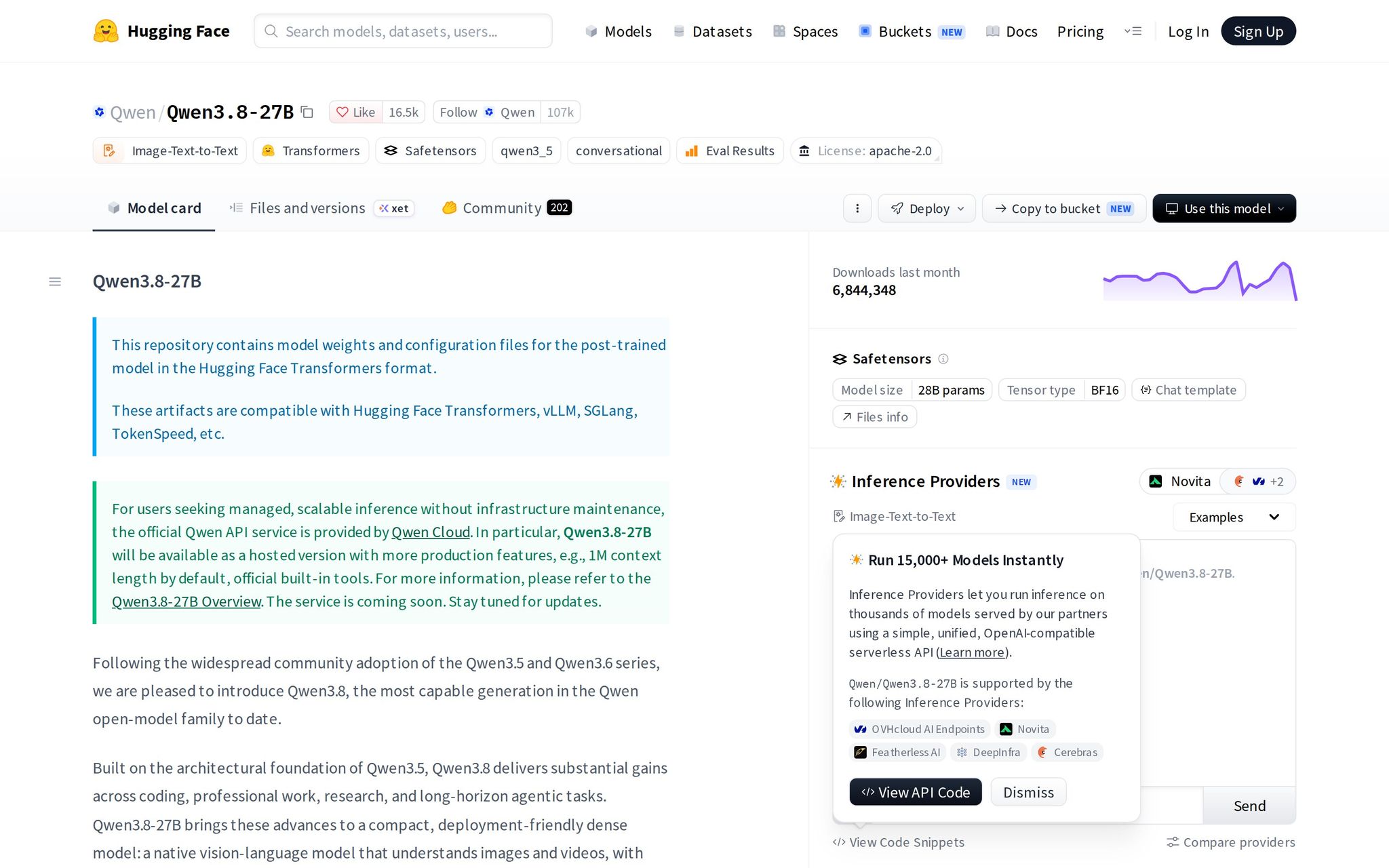
A multimodal model that accepts images and text. It can power a visual question-answering tool, like an app that explains a diagram alongside written instructions.
Why It's Trending
A slow-burn pick. The page shows 7,358,662 downloads and 15,689 likes, far more usage than any other item here, even though it was last modified August 14, 2026.
Key Capabilities
- . Analyze and understand visual input
- . Generate written answers
- . Support back-and-forth conversational prompts
- . Load with the Transformers library
- . Connect to supported hosted serving endpoints
Best For
- . Developers building visual support tools
- . Builders testing multimodal chat
- . Researchers studying heavily used model behavior
What Makes It Different
Its scale of adoption earns attention: 7.4 million downloads dwarf newer models. It’s also Apache 2.0 licensed, unlike LTX-2.5’s ‘other’ license.
Hardware Requirements
The payload identifies endpoint compatibility but doesn’t publish local hardware requirements.
How to Try It
Open the model page and load it through Transformers or a compatible endpoint. A first test combines one image with a short question, comparing the answer with the image contents.
Things to Consider
- . License: Apache 2.0.
- . Hardware: local requirements are not published.
- . Model limitations: context limits and visual error rates aren’t described.
- . Safety: no evaluation is provided.
Our Verdict
A sensible, widely exercised multimodal baseline for researchers and builders, provided they validate visual answers on the specific documents or images their application handles.
Hugging Face: https://huggingface.co/Qwen/Qwen3.8-27B
4. YuE2-3B
What It Does
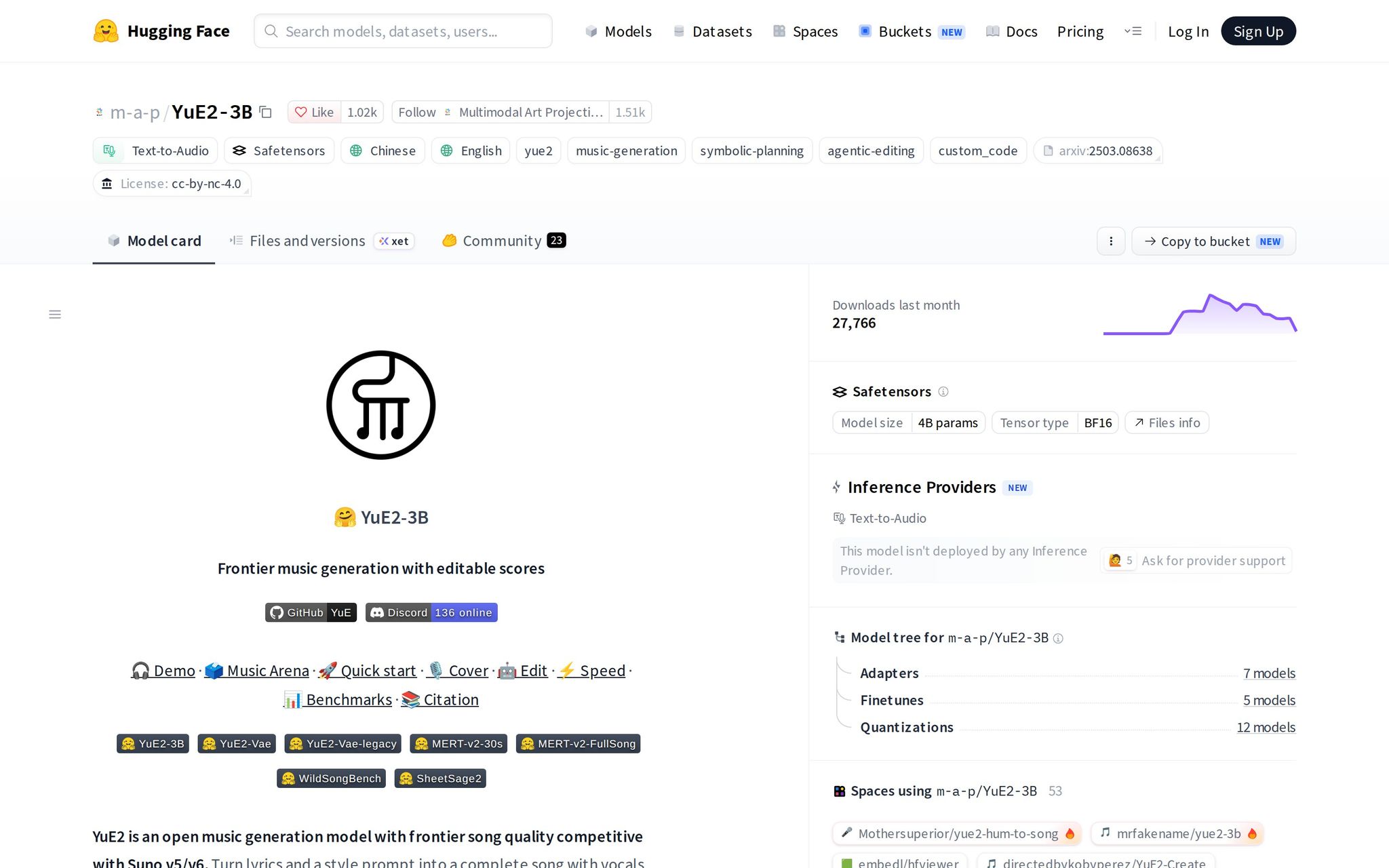
A text-to-audio model for generating music from written instructions. It also supports symbolic planning and agentic editing for structured song creation or guided changes.
Why It's Trending
Modified September 16, 2026, with 13,668 downloads, 835 likes, and a trending score of 532. The recent update and music-generation tags put it in front of creators.
Key Capabilities
- . Generate music audio from a written prompt
- . Organize musical structure with symbolic planning
- . Test zero-shot-style instructions
- . Explore guided music changes with agentic editing
- . Experiment in both English and Chinese
Best For
- . Builders prototyping music tools
- . Students learning text-to-audio workflows
- . Experimenters testing structured song editing
What Makes It Different
Its symbolic-planning and agentic-editing tags separate it from AuK’s speech focus. YuE2-3B is also explicitly tagged for music generation.
Hardware Requirements
The model page doesn’t publish a hardware requirement.
How to Try It
Open the model page and follow its custom-code setup for a text-to-audio prompt. Start with a short musical instruction.
Things to Consider
- . License: CC BY-NC 4.0, restricting commercial use.
- . Hardware: requirements are not published.
- . Model limitations: output length, quality, and editing limits aren’t stated.
- . Safety: no evaluation is provided.
Our Verdict
A promising fit for students and creative builders exploring controllable music generation, but the noncommercial license decides whether experiments can move into a paid product.
Hugging Face: https://huggingface.co/m-a-p/YuE2-3B
5. LTX-2.5
What It Does
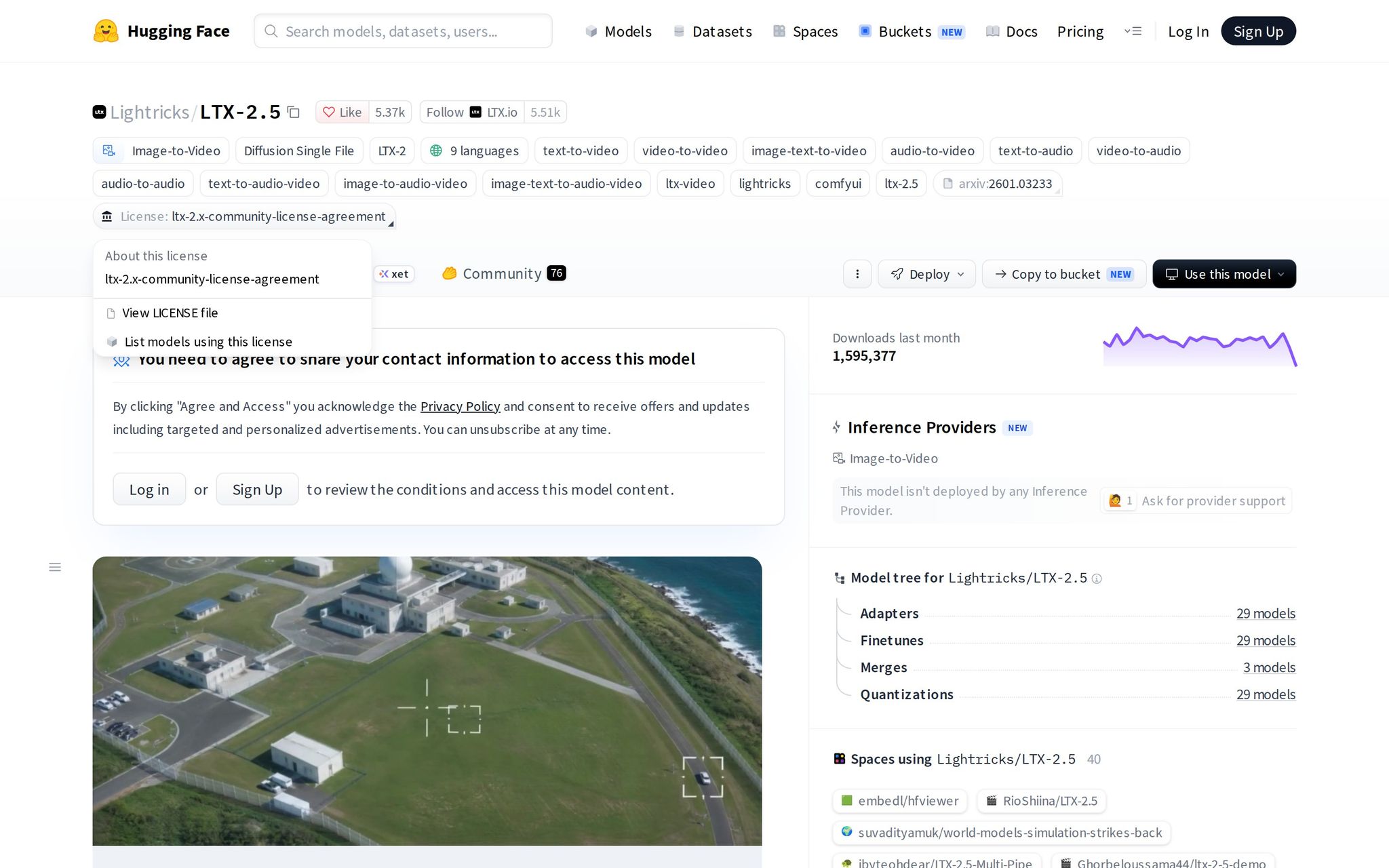
A generative video model that turns text or images into video and works with existing video. Its broad audio-and-video tags support experiments like animating a still image or pairing generated motion with sound.
Why It's Trending
1,607,815 downloads and 4,364 likes, with a page modified September 1, 2026. Substantial current usage for a generative video model.
Key Capabilities
- . Create video clips from written instructions
- . Animate a supplied image
- . Transform existing footage
- . Combine sound and visual generation
- . Test multi-output generation from text
Best For
- . Builders prototyping media pipelines
- . Developers testing video-generation interfaces
- . Experimenters comparing image, text, and video inputs
What Makes It Different
Its tags cover video, audio, image, and text combinations, a wider input-output range than YuE2-3B’s music focus. The license is less clear than Apache 2.0.
Hardware Requirements
The model page doesn’t publish a hardware requirement.
How to Try It
Open the model page and use its listed diffusion setup for a short image-to-video or text-to-video test. Start with one visual input.
Things to Consider
- . License: listed only as ‘other’ with no further terms.
- . Hardware: requirements are not published.
- . Model limitations: clip length, rendering speed, and output quality aren’t stated.
- . Safety: no evaluation is provided.
Our Verdict
A worthwhile test for media developers needing one model family across several audio-video tasks, provided licensing is resolved before distributing generated work.
Hugging Face: https://huggingface.co/Lightricks/LTX-2.5
6. MiniCPM5-2B
What It Does
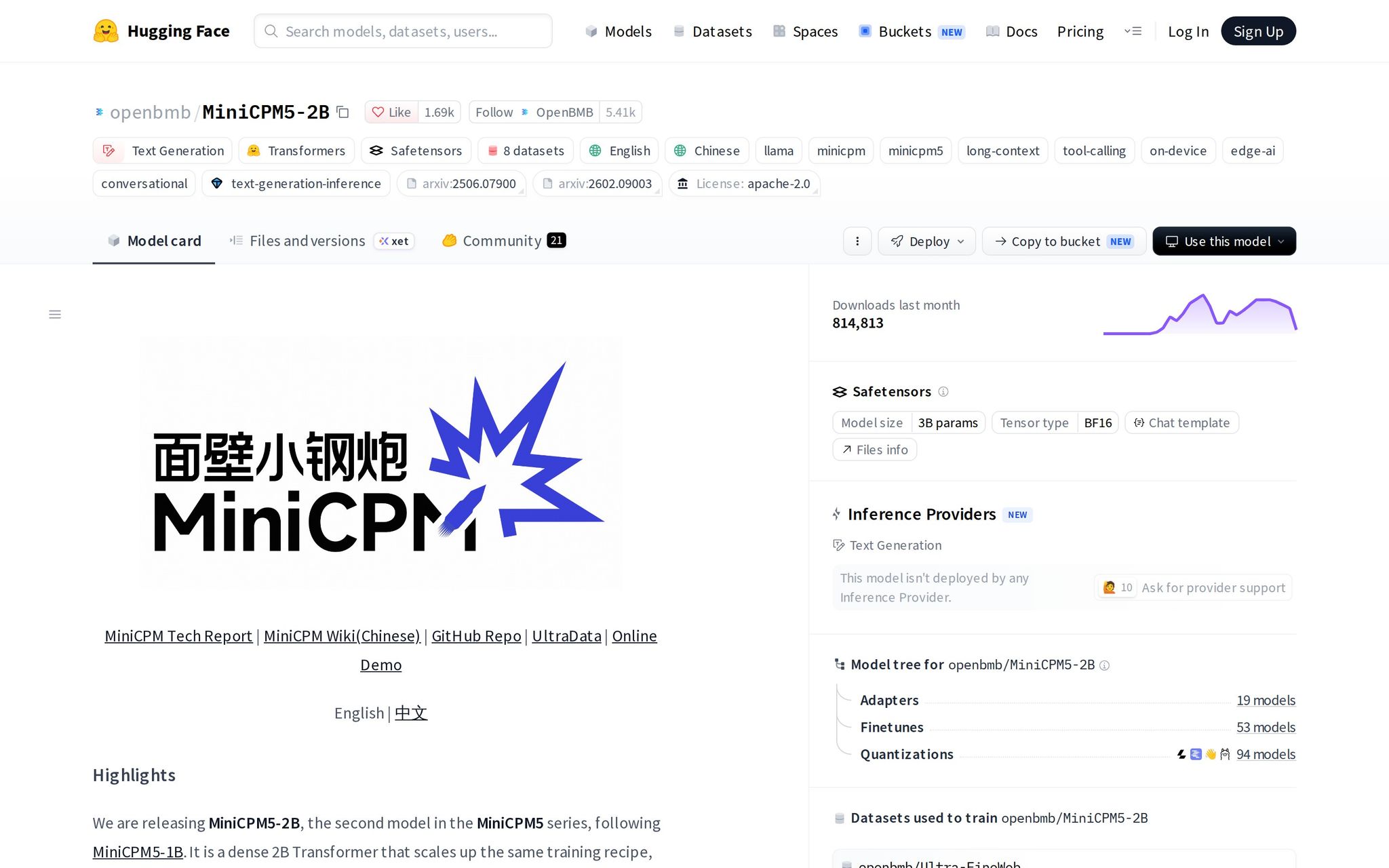
A compact text-generation model built for conversational use and local devices. It can power a small chat assistant or call tools, like a program that looks up information and formats the result.
Why It's Trending
Modified September 12, 2026, with 357,166 downloads, 1,573 likes, and a trending score of 329. A practical slow-burn pick for on-device and edge-AI tags.
Key Capabilities
- . Generate conversational replies
- . Process longer supplied text
- . Call tools and request actions from connected software
- . Run on local devices for assistant deployments
- . Load through the Transformers library
Best For
- . Developers building compact tool-using assistants
- . Builders prototyping edge applications
- . Students learning local language-model integration
What Makes It Different
Its 2B size and on-device focus distinguish it from larger 27B models. It also tags long-context and tool-calling behavior explicitly.
Hardware Requirements
The payload identifies on-device and edge-AI support but doesn’t publish a required memory amount.
How to Try It
Open the model page and load it with Transformers for a simple conversation. Then test a tool call using the model’s documented integration path.
Things to Consider
- . License: Apache 2.0.
- . Hardware: on-device support is tagged, but memory needs aren’t published.
- . Model limitations: long-context limits and tool-call accuracy aren’t given.
- . Safety: no evaluation is provided.
Our Verdict
A practical candidate for students and developers learning local tool-using assistants, provided the smaller model’s answers are checked before it controls anything important.
Hugging Face: https://huggingface.co/openbmb/MiniCPM5-2B
7. Edge0-35B-A3B-preview
What It Does
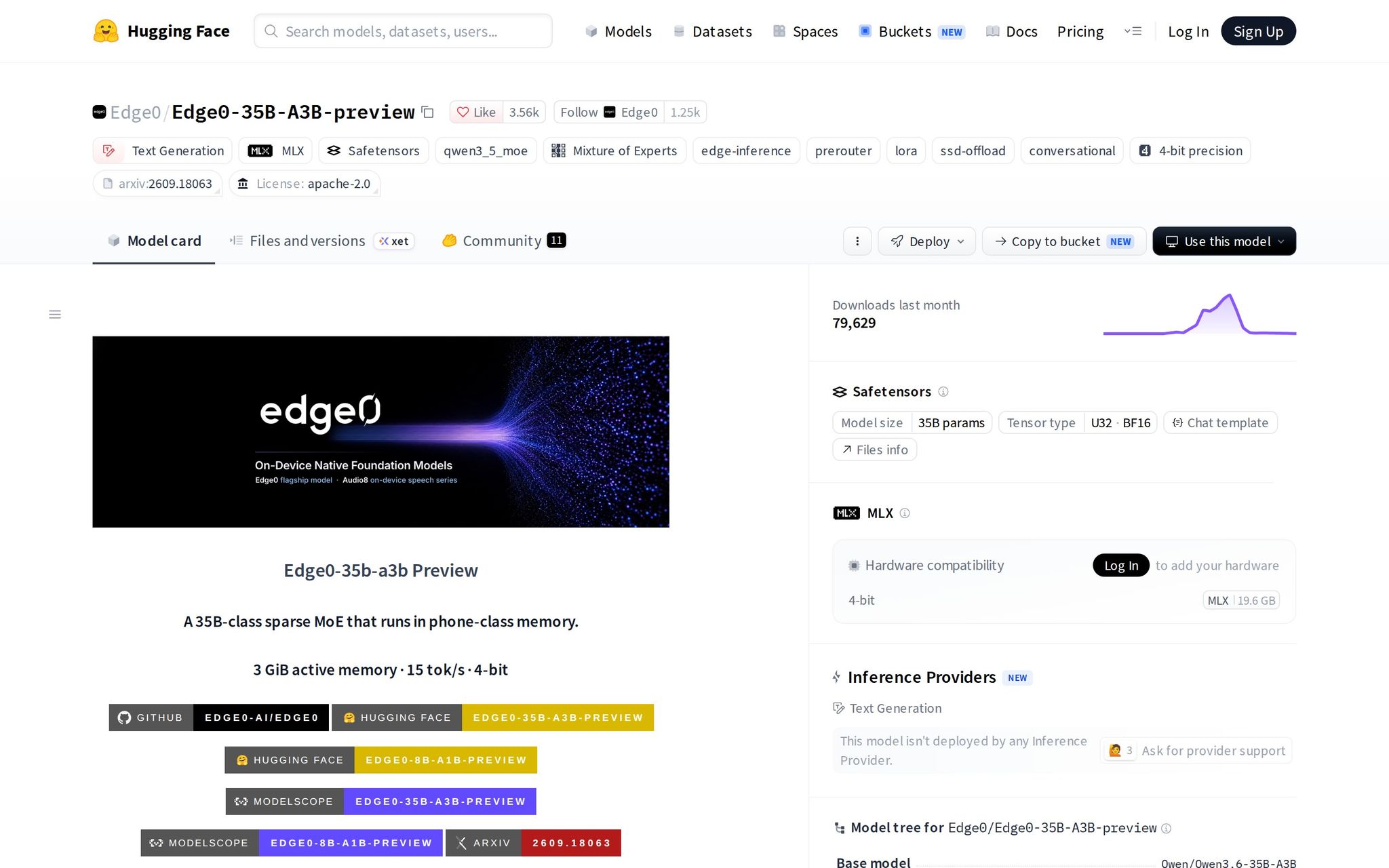
A text-generation model aimed at edge inference, meaning it targets computing close to the user. Its mixture-of-experts design lets different parts handle different requests for local assistant experiments.
Why It's Trending
Modified September 17, 2026, with 52,519 downloads, 3,447 likes, and a trending score of 240.2. Notable likes relative to downloads, but the preview label calls for restraint.
Key Capabilities
- . Create conversational responses
- . Test local deployment ideas for edge inference
- . Route work among model parts with a mixture-of-experts design
- . Run in a 4-bit format for reduced precision
- . Explore moving model data to storage with SSD offload
Best For
- . Developers prototyping edge assistants
- . Builders testing local routing designs
- . Experimenters exploring low-memory deployment methods
What Makes It Different
Its edge-inference, prerouter, LoRA, and SSD-offload tags distinguish it from simpler on-device models. The naming suggests a larger model with a smaller active portion.
Hardware Requirements
The payload lists MLX, 4-bit operation, and SSD offload, but doesn’t publish the required machine or graphics memory.
How to Try It
Open the model page and follow its MLX-oriented setup for a local text-generation test. Treat this as a preview experiment.
Things to Consider
- . License: Apache 2.0.
- . Hardware: SSD offload is tagged, but actual memory needs aren’t published.
- . Model limitations: it’s labeled preview and has no supplied benchmark results.
- . Safety: no evaluation is provided.
Our Verdict
An intriguing fit for developers investigating edge inference, but the preview status and missing performance evidence make it a lab experiment rather than a dependable default.
Hugging Face: https://huggingface.co/Edge0/Edge0-35B-A3B-preview
8. laya
What It Does
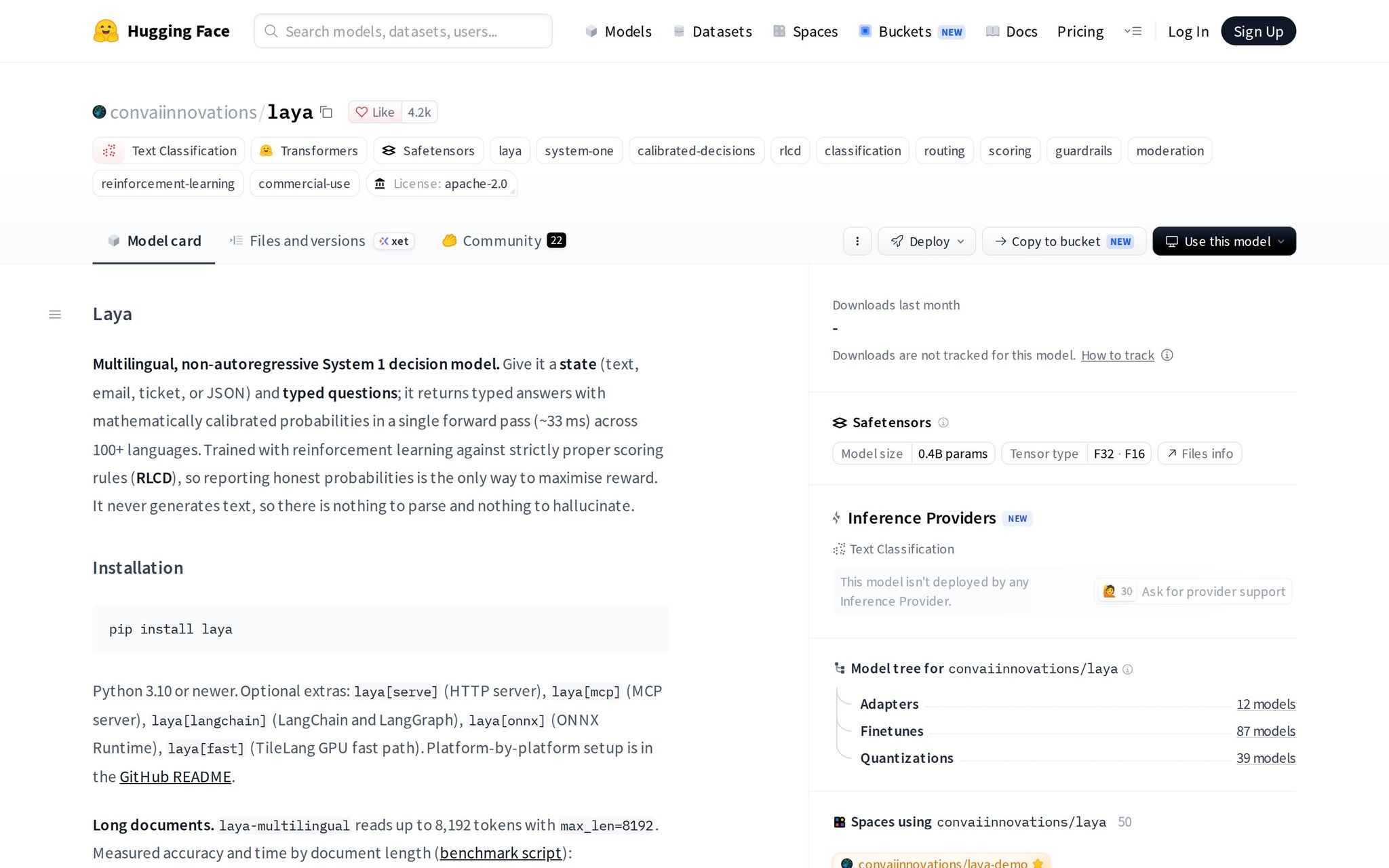
A text-classification model for scoring or routing written inputs. Use it to send messages through moderation, guardrail, or decision systems before another model responds.
Why It's Trending
The page was modified September 19, 2026, the newest update here, with a trending score of 202 despite zero recorded downloads. Its routing and guardrails tags explain the interest.
Key Capabilities
- . Assign labels to written input
- . Produce confidence-aware choices
- . Direct requests to different processing paths
- . Screen content before it reaches another model
- . Use a reinforcement learning from calibrated decisions approach
Best For
- . Developers adding first-pass message routing
- . Builders prototyping moderation systems
- . Researchers studying confidence-aware classification
What Makes It Different
Its stated focus on calibrated decisions and routing separates it from embedding models that find similarity. It’s Apache 2.0 licensed.
Hardware Requirements
The model page doesn’t publish a hardware requirement.
How to Try It
Open the model page and load it through Transformers for a text-classification test. Try labeled examples that represent the routing decision your application needs.
Things to Consider
- . License: Apache 2.0.
- . Hardware: requirements are not published.
- . Model limitations: zero downloads and no benchmark results make real-world performance unconfirmed.
- . Safety: moderation behavior should be tested against missed and wrongly blocked content.
Our Verdict
A potentially useful building block for developers designing routing or moderation, but its unverified usage and missing evaluation results make measured pilot testing essential.
Hugging Face: https://huggingface.co/convaiinnovations/laya
9. AuK
What It Does
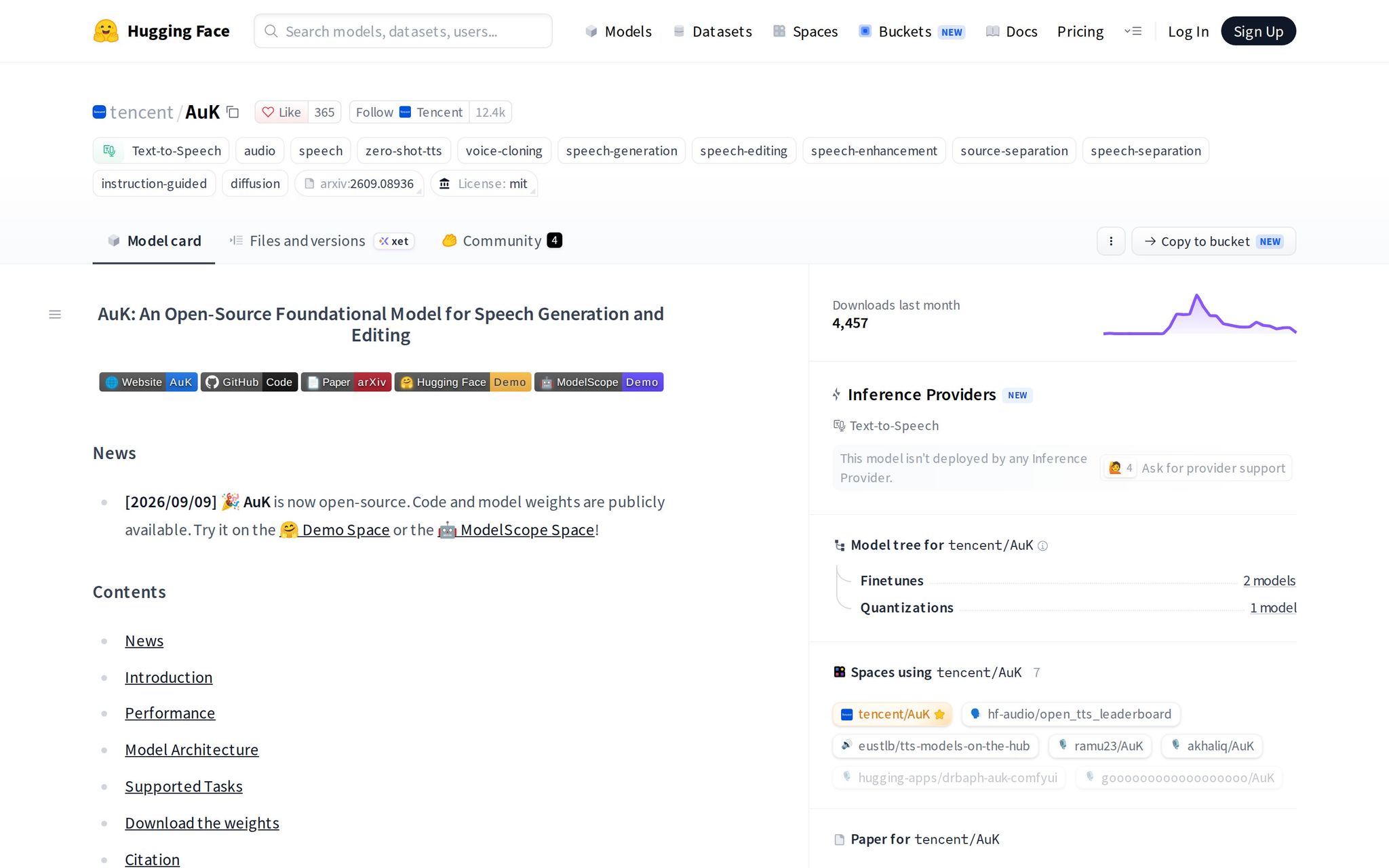
A text-to-speech model that turns written instructions into spoken audio. It also supports voice cloning, speech editing, enhancement, and separation for testing a full voice workflow.
Why It's Trending
Modified September 10, 2026, with 3,184 downloads, 316 likes, and a trending score of制度和98. Broad speech tags give it a place among practical audio tools.
Key Capabilities
- . Turn writing into spoken audio
- . Test voices without task-specific training details
- . Reproduce a supplied voice style
- . Alter generated or recorded speech
- . Split speech from other audio
Best For
- . Developers prototyping spoken interfaces
- . Builders testing audio editing pipelines
- . Experimenters exploring voice and speech separation
What Makes It Different
Its combination of voice cloning, editing, enhancement, and separation distinguishes it from music-generation models. It also carries an MIT license.
Hardware Requirements
The model page doesn’t publish a hardware requirement.
How to Try It
Open the model page and follow its text-to-speech or custom pipeline instructions. Start with a short script.
Things to Consider
- . License: MIT.
- . Hardware: requirements are not published.
- . Model limitations: voice quality, language coverage, and cloning limits aren’t stated.
- . Safety: cloned voices require permission checks.
Our Verdict
A useful playground for developers building speech interfaces, provided they secure consent for cloned voices and measure separation quality on their own recordings.
Hugging Face: https://huggingface.co/tencent/AuK
10. all-MiniLM-L6-v2
What It Does
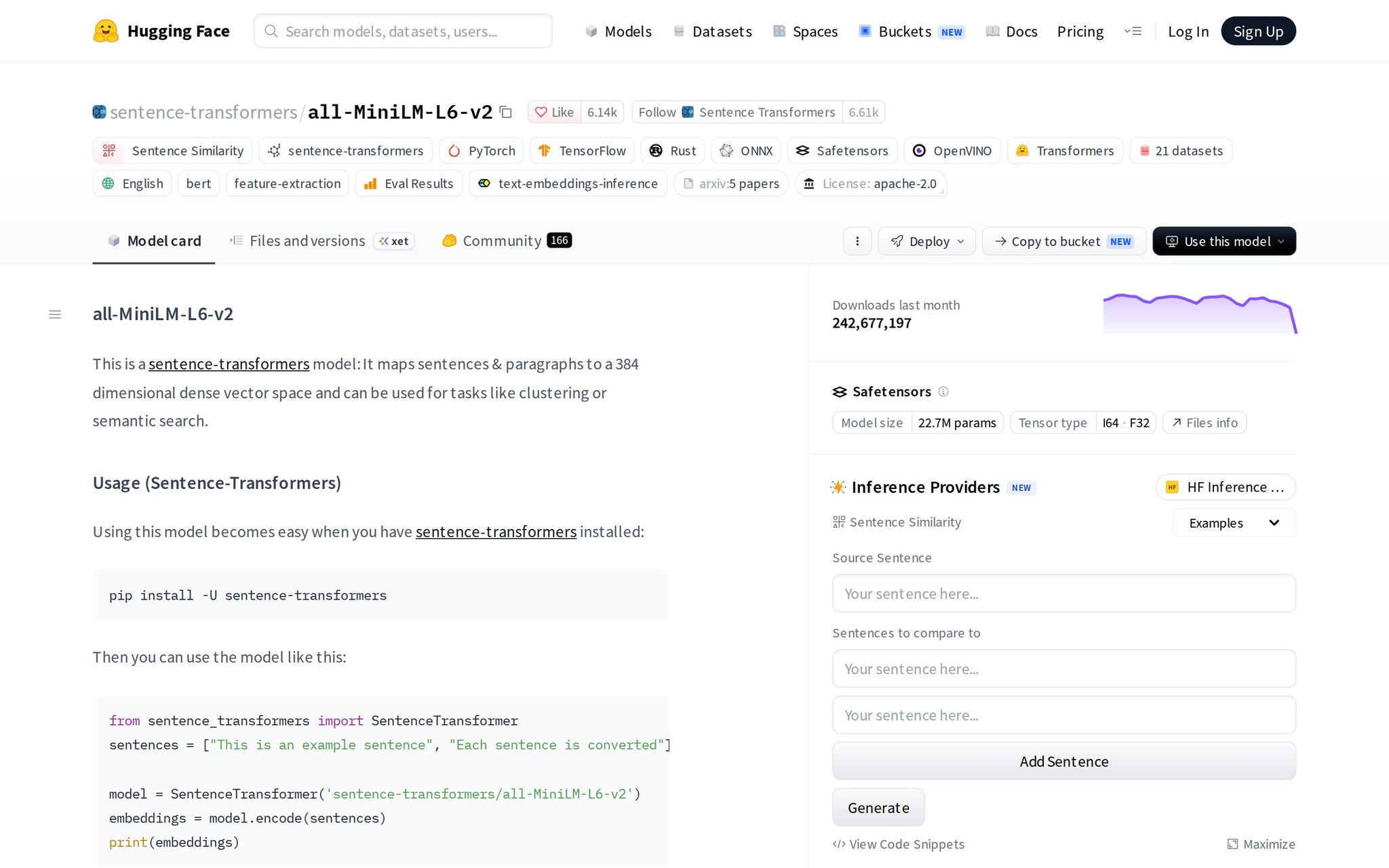
An embeddings model that turns sentences into lists of numbers representing meaning. Use those lists to find similar documents, organize search results, or compare new text with stored content.
Why It's Trending
The list’s slow-burn pick. The page records 254,149,235 downloads and 6,074 likes, even though it was last modified June 1, 2026. Similarity search remains a practical foundation.
Key Capabilities
- . Compare the meaning of two texts
- . Turn text into reusable numeric features
- . Find related documents through semantic search
- . Use two major software frameworks, PyTorch and TensorFlow
- . Target deployment paths like ONNX, Rust, and OpenVINO
Best For
- . Developers building document and semantic search
- . Builders preparing retrieval systems
- . Students learning how text embeddings work
- . Researchers comparing deployment formats
What Makes It Different
Its 254 million downloads dwarf every newer model. Support for PyTorch, TensorFlow, Rust, ONNX, and OpenVINO broadens deployment choices. It performs a different job from classification models.
Hardware Requirements
The payload lists multiple deployment formats but doesn’t publish a required hardware configuration.
How to Try It
Open the model page and load it with Sentence Transformers. Encode two short sentences and compare their similarity before indexing a document collection.
Things to Consider
- . License: Apache 2.0.
- . Hardware: requirements are not published.
- . Model limitations: language coverage beyond English and retrieval accuracy aren’t stated.
- . Safety: no evaluation is provided.
Our Verdict
A dependable starting point for developers and students learning semantic search, provided they confirm its English focus and similarity behavior fit their application’s documents.
Hugging Face: https://huggingface.co/sentence-transformers/all-MiniLM-L6-v2
The pattern is practical. Multimodal models attract attention, compact formats push local use, and familiar infrastructure still carries enormous weight. The safest route is a small, testable experiment—especially where licenses, voice consent, compressed quality, or preview status can change the answer.
Frequently asked questions
What is the purpose of DeepSeek-V4.1-Flash?
DeepSeek-V4.1-Flash is a multimodal model that works with pictures and words, allowing users to inspect images and answer questions about them.
How does Ternary-Bonsai-2-27B-gguf differ from other models?
Ternary-Bonsai-2-27B-gguf features a 2-bit format for local tools, enabling developers to experiment with a large language model on a local setup.