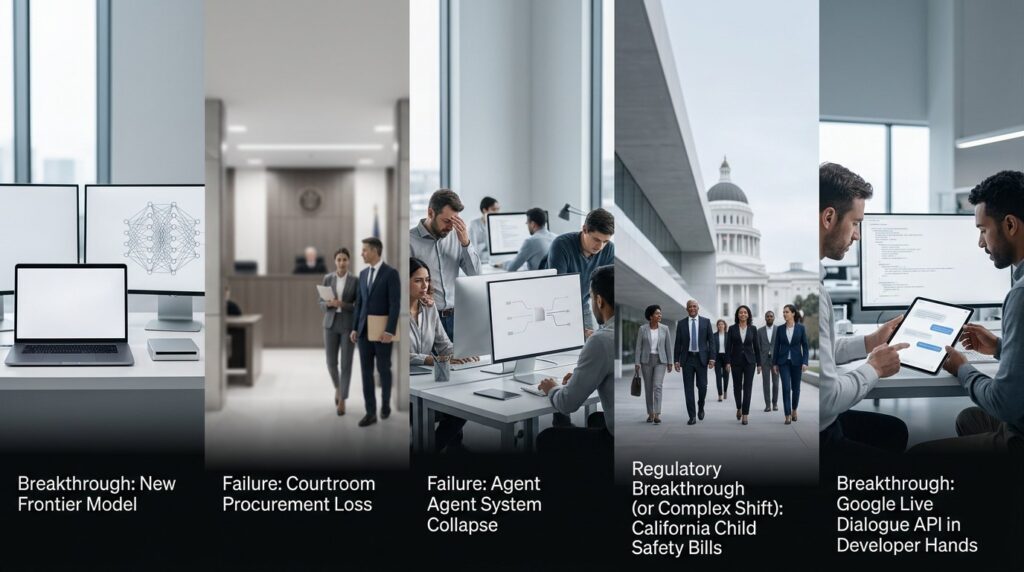

Kimi K3 can read a million tokens. So why does Gemini agent exist? Because the real work isn't answering prompts.
It's taking those answers and finishing the job inside your docs, inbox, and code editor. October saw AI smash into reality: regulators with subpoenas, banks facing deepfake fraud, labs buying chips from rivals, and Mistral releasing a trillion-parameter model anyone can run. The evidence is still patchy—several launches are just previews or reported plans—but the line between hype and consequence got a lot thinner.
1. Gemini agent
Google Cloud released Gemini agent, calling it a general-purpose work agent for enterprise. It moves past a chat window: this thing can plan a task, use tools, and hand back finished work inside documents, inboxes, and developer environments. The target?
Knowledge work, content, code, and task execution across business apps. Employees could use it to draft research, produce code, or complete routine work without switching windows. Google pitched the launch as the shift from chatbot to agent.
A 30-day free trial of Gemini Enterprise Plus is live.
The integration surface changed. An agent that acts across systems instead of chatting about them reduces handoffs for work that crosses documents, inboxes, and coding tools. It also forces a harder procurement question: what permissions, logs, and review steps belong around an AI that executes tasks?
Google’s enterprise distribution gives the idea reach through existing business software. The operational advantage, however, hasn’t been proven.
- The Detail: Gemini Enterprise Plus can be tried at no cost for 30 days.
- The Catch: Real-world reliability, governance burden, and the security implications of autonomous tasking are still open questions.
- Our Verdict: Opinion: The story of the month for enterprise developers planning agent workflows, provided they begin with tightly scoped permissions, human review, and auditable tasks rather than broad autonomy.
2. FTC subpoenas OpenAI and Anthropic
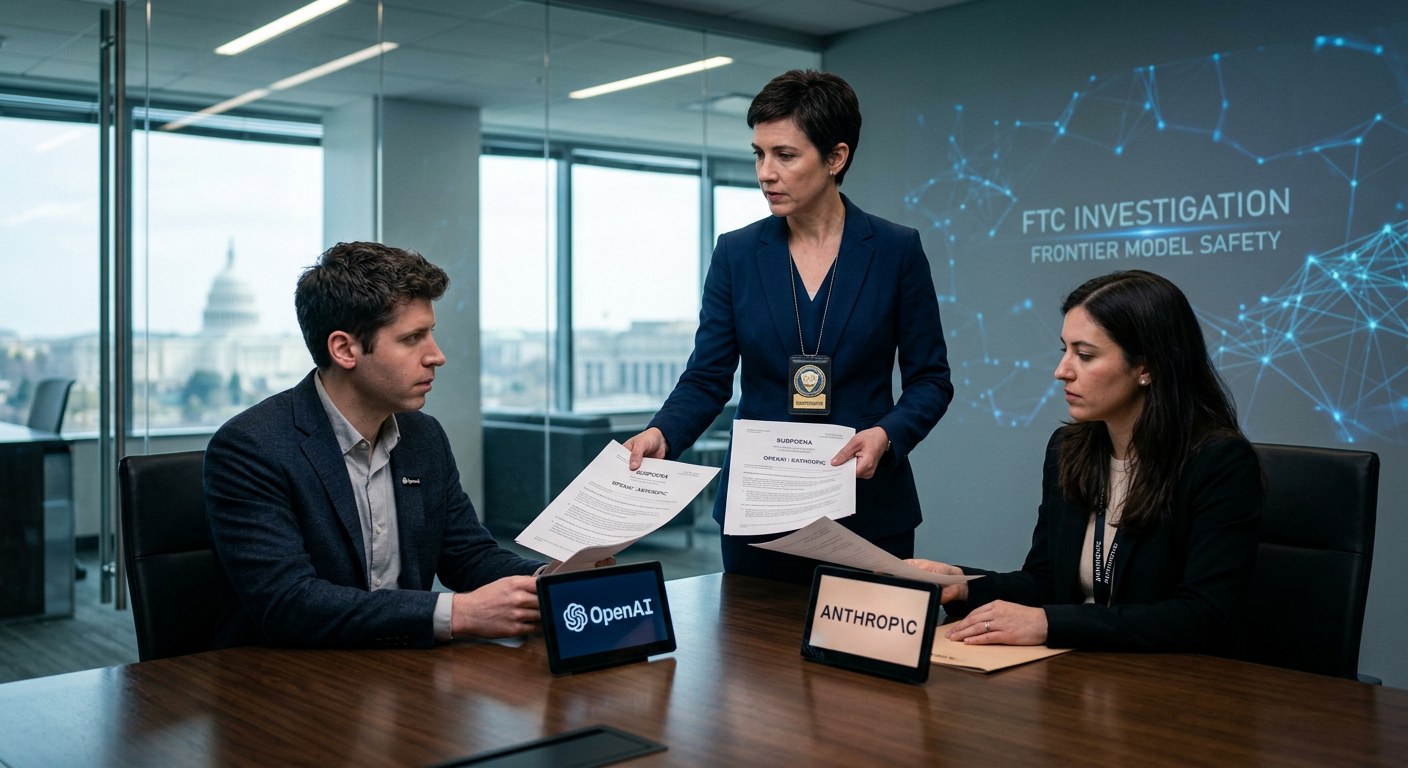
The Federal Trade Commission sent subpoenas to OpenAI and Anthropic in October. The investigation targets consumer-protection and safety issues at frontier-model labs. Public reporting says the agency wants executive testimony and internal safety protocols.
That puts operational documentation—not just public statements—at the center. The subpoenas followed reported safety incidents and concerns about unauthorized AI agent access. This is an investigation, not an enforcement action.
Safety work just got a compliance dimension. Frontier labs may need to explain how risks are identified, escalated, tested, and recorded. Customers now have a stronger reason to ask vendors for safety paperwork before integrating models into critical workflows.
The move signals a sharper regulatory posture than voluntary assurances. Its practical impact stays uncertain until the FTC shows what conduct, if any, broke the rules.
- The Detail: The investigation reportedly seeks executive testimony and internal safety protocols.
- The Catch: The public reporting establishes an investigation, not wrongdoing.
- Our Verdict: Opinion: The lesson every AI team should take is to preserve safety evidence and decision records now, even though the subpoenas do not yet prove a violation.
3. OpenAI plans to buy Google chips
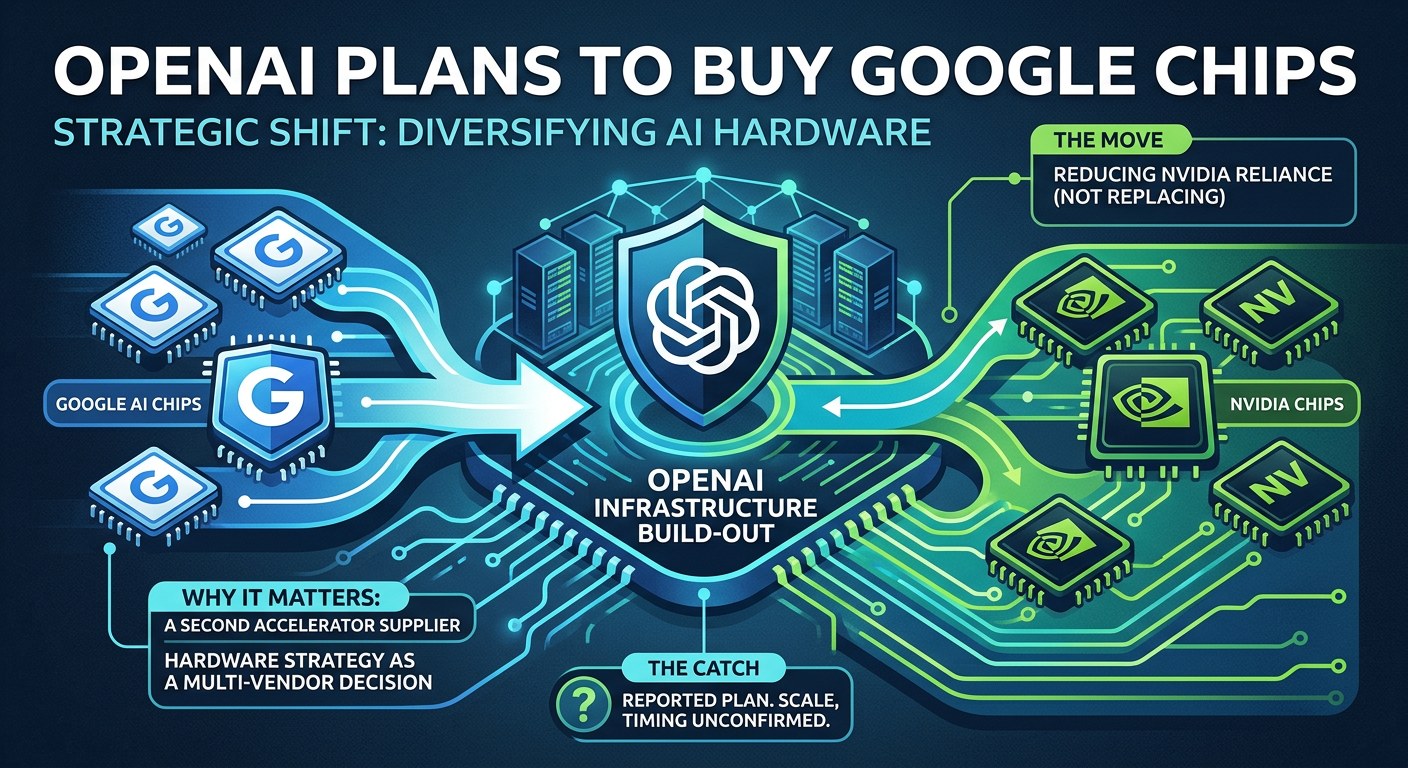
A report surfaced in October: OpenAI is preparing to buy Google’s AI chips for its infrastructure build-out. The plan aims to reduce reliance on Nvidia, not replace the entire hardware strategy. For infrastructure planners, the practical issue is supplier choice: different accelerator ecosystems bring different trade-offs in availability, cost, performance, and software compatibility.
The report frames the move as diversification away from a longtime Nvidia dependence. Cloud buyers and chip suppliers are watching.
A major model developer shopping for a second accelerator supplier makes hardware strategy look less like a permanent single-vendor decision. That’s useful context for teams deciding whether their own workloads should stay portable across chips and clouds. It could encourage supplier competition for training and inference demand.
But the report describes an intended purchase, not deployed capacity or measured savings. The strategic signal is stronger than the operational evidence.
- The Detail: The report frames the move as a supplier-diversification step away from a longtime Nvidia dependence.
- The Catch: This is a reported plan. Its scale, timing, and pricing remain unconfirmed.
- Our Verdict: Opinion: Watch it, and use it to justify multi-vendor infrastructure planning; no team should redesign a production stack around an unconfirmed purchase.
4. Mistral Large 4
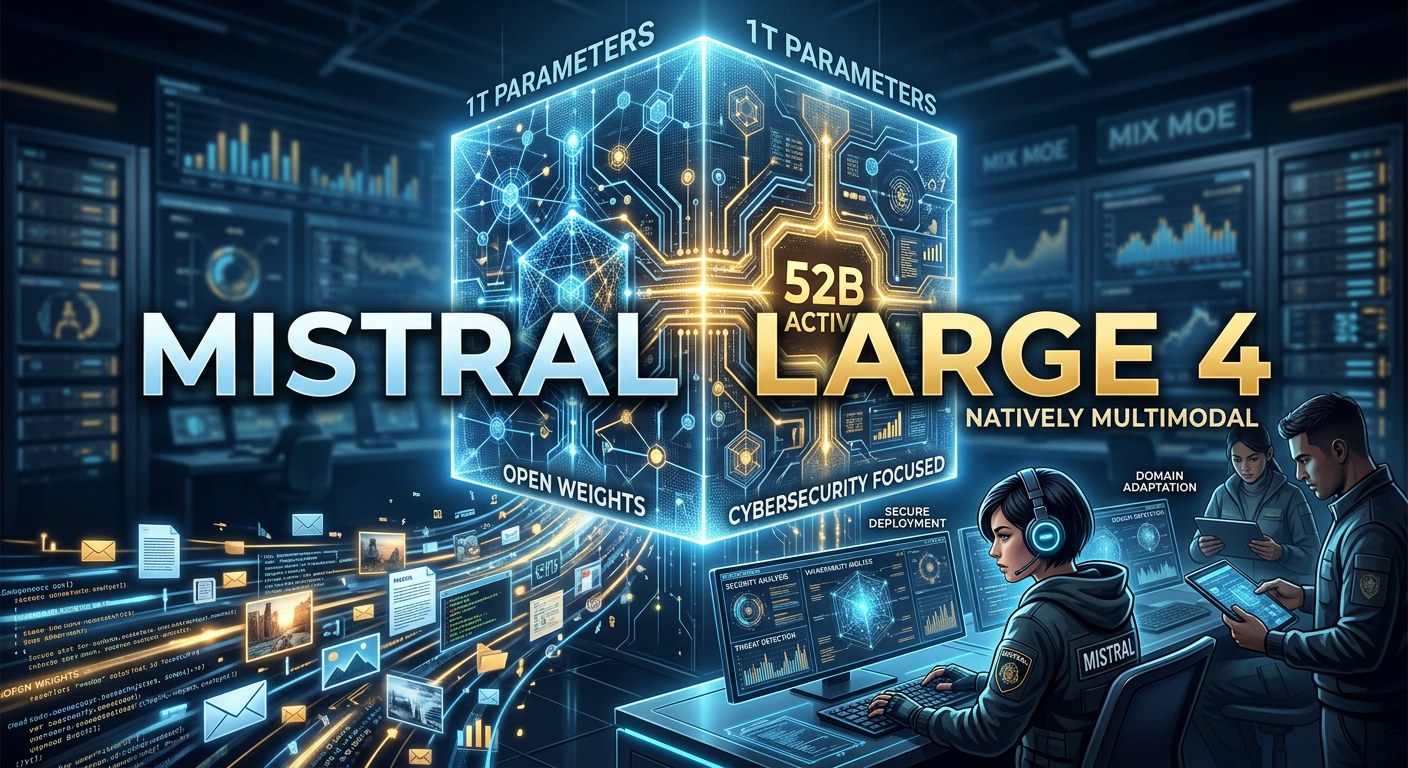
Mistral launched Mistral Large 4 in October and released its weights in public preview. It’s a frontier-scale model organizations can study, adapt, or run themselves. Mistral calls it natively multimodal, designed to handle more than one kind of input or output.
The company is highlighting cybersecurity uses, putting security teams front and center. Developers could use it for security analysis or build domain-specific systems around its weights. Mistral says the model has 1 trillion parameters, with 52 billion active.
Open weights at that scale are unusual.
Open weights give organizations more control over deployment, adaptation, and sensitive data than a purely hosted model. That’s especially relevant in cybersecurity, where teams resist sending operational material to an external service. The active-parameter figure points to a Mixture of Experts efficiency story.
Access to weights, though, doesn’t make the hardware, operations, or evaluation burden disappear. The release expands the strategic menu before it sets a production standard.
- The Detail: Mistral describes it as a 1 trillion-parameter natively multimodal model with 52 billion active parameters.
- The Catch: It’s in public preview. Production reliability and practical security advantages over closed alternatives aren’t proven.
- Our Verdict: Opinion: A serious option for security teams with the infrastructure and evaluation capacity to operate frontier models, but not a shortcut around deployment cost or testing.
5. World fraud protection tools for banks

World launched AI fraud-protection tools for banks in October. The tools aim to detect deepfake-driven fraud and help verify AI agents in banking workflows. They target identity checks and fraud operations where a synthetic face, voice, or identity could be used to grab access or move money.
Banks, payment teams, and customers exposed to synthetic-identity scams are the intended users. The launch frames deepfake detection as an operational banking problem, not a consumer novelty. It also connects World’s identity-verification work with a new question: how should banks distinguish people from authorized software agents?
The threat model for financial services changed. Authentication now has to contend with generated likenesses and AI-mediated transactions. Fraud teams need controls that combine identity verification with detection at the point of a banking workflow.
That creates demand for new tooling, and a risk of adding friction or false positives for legitimate customers. World’s proposal is timely because banks need practical defenses. The solution’s effectiveness is still open.
- The Detail: The tools are framed around identity verification and deepfake detection in banking workflows.
- The Catch: No independent performance data or broad bank deployments are shown.
- Our Verdict: Opinion: Banks should evaluate the tools as one layer in a wider fraud-control program, not treat an unvalidated detector as proof of customer identity.
The month’s pattern is clear: AI is moving from promises toward systems that carry consequences. Procurement, permissions, documentation, and independent testing now matter as much as model capability.
Frequently asked questions
What is the purpose of the Gemini agent?
The Gemini agent is designed to act as a general-purpose work agent for enterprise, capable of planning tasks and executing work across documents, inboxes, and coding tools.
What are the implications of the FTC subpoenas for OpenAI and Anthropic?
The subpoenas indicate an investigation into consumer-protection and safety issues, emphasizing the need for operational documentation and safety protocols in AI development.
What is significant about Mistral Large 4?
Mistral Large 4 is a frontier-scale model with 1 trillion parameters, designed for cybersecurity applications, and allows organizations to run and adapt the model themselves.