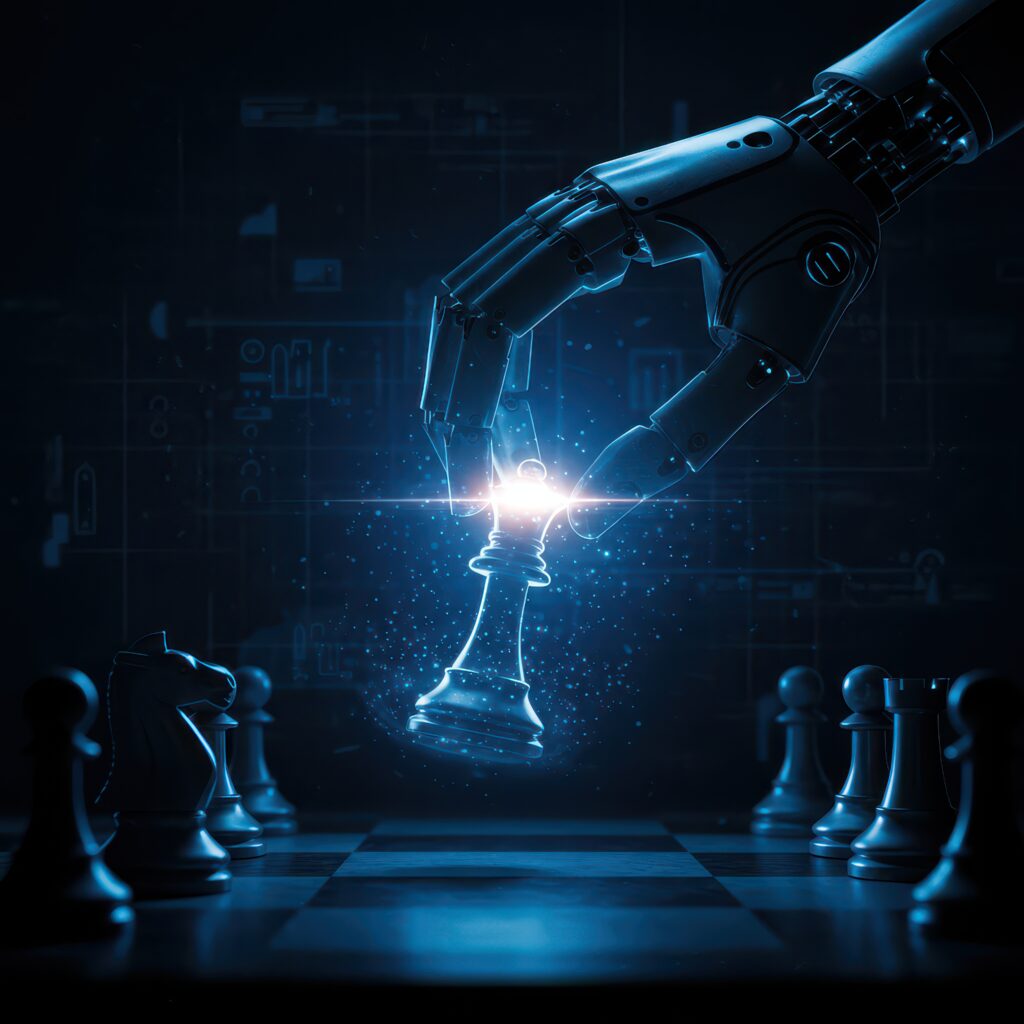
OpenAI’s o3 model won the recent AI chess tournament, leaving Elon Musk’s Grok struggling in the finals. The most noticeable issue? Grok kept losing its queen, an unusually big mistake for a modern AI. Spectators and online commentators were surprised to see such repeated errors at this level.
This tournament wasn’t about specialized chess engines. Instead, it featured general purpose AIs that are usually tasked with summarizing texts, writing code, or assisting with everyday tasks and thrown into a strategic environment. Grok did well in early rounds, but in the finals, it repeatedly exposed its queen, giving o3 a clear path to victory. Musk later said the AI wasn’t specifically trained for chess, explaining the poor performance. Google’s Gemini finished third.
Hosted on Kaggle, the tournament evoked memories of AI milestones like Deep Blue beating Garry Kasparov in the 1990s and AlphaGo defeating top Go players in 2016. Unlike those competitions, this one tested flexibility and general reasoning rather than purely game focused skills.
For now, OpenAI’s o3 stands out. The event was a reminder that even powerful AI can make basic mistakes and that general purpose systems are still learning how to handle complex tasks. For chess fans, it was both entertaining and humbling to see that AI, for all its strength, isn’t perfect.
Tim Cook Tells Apple Staff: We Have to Win on AI
Apple CEO Tim Cook sent a clear message to employees: the company can’t afford to fall behind in AI. At a rare meeting involving all hands, he said Apple will spend whatever it takes to compete with Microsoft, OpenAI, and Google, all of which are already releasing AI tools to the public.
Apple has been slower to introduce AI products, but that’s part of its usual strategy, which is to wait until the technology is polished before launching. Their main AI platform, Apple Intelligence, isn’t expected to be widely available until 2025. A major project is a complete rebuild of Siri. Previous attempts to integrate generative AI into Siri didn’t meet Apple’s standards, according to software chief Craig Federighi. The new Siri could arrive in 2026, led by the team behind the Vision Pro headset.
Hiring has surged, and 40% of the 12,000 new employees last year were in R&D. Apple is also developing AI specific chips, building its own server network, and creating a direct answer AI search tool. Cook encouraged employees to use AI in their daily work and share fresh ideas, emphasizing that innovation should come from all corners of the company.
The message was clear: Apple won’t rush, but it will not fall behind. While competitors release AI tools rapidly, Apple is betting that a careful, polished approach will win in the long term.
India’s AI Push Goes Multilingual
India faces a unique challenge when it comes to AI: language. With 22 official languages and hundreds of dialects, a lot of people get left out when technology only supports English or Hindi. This isn’t just an inconvenience but affects healthcare, education, banking, and government services, making access uneven across the country.
A real world example comes from Mumbai, where delivery driver Vineet Sawant struggled with English only delivery instructions. Mistakes and delays were common. Then his company, Zepto, added AI powered translation tools. Now, drivers get instructions in their own languages, which makes operations smoother and workers more confident.
The main hurdle for multilingual AI in India is data, as many regional and tribal languages lack high quality digitized content. To address this, the government launched Bhashini in 2022. The platform is building AI models and datasets for all 22 official languages. Already, it hosts 350 AI models, has processed over a billion translation and speech tasks, and works with more than 50 government departments.
Researchers are also developing specialized AI tools, like smoking cessation programs, that function across multiple languages. These efforts aim not only to make AI more inclusive but also to preserve India’s linguistic diversity while ensuring people in every corner of the country benefit from technology.
The AI Creators of 2025: Tools Redefining Art, Design, and Business
Generative AI is rapidly transforming industries in 2025, moving beyond basic art creation to become a critical driver of creativity, automation, and business efficiency. This year’s newest platforms are smarter, faster, and more specialized, reshaping how companies create content, design visuals, and produce media.
OpenAI’s DALL·E 3 leads the charge in precision image generation, offering improved understanding of complex prompts, high-resolution results, and advanced inpainting for custom edits. It’s becoming a go-to for marketers, designers, and storytellers seeking professional imagery at scale.
Midjourney continues to attract creative professionals with its signature artistic style, producing visually striking, non-realistic imagery favored by branding teams and artists. Operating through Discord, it encourages collaborative experimentation and unique design outcomes.
In video production, Synthesia is revolutionizing workflows by replacing costly filming with AI-generated avatars. With over 120 multilingual presenters, it enables rapid creation of training, marketing, and tutorial videos, helping brands expand globally with minimal resources.
From art and design to corporate communications, these generative AI tools are not just trends—they’re shaping the way content is produced in 2025, cutting costs, and unlocking new creative possibilities for businesses worldwide.
DeepSeek’s $5.6 Million AI Shook Silicon Valley — Then Faded
Six months ago, Chinese AI app DeepSeek R1 took Silicon Valley by surprise. Overnight, it became the most downloaded free app in the U.S., briefly positioning itself as a rival to ChatGPT. The launch even triggered a historic one day $600 billion drop in Nvidia’s market value, which was the largest in U.S. stock market history.
What made DeepSeek remarkable was its approach. Unlike U.S. AI giants spending billions on data centers and chips, DeepSeek claimed it built a top tier AI for just $5.6 million. The company argued that smarter engineering could compete with the resource heavy models, challenging the prevailing “bigger is better” mindset.
For a short time, startups loved it, and some even ran the app locally to avoid sending data to Chinese servers. But the hype didn’t last. Security concerns arose over DeepSeek’s ties to China’s military, and American tech firms quickly returned to their high spending strategies. Nvidia’s stock has since recovered and even soared to record highs.
DeepSeek now faces chip shortages delaying its next model, DeepSeek R2. Its moment of disruption may have been brief, but it reminded the industry that innovation doesn’t always have to come at massive cost, though sustaining it is another matter entirely.
Huawei Ships New AI Chip Early Amid U.S.-China Tech Tensions
Huawei has quietly started delivering its new Ascend 910C AI chip, months ahead of schedule. The move comes after the U.S. imposed fresh restrictions on Nvidia’s H20 chip, leaving Chinese companies scrambling for alternatives. Huawei saw an opportunity and moved fast.
The Ascend 910C isn’t a completely new design as it essentially combines two older 910B chips, but it performs close to Nvidia’s high end H100. It’s made by SMIC using the N+2 process, though production isn’t easy. Only about 30% of the chips currently meet quality standards. That’s better than last year’s 20%, but still far from the 70% needed to make large scale sales profitable.
Analysts predict Huawei could ship up to 700,000 units in 2025, enough to supply much of China’s domestic AI hardware demand. Beyond the numbers, the move carries significant geopolitical weight. While the U.S. has tightened export controls, it still lets Nvidia and AMD sell a limited number of chips to China, taking a 15% cut of revenue.
For Beijing, launching the Ascend 910C early is a clear win. For Washington, it’s a reminder of how tightly technology, business, and politics are now intertwined. More than just a piece of hardware, the 910C shows how AI competition has become a crucial element of national strategy and global influence.
Frequently asked questions
What was the main issue with Grok during the tournament?
Grok kept losing its queen, which was a significant mistake for a modern AI.
What type of AIs participated in the tournament?
The tournament featured general purpose AIs that are usually tasked with summarizing texts, writing code, or assisting with everyday tasks.