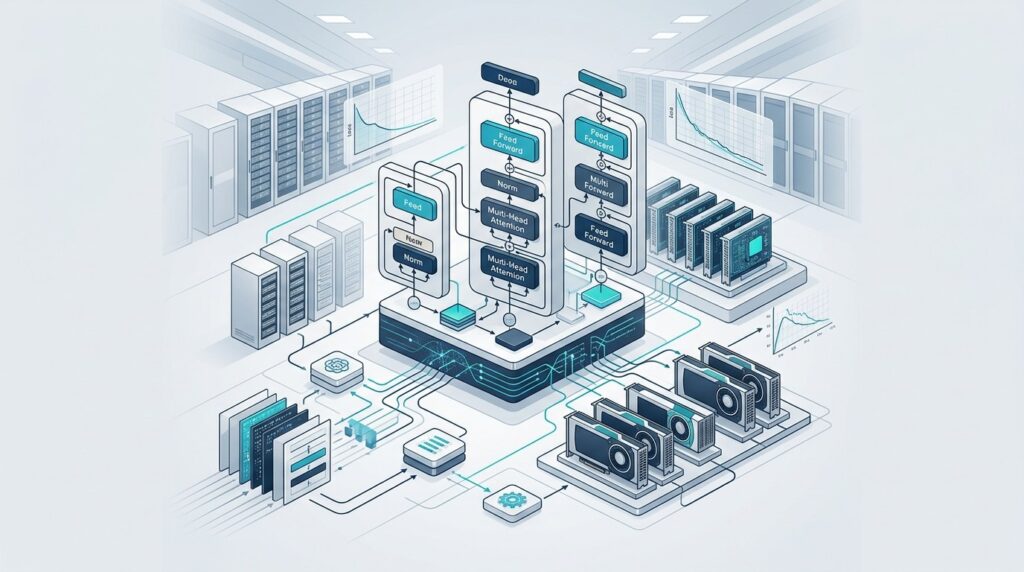
AI models are evolving faster than most organizations can track. This guide explains the major model types, capabilities, trade-offs, and how businesses choose the right models for real-world deployment.
-
Executive Summary
Executive Summary
-
Foundation Model
Foundation Model
-
Knowledge Management
Knowledge Management
-
Adoption Journey
Adoption Journey
-
New and Evolving Roles
New and Evolving Roles
-
Model Strategy
Model Strategy
-
Technical Evolution
Technical Evolution
Learning Objectives
After reading this article you will be able to:
The Core Idea Explained Simply
The Core Idea Explained in Detail
Common Misconceptions
Practical Use Cases That You Should Know
How Organizations Are Using This Today
What Good Looks Like (Success Signals)
What to Avoid (Executive Pitfalls)
Final Takeaway
TL;DR — Executive Summary
Foundation AI models include large pre-trained systems like GPT-style large language models, multimodal models such as Gemini and Claude, and specialized ones in fields like biomedicine and materials science. These models form essential digital infrastructure for organizations by 2026. They process vast amounts of data to handle diverse tasks.
They are:
General‑purpose: trained on vast, heterogeneous data and then adapted—via prompting, retrieval or fine‑tuning—to many downstream tasks.
Multimodal: increasingly fluent across text, images, audio, video and structured data, and able to call tools and APIs.
Composable: used as reasoning and orchestration engines that sit on top of your own data, systems and workflows.
Executives face three key implications from these models. First, they deliver value. When integrated with proprietary data and workflows, foundation models reduce operational costs and speed up processes.
They also enable new products and services. Deployments often yield 20–40% productivity gains in areas like document handling and software development. Research and analytics show even greater potential.
Second, risks are significant. Models can hallucinate facts, carry biases, and expose sensitive data if not configured properly. They respond probabilistically, not predictably, and face growing regulation in sectors like finance and healthcare.
Third, realizing sustained value goes beyond basic tools. Organizations require a data and retrieval layer to anchor models in internal knowledge. They also need ModelOps for deployment, monitoring, and governance, plus frameworks for generative AI risks.
The landscape shifts on three axes by 2026. It moves from single large models to portfolios including various sizes and sources. It evolves from text chatbots to multimodal agents that perceive, plan, and act through tools.
Finally, it transitions from pilots to platform-based enterprise use. This includes AI catalogs, standard pipelines, and cross-functional governance. The resilient approach treats these models as infrastructure, not projects: build platforms, talent, focused cases, and controls for safety and compliance.
The Core Idea Explained Simply
A foundation AI model acts as a versatile digital assistant trained on massive datasets.
It absorbs patterns from text, code, images, audio, and video. This broad training covers language, reasoning, and visual elements without focusing on single tasks. You adapt it to specific needs through prompts, data lookups, or fine-tuning on examples.
Avoid starting from scratch for each use. Begin with established models from providers like OpenAI, Anthropic, or Meta. Connect them to your documents, databases, and APIs.
Add safeguards and workflows for secure access. By 2026, most organizations use a few core models, public or hosted. They pair these with retrieval layers for internal data access.
Governance handles versioning, risks, costs, and compliance. Applications range from assistants to analytics tools built atop this base.
View it as infrastructure like cloud services. It enables broad capabilities across operations.
The Core Idea Explained in Detail
What Makes a Model a “Foundation Model”?
Foundation models share defining traits across providers.
They achieve scale through massive, varied training data. This includes web content, books, code, images, and videos, plus specialized sources like medical texts. Parameter counts reach billions to trillions, but efficiency optimizations prove equally important.
General-purpose transfer allows one model to handle diverse tasks. It supports text operations like summarization and coding, vision for image analysis, and audio for transcription. Multimodal inputs, such as combining PDFs and screenshots, work in unified sessions. Adaptation to new tasks requires far less data than building anew.
Pre-training occurs once on general data at provider scale. Enterprises then adapt via prompts or instructions. Retrieval-augmented generation pulls in relevant internal documents dynamically. Fine-tuning applies further training on proprietary examples.
Modern models handle multiple modalities. Inputs and outputs mix text, images, video, and audio. Tool integration lets them query calculators, databases, or APIs to execute workflows like data lookups and email drafting.
Key Architectural Trends
Transformer architectures dominate current designs. They process sequences like text and code effectively through pattern recognition. Ongoing work improves attention for longer inputs and explores diffusion methods for faster generation. New structures suit agentic systems with persistent memory.
Mixture-of-Experts setups enhance efficiency. These models include specialized sub-networks called experts. Input tokens route to select experts rather than the full model. This maintains performance while cutting per-query costs.
Context windows define input capacity, often spanning 100K to 1M tokens. Larger windows process entire files or extended dialogues without truncation. Vendors extend this with external memory and search for handling vast information.
Specialization grows alongside general models. Smaller models with 3B–30B parameters run on standard hardware. Domain-specific versions target fields like finance or medicine. Enterprises often combine a large model for reasoning with compact ones for sensitive or real-time tasks.
From Chatbots to Agents
Adoption began with simple chat interfaces. By 2024–2026, it advances to agentic systems. Agents plan steps, invoke tools, manage memory, and collaborate with other agents or users.
Consider a customer service agent. It reviews history and policies to draft responses or process refunds. A research agent scans literature, summarizes findings, and notes inconsistencies.
This evolution introduces safety needs. Authorization controls actions, audit logs track events, and limits prevent overreach.
Common Misconceptions
“A Foundation Model Is Just a Better Chatbot”
Chat interfaces provide one access point. The underlying strength lies in versatile pattern recognition and generation. It spans text, code, and multimedia without fixed interfaces.
Value emerges from deeper integrations. These enhance search, analytics, and copilots in tools. They also automate workflows and support decisions behind the scenes.
“Bigger Is Always Better”
Larger models score higher on tests. However, they increase runtime costs and latency. Many tasks do not demand maximum scale.
Mid-sized or small models suffice in practice. Pair them with domain data and retrieval for strong results. They suit self-hosting in data-controlled environments.
Executives select based on fit. Consider model scale, speed, expense, and control needs.
“We Need to Train Our Own Model from Scratch”
Few organizations require this path. Frontier training demands billions in compute, data, and expertise. Obsolescence arrives quickly in this space.
Most start with vendor or open-source bases. Prompts and RAG handle adaptations effectively. Fine-tuning adds customization where needed.
In-house training fits only hyperscalers or niches with unique data. Such cases remain rare for enterprises.
“Foundation Models Always Tell the Truth”
Models generate probable outputs, not verified facts. Training shapes responses to include accurate, outdated, or invented details. Confidence does not guarantee correctness.
High-stakes applications demand grounding in reliable sources. Add checks and human review for validation. This ensures outputs align with reality.
“Using Public APIs Is Inherently Unsafe”
Enterprise features mitigate risks from major providers. Inputs avoid retraining by default, with options for data residency and private connections.
Misconfigurations pose the real threats, alongside contract gaps or regulations. Vendor vetting and proper setup address these effectively. External models fit with disciplined management.
“Adoption Is Mainly an IT Issue”
Technology covers only part of the effort. Business value ties to use-case choices and process integration. Change management builds trust through training and design.
Governance spans risks, ethics, and communication. It operates across functions, not just IT.
Practical Use Cases That You Should Know
Below is a non‑exhaustive set of high‑impact use cases that are maturing rapidly toward 2026.
1. Knowledge Management and Enterprise Search
- What: Use models to read and synthesize across SharePoint sites, wikis, email, ticketing systems, policy documents, and more.
- Why it matters:
- Reduces the time employees spend searching for information.
- Provides consistent answers instead of “tribal knowledge.”
- Typical applications:
- Internal “Ask the company” assistants for HR, IT, legal, procurement.
- Contextual help within business apps (e.g., “explain this dashboard,” “what does this field mean?”).
2. Document‑Heavy Workflows
- Industries: Legal, insurance, healthcare, real estate, energy, public sector.
- Tasks:
- Contract review and clause extraction.
- Policy comparison and summarization.
- Claims triage and initial assessment.
- Regulatory filings and documentation drafts.
- Impact:
- 30–50% reduction in review time for standard documents.
- Improved consistency and auditability when combined with structured templates.
3. Software Engineering and IT Operations
- Developer copilots:
- Code completion, refactoring, test generation, documentation.
- Framework‑specific assistants for configuration, infrastructure as code, and CI/CD.
- Ops assistants:
- Summarize incident tickets and logs.
- Propose remediation steps or runbooks.
- Impact:
- Higher throughput of features and bug fixes.
- Faster resolution of operational incidents.
- Improved code quality and reduced onboarding time.
4. Customer Service and Sales Support
- Customer agents:
- Multi‑channel support (chat, email, voice) with access to product knowledge and customer histories.
- Draft responses for human agents to review.
- Sales enablement:
- Generate customized proposals and pitch decks.
- Analyze CRM data and help prioritize leads.
- Impact:
- Reduced average handle times.
- Higher first‑contact resolution.
- Improved personalization and consistency.
5. Marketing, Content and Communications
- Content generation and editing:
- Draft emails, blog posts, social content, product descriptions.
- Translate and localize content across markets.
- Brand and policy guardrails:
- Use fine‑tuning and style guides to maintain tone and compliance.
- Impact:
- Faster content production.
- Better reuse and adaptation of core materials.
6. Analytics, Planning and Decision Support
- Natural language BI:
- “Ask your data” interfaces over data warehouses and BI tools.
- Automatic chart and dashboard description in plain language.
- Scenario analysis:
- Generate and compare narratives for business scenarios based on structured data.
- Impact:
- Broader access to data insights beyond analysts.
- More explainable analytics for non‑technical stakeholders.
7. R&D, Life Sciences and Materials
- Scientific assistants:
- Literature review, hypothesis generation, and experiment planning.
- Domain‑specific models:
- Biomedical foundation models trained on medical and genomic data.
- Materials discovery models that simulate properties of new compounds.
- Impact:
- Shorter cycles from idea to candidate solution.
- More targeted experimentation.
8. HR and Internal Operations
- Use cases:
- Drafting job descriptions and performance review language.
- Personalized learning paths and training recommendations.
- Policy Q&A for employees.
- Caveats:
- Careful mitigation of bias and fairness concerns.
- Clear separation between assistive use and final human decision‑making.
How Organizations Are Using This Today
Typical Adoption Journey
Organizations follow a structured progression in adoption.
- Exploration and Pilots
- Small teams experiment with public tools (ChatGPT, Gemini, Claude, etc.).
- Quick pilots in low‑risk areas: marketing drafts, internal FAQs, coding assistance.
- First Integrated Use Cases
- Build an internal knowledge assistant using RAG over policy documents or support content.
- Launch developer copilots integrated into existing IDEs and repositories.
- Deploy customer support assistants for low‑risk queries, with human oversight.
- Platformization
- Establish a central AI platform team or center of excellence.
- Build or adopt a platform that includes:
- Model catalog (multiple providers and open models).
- Retrieval and vector database layer.
- Monitoring, logging and evaluation tools.
- Start to define organization‑wide standards and templates.
- Enterprise‑Scale Rollout
- Integrate AI assistants into major workflows: CRM, ERP, HRIS, ticketing, productivity suites.
- Publish internal APIs and SDKs so teams can build on the core AI platform.
- Formalize governance, including approval processes and risk classifications.
Patterns by Sector
- Financial services:
- Document summarization for KYC, compliance and risk.
- Internal research assistants for analysts and relationship managers.
- Strict governance and model validation; often prefer private deployments.
- Healthcare and life sciences:
- Clinical documentation assistance and coding support.
- Literature review and evidence synthesis for clinicians and researchers.
- Heavy emphasis on validation, audit trails, and human oversight.
- Manufacturing and logistics:
- Maintenance and troubleshooting assistants for technicians.
- Supply chain analytics and demand forecasting augmentation.
- Documentation and training content automation.
- Public sector and education:
- Citizen service chatbots, multilingual information access.
- Educational content generation and tutoring tools.
- Complex constraints around transparency, fairness and accessibility.
Common Lessons from Early Adopters
Early adopters highlight key practices. Success pairs platform builds with change efforts. Technology alone misses ROI; training and redesign drive results.
Focused scopes yield better outcomes. Broad “AI everything” goals fail; target measurable workflows instead.
Multi-model use becomes standard. Teams select based on task needs, cost, and security.
Talent, Skills, and Capability Implications
New and Evolving Roles
Adoption demands specific expertise.
- AI Platform / ModelOps Engineers
- Manage the lifecycle of models (selection, deployment, updates, rollback).
- Integrate models with infrastructure, CI/CD, monitoring and security.
- Optimize cost and performance (distillation, caching, routing).
- Data and Knowledge Engineers
- Build and maintain the data pipelines and semantic layers:
- Clean, curate and label corpora.
- Design retrieval indexes and access controls.
- Maintain metadata and lineage.
- Prompt, Interaction and UX Designers
- Design prompts, system instructions and conversation flows.
- Craft user interfaces that combine AI suggestions with human judgment.
- Conduct usability testing and refine interaction patterns.
- Domain‑aware AI Product Owners
- Translate domain needs (legal, claims, underwriting, R&D, HR) into AI use cases.
- Own success metrics and adoption for specific AI‑enabled workflows.
- AI Governance, Risk and Compliance Specialists
- Define acceptable uses, risk tiers and control frameworks.
- Oversee audits, incident response and regulatory engagement.
- Coordinate red‑teaming and evaluations.
Skills Across the Organization
Broad literacy supports wider use. Knowledge workers grasp model limits like hallucinations and biases. They learn responsible application and output validation.
Managers adapt teams and metrics for AI integration. They guide through transitions and address workforce shifts.
Security awareness covers data handling in tools. It flags risks like deepfakes amplified by generative systems.
Build vs. Train: Where the Scarcity Really Is
Talent gaps center on integration, not core model creation. Demand rises for engineers building secure applications atop models. Product leads balance experience, compliance, and usability.
Governance roles operationalize risks daily. These skills create lasting edges over raw modeling talent.
Build, Buy, or Learn? Decision Framework
Executives weigh options for models, platforms, and skills. Decisions align across three areas: model handling, platform setup, and capability growth.
1. Model Strategy: Use, Fine‑Tune, or Train?
Use (Prompt + RAG)
- Default choice for most organizations.
- When:
- Use cases are within reach of general models (summarization, translation, drafting, Q&A, coding).
- Data sensitivity is manageable with vendor controls or private deployment.
- How:
- Select 2–4 candidate models.
- Evaluate them on your tasks with your data.
- Wrap them with RAG and guardrails.
Fine‑Tune or Specialize
- When:
- You need specific tone, style or decision patterns.
- You operate in a narrow domain with particular jargon or reasoning patterns.
- How:
- Curate high‑quality examples (prompts, inputs, labels/outputs).
- Fine‑tune smaller models where efficient or a vendor’s fine‑tuning offering.
- Put strong evaluation in place to detect regressions or new biases.
Train from Scratch
- When (for most enterprises, the answer is “almost never”):
- You are an AI provider or hyperscaler.
- You have unique, large‑scale data that can’t be shared or adapted via existing models.
- Cost and risk:
- Very high capital expenditure on compute, data acquisition, and expert teams.
- Long lead times and rapid obsolescence risk.
2. Platform Strategy: Cloud Service vs. In‑House Platform
Pure “Buy” (Cloud APIs and SaaS Apps)
- Pros:
- Fastest time to value; lower initial capital outlay.
- Continuous improvement handled by vendors.
- Less burden on your IT and data teams.
- Cons:
- Less control over model behavior and lifecycle.
- Vendor lock‑in risks.
- Data residency and compliance constraints for certain workloads.
Hybrid Platform (Your Orchestration + External Models)
- Pros:
- You own the orchestration layer:
- Model routing and A/B testing.
- RAG and semantic search.
- Logging, monitoring and governance.
- Can use multiple model providers and open‑source models.
- You own the orchestration layer:
- Cons:
- Requires investment in platform engineering, security and operations.
- Still dependent on vendors for underlying models and compute.
Self‑Hosted Models (On‑Prem or Private Cloud)
- Pros:
- Maximum control over data, configuration and performance.
- Better negotiation leverage and exit options.
- Cons:
- You manage scaling, upgrades, security, and operations.
- Need specialized skills to evaluate and maintain models.
- Hardware and capacity planning become your responsibility.
Hybrid platforms suit most mid-to-large setups. They balance control and vendor benefits.
3. Learn: Where to Invest in Capability
Capability building applies regardless of other choices. Focus on AI product design for end-to-end solutions. Prioritize data management for clean, governed access.
Embed governance into risk processes. Drive change through training and adoption support.
This area builds unique advantages. Data, workflows, and culture set organizations apart from shared models.
What Good Looks Like (Success Signals)
Maturity shows through clear signals across strategy, operations, and outcomes.
Strategic and Organizational Signals
- Clear portfolio of prioritized use cases
- Each with:
- A defined owner.
- Baseline and target metrics.
- A risk classification and governance plan.
- Each with:
- Executive alignment and governance
- A cross‑functional committee or steering group that:
- Sets policy and approves high‑risk uses.
- Monitors incidents and external developments.
- Clear lines of responsibility between IT, data, business units, legal, risk and HR.
- A cross‑functional committee or steering group that:
- Platform mindset
- Rather than creating isolated proofs of concept, you:
- Build reusable services (model access, RAG, evaluation).
- Provide internal APIs and templates for teams to adopt.
- Maintain a model catalog with documented performance and constraints.
- Rather than creating isolated proofs of concept, you:
Technical and Operational Signals
- Robust evaluation practices
- You evaluate models not just with generic benchmarks but:
- On your own representative data.
- Against task‑specific metrics (accuracy, latency, cost).
- With human reviewers where stakes are high.
- You evaluate models not just with generic benchmarks but:
- Integrated observability
- Centralized logging of:
- Prompts and outputs (with appropriate privacy measures).
- Tool calls and actions taken.
- Error and incident patterns.
- Dashboards for performance, usage, and cost by model and application.
- Centralized logging of:
- Cost control mechanisms
- You:
- Track cost per query and per user.
- Use caching and distillation where sensible.
- Route tasks to cheaper models when high‑end capability is unnecessary.
- You:
Risk and Governance Signals
- Risk‑tiered approach
- Use cases are categorized by risk:
- Low‑risk (e.g., marketing drafts) with lighter controls.
- Medium‑risk (e.g., internal guidance) with review and logging.
- High‑risk (e.g., medical advice, credit decisions) with strict oversight and validation.
- Use cases are categorized by risk:
- Incident management
- Documented processes for:
- Reporting and triaging AI‑related incidents.
- Root‑cause analysis and remediation.
- Communicating with stakeholders and regulators as needed.
- Documented processes for:
- Training and awareness
- Employees who use AI tools:
- Receive regular training on appropriate use.
- Understand privacy and security implications.
- Know how to report issues.
- Employees who use AI tools:
Business Outcome Signals
- Measurable impact
- For each major use case, you can point to:
- Time or cost savings.
- Revenue uplift or conversion improvements.
- Quality or satisfaction improvements.
- These metrics are tracked over time, not just estimated once.
- For each major use case, you can point to:
- Adoption and satisfaction
- Employees find AI tools genuinely helpful—not a burden.
- Usage is growing in a healthy way, with feedback loops to improve tools.
What to Avoid (Executive Pitfalls)
1. Treating AI as a Sideshow or a Hype Project
- Pitfall:
- Over‑indexing on flashy demos and PR.
- Running many disconnected pilots with no strategy.
- Better approach:
- Start from business objectives and constraints.
- Build a coherent roadmap and platform.
2. Over‑centralization or Over‑fragmentation
- Pitfall:
- A central team becomes a bottleneck, or
- Every business unit builds its own incompatible AI stack with no governance.
- Better approach:
- Establish a central platform and guardrails.
- Enable federated innovation with shared services and standards.
3. Ignoring Governance Until It’s Too Late
- Pitfall:
- Deploying powerful AI into production with:
- No clear risk assessment.
- Weak monitoring.
- Unclear accountability.
- Deploying powerful AI into production with:
- Consequences:
- Reputational damage from biased, harmful or incorrect outputs.
- Regulatory or contractual breaches.
- Better approach:
- Build governance and evaluation into the earliest pilots.
- Treat governance as an enabler, not purely a brake.
4. Underestimating Data Work
- Pitfall:
- Assuming model power alone will compensate for unstructured, messy or siloed data.
- Reality:
- Poor data quality and access will limit usefulness and trust.
- Better approach:
- Invest in data cataloging, documentation, and semantic layers.
- Make key corpora accessible with proper access controls and lineage.
5. Over‑reliance on a Single Vendor or Model
- Pitfall:
- Locking in to one model provider without:
- Comparisons.
- Exit plans.
- Abstraction layers.
- Locking in to one model provider without:
- Risks:
- Pricing power shifts to the vendor.
- Feature roadmap and outages outside your control.
- Better approach:
- Design for multi‑model from the start:
- Abstract model calls behind your own API.
- Test multiple providers for critical workloads.
- Design for multi‑model from the start:
6. Automating Judgment, Not Work
- Pitfall:
- Removing humans from high‑stakes decisions because the model seems “smart.”
- Consequence:
- Invisible, systemic errors that are hard to challenge or appeal.
- Better approach:
- Use AI to handle drudgery—drafting, searching, collating.
- Keep humans in the loop where outcomes significantly affect people or the organization.
7. Neglecting Workforce Impact
- Pitfall:
- Introducing AI as a cost‑cutting tool with no clear communication or upskilling.
- Result:
- Resistance, shadow IT, loss of trust and talent attrition.
- Better approach:
- Frame AI as augmentation, at least in the early years.
- Provide training, involve employees in design, and be transparent about goals.
How This Is Likely to Evolve
Trajectories point to steady advances by 2026.
Technical Evolution
- More capable and general multimodal models
- Models will better integrate text, images, video, audio and potentially structured data.
- Expect smoother experiences where users combine screenshots, documents and voice instructions seamlessly.
- Agents and tool ecosystems
- Standard patterns for:
- Planning and multi‑step workflows.
- Tool discovery and safe execution.
- Multi‑agent collaboration.
- More powerful “AI operating systems” that orchestrate tasks across tools and devices.
- Standard patterns for:
- Efficient and specialized models
- Broader availability of:
- Highly capable mid‑sized models that run at lower cost.
- Domain‑specific models for sectors like law, finance, biomedicine, materials, and public policy.
- Broader availability of:
- Better control and interpretability
- Techniques for:
- Steering model behavior more reliably.
- Inspecting and auditing model reasoning at a higher level.
- Estimating uncertainty and detecting hallucinations.
- Techniques for:
Economic and Market Evolution
- Commoditization at the base, differentiation at the edges
- Base model capabilities will continue to improve and become widely available.
- Competitive edge will increasingly come from:
- Superior data assets and knowledge graphs.
- Integration quality and workflow design.
- Governance, trust, and reliability.
- Shifts in IT spending
- Spend may shift from:
- Traditional application development to AI‑enabled platforms.
- Bespoke feature‑by‑feature building to leveraging generative components.
- AI will become deeply embedded in productivity suites, developer tools and line‑of‑business apps.
- Spend may shift from:
- Labor and skills market
- Demand will rise for:
- AI‑literate product managers, engineers and designers.
- Domain experts who can work effectively with AI tools.
- Roles focused on repetitive knowledge work will change shape:
- From doing the entire task to supervising and enriching AI output.
- Demand will rise for:
Governance and Regulation
- Regulatory frameworks maturing
- Clarity will increase around:
- High‑risk vs. low‑risk applications.
- Requirements for auditability, documentation and human oversight.
- Expectations around data usage, consent, and IP.
- Clarity will increase around:
- Industry standards for safety and evaluation
- Common benchmarks and evaluation practices for:
- Factuality and reliability.
- Fairness and non‑discrimination.
- Robustness and misuse prevention.
- Common benchmarks and evaluation practices for:
- Societal and reputational dynamics
- Increased public awareness of deepfakes, synthetic media and AI‑assisted fraud.
- Greater scrutiny of AI use in public services, hiring, lending and healthcare.
Organizations adapt by building modular systems. Transparency and oversight demands will rise. AI shifts to baseline capability; execution defines edges.
Final Takeaway
Foundation AI models reach infrastructure status by 2026, akin to cloud or ERP systems.
Focus on outcomes over specific models. Identify problems first, then select tools.
Develop flexible platforms with multi-model support, retrieval, and monitoring. Governance ensures safety.
Prioritize people alongside tech. Build skills, literacy, and risk practices.
Advance steadily. Balance caution with progress to secure value and limit risks.
This long-term view positions organizations for sustained gains.
Related Articles
Get Tech AI Magazine Free for 3 Month
-
Access all issues of Tech AI Magazine -
Digital copy delivered monthly via email -
No credit card required
Frequently asked questions
What are foundation AI models?
Foundation AI models include large pre-trained systems like GPT-style large language models and multimodal models that handle diverse tasks.
What risks are associated with foundation models?
Foundation models can hallucinate facts, carry biases, and expose sensitive data if not configured properly, requiring careful management.
How should organizations approach the adoption of AI models?
Organizations should view AI models as infrastructure, focusing on building platforms, talent, and controls for safety and compliance.