
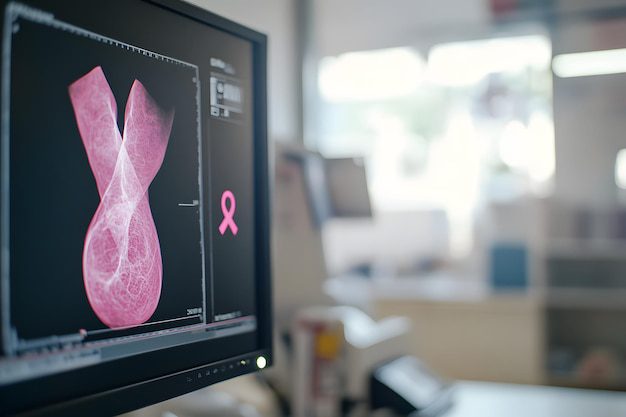
MIT’s Jameel Clinic, in collaboration with Japan’s National Cancer Centre (NCC) Hospital, has introduced Mirai, a cutting-edge deep learning AI tool designed to predict an individual’s risk of developing breast cancer up to five years before onset by analyzing mammogram images. This collaboration aims to evaluate and adapt Mirai’s predictive capabilities specifically for Japanese women, addressing a critical healthcare need as nearly 16,000 women in Japan succumb to breast cancer annually.
Mirai generates a personalized risk score from mammograms, enabling earlier and more targeted interventions that could significantly enhance patient outcomes. Professor Regina Barzilay, lead AI faculty at the MIT Jameel Clinic, emphasized the potential for Mirai’s use in Japan to revolutionize breast cancer screening and treatment protocols by introducing a proactive, risk-based approach rather than traditional methods that often focus on detection only after cancer develops.
The significance of this partnership lies in its promise to tailor AI-driven healthcare solutions to local populations, recognizing demographic and genetic variations that influence cancer risk. By bringing advanced AI into Japan’s clinical oncology landscape, this initiative marks a step forward in integrating AI tools into preventive medicine, potentially reducing mortality rates through better early risk identification and subsequent care optimization.
Mirai reflects ongoing global trends where AI is increasingly leveraged to transform cancer diagnosis and prevention, aligning with broader efforts to improve health outcomes through technology-driven innovation.
Frequently asked questions
What is the purpose of the Mirai AI tool?
The Mirai AI tool is designed to predict an individual’s risk of developing breast cancer up to five years before onset by analyzing mammogram images.
How does Mirai enhance breast cancer screening?
Mirai generates a personalized risk score from mammograms, enabling earlier and more targeted interventions that could significantly enhance patient outcomes.
Why is the collaboration with Japan's NCC Hospital significant?
The collaboration aims to evaluate and adapt Mirai’s predictive capabilities specifically for Japanese women, addressing a critical healthcare need.