
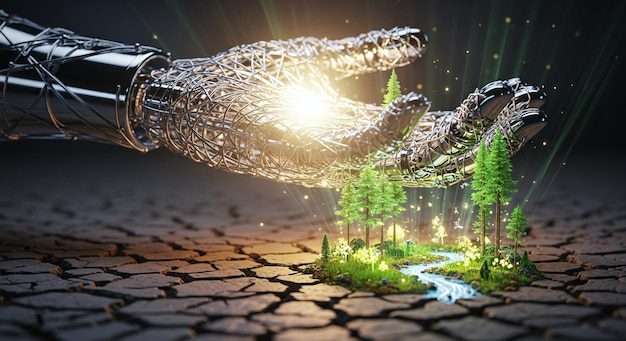
Artificial intelligence (AI) presents significant potential to aid in combating climate change by enhancing prediction, mitigation, and sustainability strategies. Advanced AI technologies are being leveraged to better forecast extreme weather events, which are becoming more frequent and severe due to global warming. These predictions enable communities and governments to prepare more effectively for climate disasters, potentially saving lives and reducing economic damage. Meanwhile, AI-driven initiatives are also transforming sectors like agriculture by fostering climate-resilient and sustainable food systems that adapt to evolving environmental challenges.
AI is also pivotal in designing energy-efficient infrastructure, optimizing low-emission transportation routes, and improving carbon capture technologies. These applications directly contribute to reducing greenhouse gas emissions, a key driver of climate change. While AI itself accounts for a measurable portion of global emissions due to the energy demands of its computational processes, its use in creating more environmentally friendly solutions shows promise in offsetting those impacts. This cycle of innovation positions AI as a critical tool in the global effort to meet climate goals.
Organizations and initiatives, such as the non-profit Climate Change AI, are dedicated to harnessing machine learning to address environmental challenges through impactful projects and collaborations. As global leaders convene at climate conferences like COP28, the integration of AI into climate strategies underscores a crucial innovation frontier, balancing the challenges of advanced technologies with the urgent need for environmental stewardship.
Frequently asked questions
How does AI help in combating climate change?
AI aids in combating climate change by enhancing prediction, mitigation, and sustainability strategies.
What role does AI play in agriculture?
AI-driven initiatives are transforming agriculture by fostering climate-resilient and sustainable food systems.