
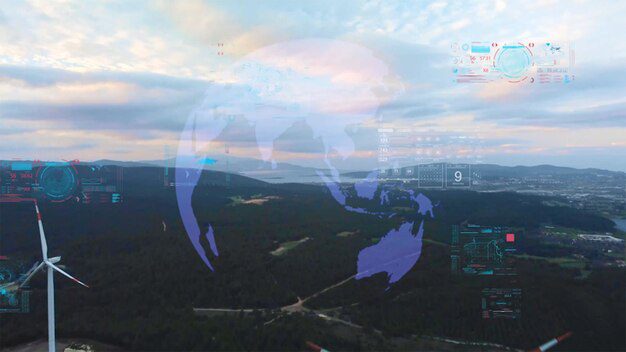
In his commentary, Alex Friedman argues that relying on AI superintelligence as a solution to climate change is misguided. He emphasizes the critical importance of prioritizing immediate and tangible climate actions over speculative future technologies. Friedman warns that by the time advanced AI capable of solving complex global problems emerges—potentially around 2035—the effects of climate change may have already crossed irreversible tipping points, rendering technological fixes insufficient. He highlights that climate change is less an information problem and more a problem of political will and concrete investments, such as modernizing energy infrastructure and implementing policies like carbon taxes.
Friedman underscores the massive scale of investment required to stabilize the planet, noting that more than $6 trillion annually in global climate action is necessary to prevent catastrophic damage. He points out that without swift action, by mid-century the global financial system could suffer from trillions in losses due to uncontrollable climate-related impacts like uninsurable property damage. This scenario illustrates how waiting for a hypothetical AI superintelligence to arrive misses the urgent need for practical measures today.
The article serves as a caution against overreliance on future AI breakthroughs, advocating instead for a proactive approach focused on energy modernization, regulatory reforms, and sustainable policies. Friedman’s perspective aligns with broader climate discourse emphasizing that climate stability depends on immediate collective action rather than hopeful technological miracles in the distant future.
Frequently asked questions
What does Alex Friedman argue about AI superintelligence?
Friedman argues that relying on AI superintelligence as a solution to climate change is misguided and emphasizes the need for immediate actions.
How much investment is needed for global climate action?
Friedman notes that more than $6 trillion annually is necessary to prevent catastrophic damage from climate change.
What are the risks of waiting for AI to solve climate change?
Waiting for advanced AI could result in crossing irreversible tipping points of climate change, making technological fixes insufficient.