

At 9:12 a.m., you inherit a checkout bug spread across 27 files. The tests fail, the customer-support queue grows, and the engineer who designed the service is offline.
A coding assistant suggests three lines. Helpful, but you still must find the right files, understand the design, make the change, run checks and inspect the damage.
Then the assistant starts doing those steps itself. That sounds like saved time. It can also mean a larger bill, broader permissions and mistakes made at machine speed.
The question is simple: when does that extra autonomy genuinely make a developer more efficient?
The Real-World Problem
The checkout error mentions one function, but that function calls another service, which reads a shared configuration file and writes to a database. Fixing the visible line could break refunds. You need a map before touching anything.
A basic coding assistant waits for you to open each file and request suggestions. That leaves the slowest work untouched: searching, tracing relationships, running tests and returning to the code after failures.
You could hand the whole job to Claude Code. Yet that creates a different problem. It might reread large files, spend heavily, change more code than necessary or run a command you did not intend.
Parallel sessions can also duplicate work or create merge conflicts.
Efficiency therefore cannot mean producing code quickly. It must include the time spent explaining the task, supervising actions, reviewing changes, fixing errors and paying for model use.
The real problem is choosing how much work to delegate—and how much control to keep.
What’s Actually Going On
Claude Code is an agentic coding tool. An agent is a program that can choose its next step instead of merely answering once. Give it a goal, and it can inspect a repository, edit files, execute shell commands, run tests and revise its work after seeing the results.
Think of a repair technician. A simple assistant hands you the suggested wrench. Claude Code can examine the machine, select tools, replace a part, switch the power on and check whether the warning light returns.
You still decide which rooms and controls it may enter.
The loop is the important part: inspect, act, observe, correct. Tests give the agent feedback, although passing tests cannot catch behavior those tests never examine.
Behind that loop sits a harness, the software layer that manages instructions, tools and execution. Choosing Claude Code therefore means choosing both a Claude model and Anthropic’s method for organizing the work.
The harness also manages context—the files, instructions, logs and earlier messages available to the model. This information is counted in tokens, small chunks of text used for billing. More context may help, but repeatedly loading a repository can waste tokens and bury an important detail.
Current features include planning before editing, checkpoints for rolling back, dedicated review sessions and adjustable effort. Dynamic workflows can divide a large task among hundreds of parallel subagents, meaning smaller agents working on separate pieces.
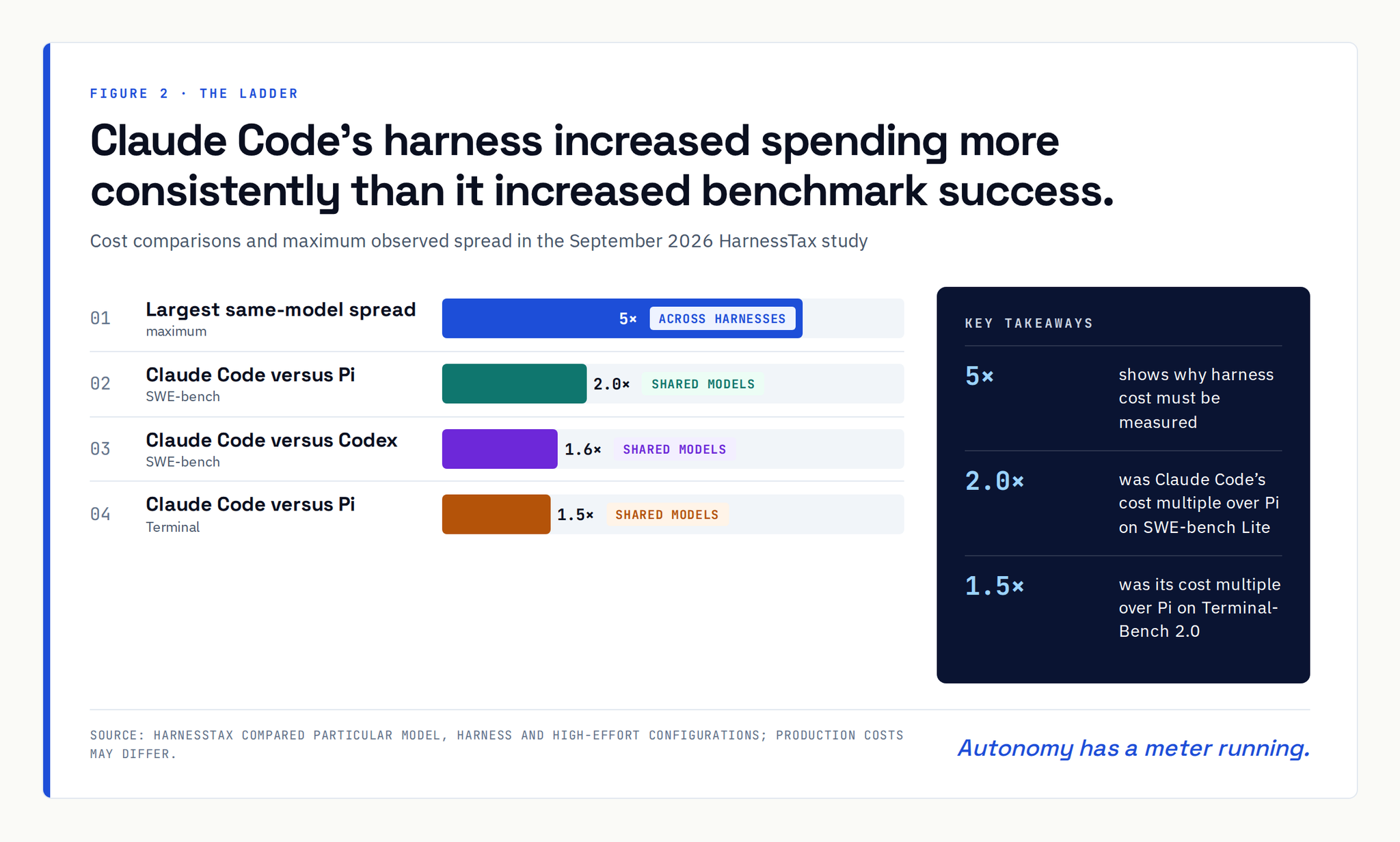
Powerful. Not automatic. Every extra agent, review pass and high-effort step can add cost, latency and human review.

Unlike a one-shot assistant, an agent can inspect its work, test the result and revise its next move.
Why It Matters
Used selectively, Claude Code removes expensive pauses. It can trace an unfamiliar repository, make coordinated edits, run checks and investigate failures while you focus on requirements and judgment. That is valuable for multi-file bugs, migrations and repetitive test work.
It is excessive for renaming one variable.
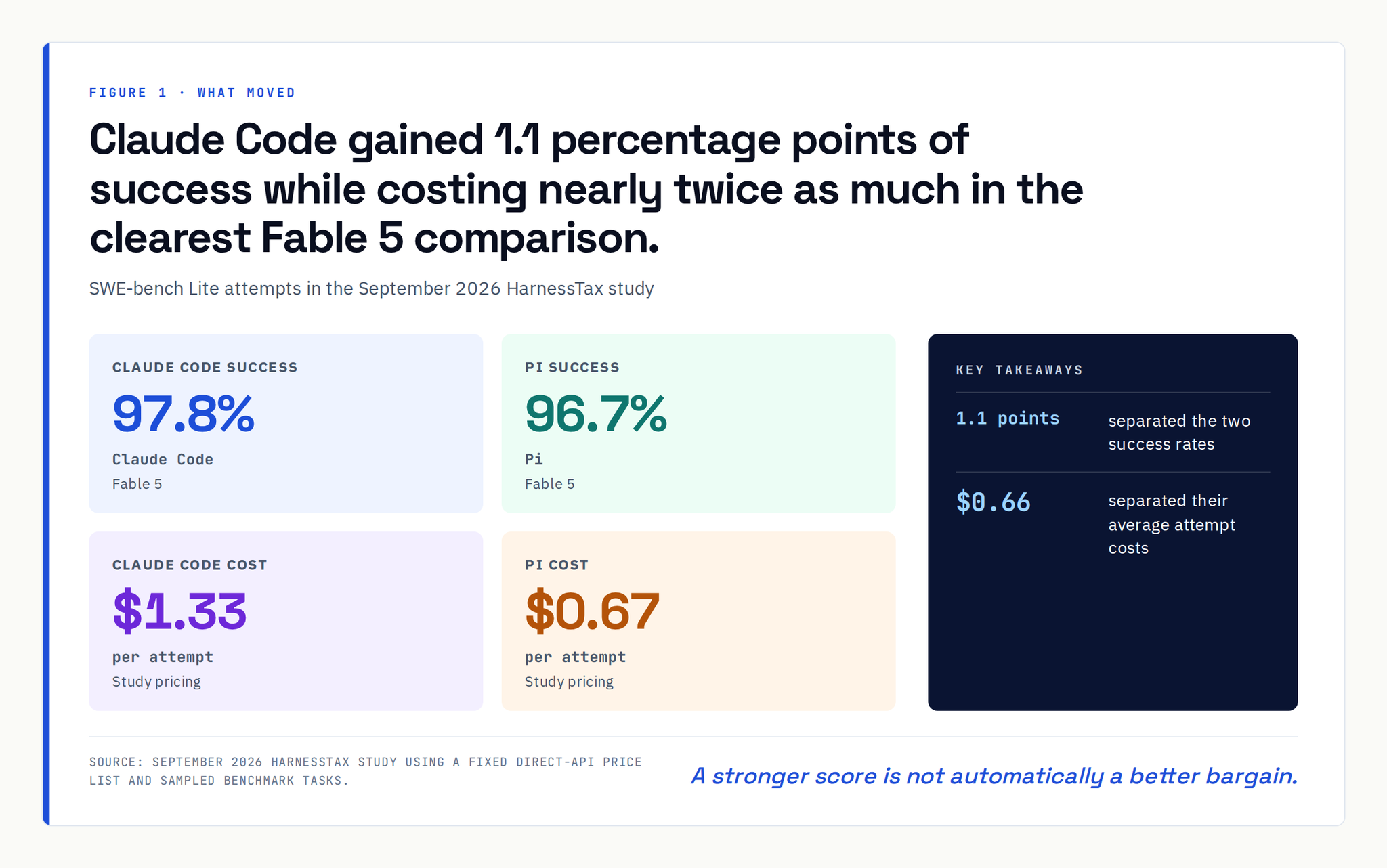
The strongest independent warning comes from the September 2026 HarnessTax study. With the Claude Fable 5 model, Claude Code completed 97.8% of attempts, while Pi completed 96.7%. That 1.1-percentage-point difference came with average costs of $1.33 and $0.67 per attempt, respectively, under the study’s fixed assumptions.
The benchmark does not reproduce a private production system, subscription pricing or human review. Still, it exposes the right habit: measure completed work, not generated code.
Permissions matter just as much. Repository access, shell commands and network tools can save clicks, but a mistaken action can touch secrets, dependencies or production settings.
Claude Code earns its place when the whole loop becomes cheaper or safer—not merely busier.
See It In Action
Bad prompt: “Fix the checkout bug and clean up anything else you notice. Run whatever commands are needed.”
What you get: The agent edits checkout, shared configuration and logging files, adds a dependency, then reports passing tests without explaining the wider changes.
Better prompt: “Investigate the checkout timeout. Plan first. Change only checkout-related files, run existing tests, do not access the network, and show the diff for approval.”
What you get instead: The agent maps the request path, identifies the timeout handler, lists two affected files and proposes a limited patch. It runs the existing checkout tests, reports one failure, revises the patch and presents the final diff without committing. The second prompt defines the goal, boundaries, checks and stopping point. That turns autonomy into supervised work rather than an open-ended cleanup.
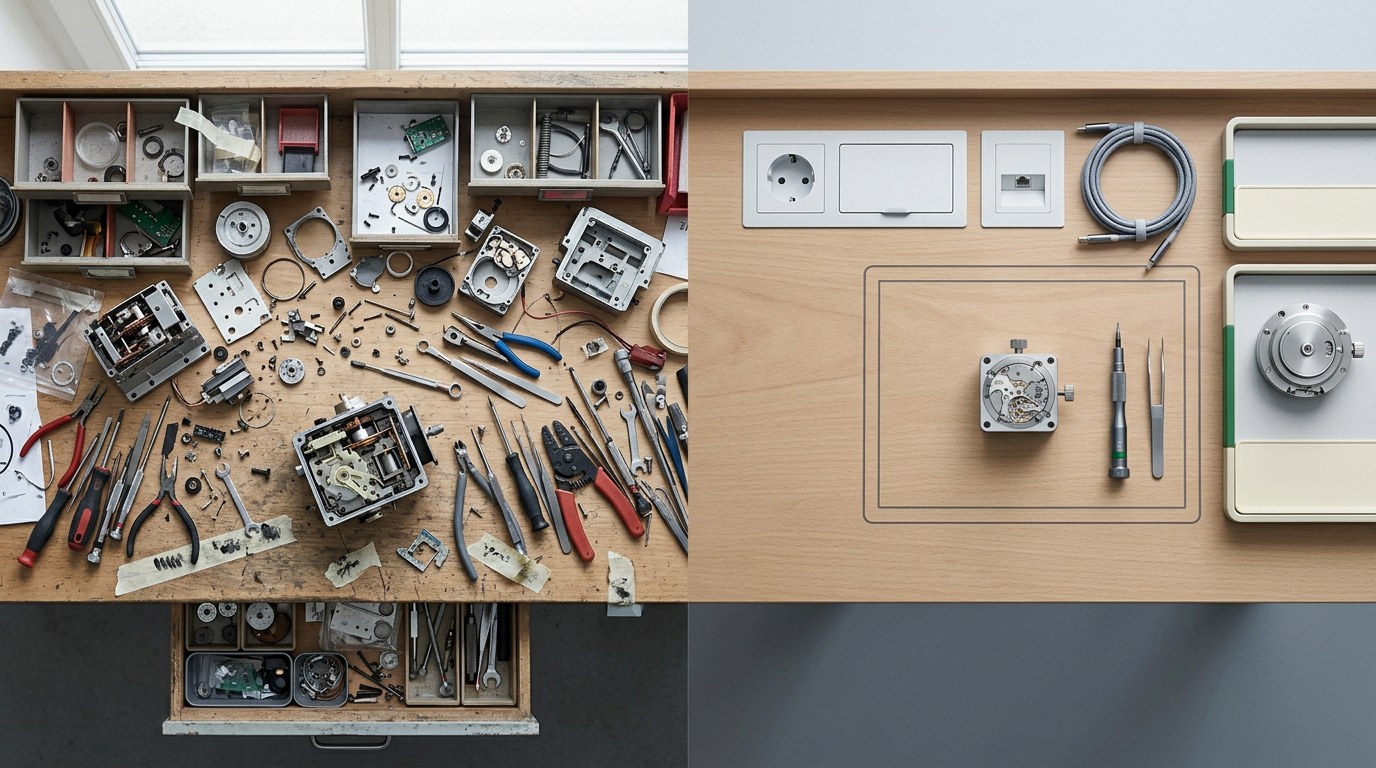
Clear boundaries turn an open-ended instruction into a task that can be checked before it spreads.
How To Use This Knowledge
- Start with a plan for any change that crosses files. Ask Claude Code to identify affected components, risks and tests before editing.
- Limit permissions to what the task needs. Block network access, production credentials and automatic pushes unless there is a specific reason to allow them.
- Define success with commands the agent can run, such as existing tests or static checks, then inspect whether those checks cover the changed behavior.
- Measure cost per accepted change, including tokens, supervision and rework. Use lower effort or a simpler tool when a task is routine.
Common Mistakes
- Assume more context is always better. Repeated repository scans can increase cost and make earlier decisions harder for the model to notice.
- Grant broad permissions to avoid interruptions. Convenience is not worth exposing secrets, accepting unsafe dependencies or allowing destructive commands without review.
- Treat passing tests as proof. Tests can be incomplete, flaky or blind to behavior outside the cases their authors anticipated.
- Launch parallel agents on tightly connected work. They can make conflicting edits, repeat research and leave you with a larger merge and review job.
In The Wild
In results published by Anthropic in April 2026, Opus 4.7 resolved 3× as many production tasks as Opus 4.6 on Rakuten-SWE-Bench. That suggests long-running work can benefit when the model explores, edits and verifies rather than stopping after one suggestion.
It does not establish a universal 3× productivity gain. Anthropic published the result, the benchmark belonged to the partner, and the announcement did not independently verify developer time, review effort or deployed defect rates. Other partner evaluations used different tasks and definitions, so their percentages cannot be combined into one score.
The practical lesson is narrower. Test Claude Code on a repeated task from your own repository, preserve human review and compare accepted outcomes with the previous workflow.
Back at 9:12 a.m., the checkout bug no longer begins with a command to fix everything. It begins with three controls: plan first, restrict access and prove the change with relevant tests. The agent moves faster because its lane is clear.
So does the developer.
Frequently asked questions
What is Claude Code?
Claude Code is an agentic coding tool that can inspect a repository, edit files, execute commands, and run tests.
How does Claude Code improve developer efficiency?
Claude Code removes expensive pauses and allows developers to focus on requirements while it handles coordinated edits and checks.
What are common mistakes when using Claude Code?
Common mistakes include assuming more context is always better and granting broad permissions that can expose secrets or allow unsafe commands.