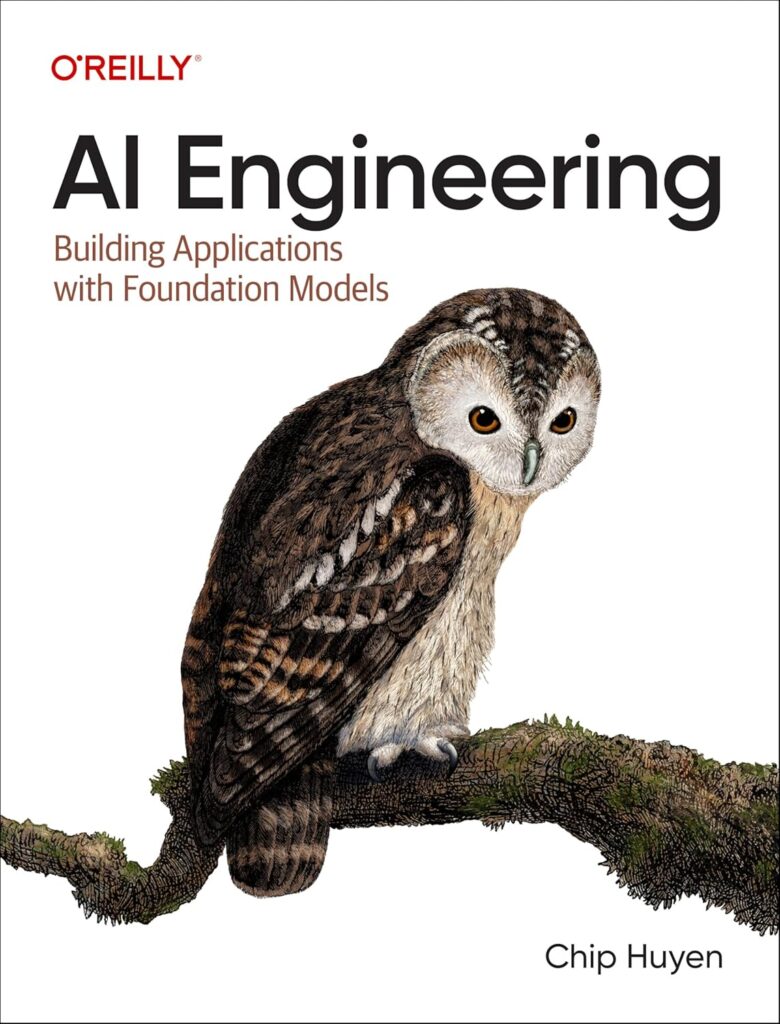
AI Engineering: Building Applications with Foundation Models
By Chip Huyen
Chip Huyen teaches at Stanford. She worked at Netflix and NVIDIA. She knows research and she knows production. This shows in her writing. The book has 350 pages. It focuses on one goal: moving AI from experiments to systems that work. Huyen published it in 2025. It tackles problems engineers face today.
Huyen calls AI engineering a new field. It’s not machine learning. It’s not software engineering. It combines both but creates something different. A practical approach that embraces mind blowing things AI can do, yet keeps systems reliable and maintainable.
How AI Engineering Differs
Regular software takes input A and gives output B. Every time. AI systems don’t work this way. They give different outputs for the same input. A system that works 99% of the time still fails once per hundred tries. Huyen shows how to think about systems that aren’t predictable. She covers failure modes that don’t exist in regular software. She teaches design patterns for handling uncertainty.
The book gives real examples. Prompt versioning systems. Model drift detection. A/B testing for AI features. You can use these patterns in your next project.
Production Deployment
Research code runs in notebooks. Production code handles millions of users. These are different problems. Huyen spent years moving models from labs to production services. She covers the hard parts. How to containerize models. How to handle API rate limits. How to build systems that work when third-party APIs fail. When OpenAI goes down, your users still need working software.
Her code examples handle real problems. Bad input data. Network timeouts. Memory limits. She shows what happens when things break, not just when they work.
Tool Selection and Infrastructure
AI tools change every month. New vector databases launch. Old platforms shut down. Huyen doesn’t predict which tools will win. She gives you frameworks for picking tools. She explains build vs buy decisions. Should you use managed services? Should you build your own infrastructure? Her decision trees come from actual experience.
The book covers cost control. Large models cost money to run. Huyen shows techniques that cut inference costs without hurting quality. These can save thousands per month. She discusses caching strategies. Batch processing optimization. Resource allocation. These topics sound boring but they determine if your AI project succeeds or burns through budget.
Technical Architecture Patterns
Huyen presents patterns for common AI engineering problems. How to version prompts. How to handle model updates. How to monitor AI system behavior. How to implement gradual rollouts. She covers data pipeline design for AI systems. Traditional ETL doesn’t work for AI. You need different patterns for handling training data, inference data, and feedback loops.
The monitoring section deserves attention. AI systems fail in subtle ways. Traditional application monitoring misses these failures. Huyen shows monitoring strategies that catch AI-specific problems.
Why This Book Matters
Most AI books target researchers or business leaders. This one targets engineers who build systems. It assumes you know how to code. It assumes you care about uptime and user experience. Huyen doesn’t oversell AI capabilities. She shows limitations alongside benefits. She explains when AI solves problems and when simpler solutions work better.
Senior engineers will recognize patterns they developed through trial and error. Junior engineers get a roadmap for building AI systems that don’t break in production. For those interested in AI trends in education and real-world applications, this book offers practical insights that go beyond theory. Readers of Tech AI Magazine will appreciate how Huyen bridges the gap between cutting-edge research and production-ready systems, showcasing how mind blowing things AI can do are made reliable and scalable.
Resources on AI learning for developers