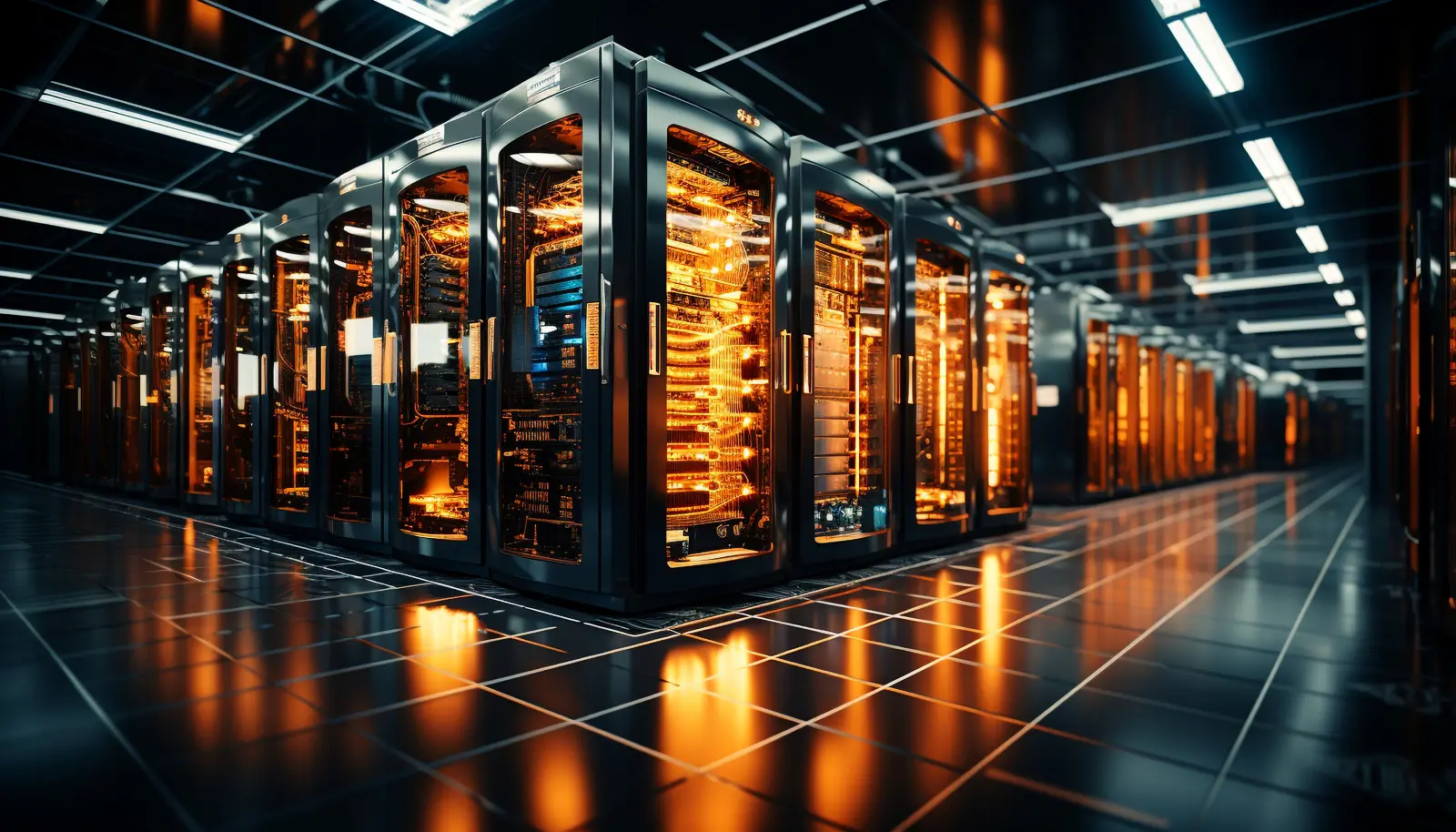
AMD’s AI-Powered Future: What to Watch in Q3 Earnings
As Advanced Micro Devices (AMD) prepares to announce its Q3 earnings, the spotlight is intensely focused on how the company is capitalizing on the booming AI datacenter market. AMD’s expanding partnerships, notably with AI innovators such as OpenAI, suggest that its chip technology is becoming foundational to next-generation artificial intelligence systems. Analysts are eager to decipher revenue growth segments, especially in AI hardware, which could signal AMD’s position in powering critical AI infrastructure across industries. Beyond just numbers, AMD’s outlook will provide a glimpse into how semiconductor firms are adapting to the accelerating demands of machine learning workloads, cloud computing, and enterprise AI solutions. For tech enthusiasts and investors alike, this earnings call could reveal shifts in competitive dynamics with rivals and highlight the strategic importance of AI chips beyond traditional gaming and consumer markets. AMD’s forward-looking statements will also shed light on supply chain resilience amid global challenges and innovation roadmaps featuring new AI-optimized processors. Ultimately, this earnings event represents more than financial results — it’s a barometer of AI’s influence on the semiconductor industry’s future trajectory and the underpinning technologies powering the AI revolution.
Bridgewater Sounds Alarm on Hidden AI Market Risks
Bridgewater Associates, one of the world’s largest hedge funds, is cautioning investors that the excitement around artificial intelligence may be overshadowing significant risks to financial market stability. While AI’s rapid advancements promise transformative economic benefits, Bridgewater warns the current hype fails to fully account for the potential downsides — especially in the US markets where AI adoption is accelerating at an unprecedented pace.
This warning is crucial as markets may be underpricing vulnerabilities emerging from AI-driven shifts: automation disrupting jobs, bubbles in AI-related stocks, rapid changes in investment strategies powered by AI, and potentially unforeseen systemic shocks triggered by the technology. Bridgewater stresses that these risks could lead to severe market volatility or instability if not carefully monitored and managed by investors and policymakers alike.
For the AI future, the takeaway is clear: enthusiasm must be balanced with caution. Investors and institutions need a nuanced understanding of AI’s economic impact—not just its benefits but also its disruptive potential to the financial ecosystem. This perspective encourages a broader conversation on how to harness AI responsibly while safeguarding the financial system’s resilience as this powerful technology reshapes industries and societies alike.
AI Sparks Stock Surge: How Mega Deals and Market Moves Shape Tech’s Future
Artificial Intelligence is no longer just a buzzword; it’s a powerhouse propelling massive market shifts. Recently, AI advancements helped fuel gains in major stock indices like the S&P 500 and Nasdaq, with megacap companies leading the charge. Notably, investor confidence surged around tech giants Amazon and Nvidia, reflecting their critical roles in AI infrastructure and innovation. This momentum was further amplified by Kimberly-Clark’s staggering $48.7 billion acquisition of Kenvue, underscoring how AI excitement is influencing even traditional sectors and mergers. The intersection of AI with big finance illustrates a broader trend: AI isn’t just transforming technology but is increasingly shaping economic strategies, driving capital flows, and altering corporate landscapes. For investors and consumers alike, this signals that AI-powered companies are positioned to define market leadership in the coming decade. Beyond dollars and indexes, these developments hint at AI’s growing societal impact—from automation and cloud computing to smarter consumer products. As AI continues fueling both business innovation and financial ecosystems, understanding these megatrends is crucial. The current market surge is a vivid indicator that AI’s influence extends well beyond labs and code—it’s actively rewriting the rules of commerce, investment, and everyday life.
AI Financing Fears Stir Cautious Calm in Markets Amid U.S. Shutdown
As the U.S. faces the threat of a government shutdown, global markets have surprisingly held steady, buoyed by strong corporate earnings and ongoing U.S.-China trade negotiations. However, behind this façade of calm, investors are growing increasingly cautious about emerging risks tied to AI financing. With artificial intelligence technologies evolving rapidly, venture capital and corporate funding are accelerating but also raising concerns about overheating and potential misallocation of capital. This delicate balance reflects broader uncertainty about AI’s economic impact: while promising transformative growth, AI investments carry financial risks that could ripple through markets if not managed prudently. The situation highlights a critical intersection of technology, economics, and geopolitics where government stability and international cooperation remain crucial. For the AI industry, this moment underscores the need for sustainable investment strategies and regulatory clarity to harness innovation without fueling speculative bubbles. The market’s current steadiness belies underlying fragilities as both policy disruptions and AI financing questions loom. This evolving narrative signals that AI’s future is not only a matter of technology but also of economic stewardship and political stability, with significant implications for investors, businesses, and society at large.
AI’s Quiet Powerhouse: How ON Semiconductor Thrives in a Stable Chip Market
ON Semiconductor’s recent Q3 performance shines a spotlight on a critical, yet often overlooked, player in the AI hardware ecosystem. Reporting $1.55 billion in revenue and earnings per share of 63 cents—both surpassing market expectations—the company’s success underscores the expanding reach of AI beyond flashy end-user products. Their growth is fueled by AI-driven demand that stabilizes the broader semiconductor chip market, a sector known for volatility. This financial resilience highlights how foundational chip manufacturers contribute to the robust infrastructure behind the AI revolution. In an industry where cutting-edge processors grab headlines, ON Semiconductor’s steady rise reveals the dual narrative of innovation and stability. For AI’s future, it signals that sustainable growth depends not just on breakthrough algorithms, but also on reliable supply chains and mature chip production. Investors and technologists alike are reminded that powering AI’s intelligence requires a solid hardware backbone—a market calmly expanding beneath the surface. This story offers a fresh lens on how AI’s growth permeates the tech economy, promising long-term opportunities that blend innovation with business pragmatism.
Bitcoin Miner IREN’s $9.7B Bet: From Crypto to AI Cloud Powerhouse
In a striking pivot with vast implications, Bitcoin mining giant IREN has secured a $9.7 billion multi-year GPU cloud deal with Microsoft. This massive contract marks IREN’s strategic departure from crypto mining toward harnessing AI computing capabilities, leveraging Microsoft’s cutting-edge cloud infrastructure. The partnership reflects a broader trend where companies with high-performance computing expertise are repositioning themselves to meet the exponentially growing demands of artificial intelligence workloads. For IREN, this deal not only promises a financial windfall but also places the company at the forefront of the AI hardware supply chain, powering models that require intense GPU resources. On a macro level, this move underscores how AI is redefining the value and deployment of specialized computing assets originally built for crypto mining. Microsoft benefits by securing a powerful, dedicated GPU cloud cluster to bolster its AI services and offerings to enterprise customers. Meanwhile, AI developers stand to gain access to unparalleled compute scalability, potentially accelerating innovations from natural language models to computer vision. IREN’s successful transformation highlights the evolving era of AI infrastructure, where organizations must adapt hardware and partnerships to thrive. This story offers a crucial lens into AI’s expanding footprint and the industrial-scale resources required to fuel its next breakthroughs.
Why a $9.7 Billion AI GPU Cloud Deal Is a Game-Changer for AI Infrastructure
The recent $9.7 billion GPU cloud contract between IREN and Microsoft is not just a financial headline—it signals a fundamental shift in AI infrastructure strategy. GPUs, originally pivotal to gaming and crypto mining, have become the engine behind all forms of AI training and inference. IREN’s pivot away from Bitcoin mining towards AI computing through this immense partnership exemplifies how infrastructure providers must evolve in response to AI’s explosive growth. This deal provides Microsoft with expansive, state-of-the-art GPU resources, enabling it to support ever-larger AI models and enterprise cloud AI services. The infusion of such capital and compute power also illustrates the massive scale AI demands, highlighting a technology arms race in cloud computing. For AI developers and users, this means improved access to scalable cloud AI resources capable of accelerating model training times and lowering barriers to innovation. This landmark agreement further crystallizes how the AI era is restructuring business models, repurposing legacy GPU farms, and defining new industry leaders. It’s a snapshot of AI’s swiftly changing investment and infrastructure landscape with global ripple effects for digital transformation and the future of computing.
From Crypto to AI: The Untold Story of IREN’s Strategic Transformation
Once solely a Bitcoin mining powerhouse, IREN is undertaking a bold transformation from crypto to AI cloud computing through a monumental $9.7 billion GPU deal with Microsoft. This partnership exemplifies an emerging strategic playbook: companies who built massive crypto GPU farms are now recalibrating to exploit the surging demand for artificial intelligence compute power. IREN’s move leverages its massive installed GPU base and operational expertise to tap into AI’s multi-billion dollar infrastructure market. The $9.7B multi-year contract with Microsoft, a global cloud and AI leader, underscores the value of repurposing existing high-performance hardware for AI workloads—ranging from training massive neural networks to real-time AI inference. This evolution mirrors broader sectoral shifts as AI reshapes computing needs, driving GPU demand beyond gaming and crypto to AI research and enterprise adoption. The deal also raises interesting questions about resource optimization, sustainability, and the future of crypto mining infrastructures. IREN’s strategic pivot reflects AI’s rising dominance and reshapes the contours of how cloud providers and tech companies build powerful AI ecosystems for the next generation of applications.
Massive AI Deals Recast GPU Cloud Landscape: What IREN and Microsoft’s Pact Means
The $9.7 billion AI cloud GPU deal between IREN and Microsoft spotlights a fundamental realignment in cloud computing and AI hardware supply chains. As AI models grow larger and more complex, scalable GPU infrastructure has become the critical bottleneck. IREN’s agreement to deploy multi-year GPU resources within Microsoft’s cloud not only escalates Microsoft’s AI capabilities but also signals a new era where cryptocurrency mining infrastructure can be effectively repurposed for AI. This repurposing has far-reaching implications: it promises lower costs and more accessible AI compute while intensifying competition among cloud providers. For enterprises and AI developers, this means faster, cheaper access to advanced GPU clusters that power everything from natural language understanding to autonomous systems. From a technology policy perspective, this partnership illustrates how capital-intensive AI model training is influencing global investments and cloud computing monopolies, raising questions about supply chain security and AI democratization. IREN’s deal with Microsoft encapsulates how AI innovation is deeply intertwined with hardware availability and strategic cloud alliances, framing the future dynamics of AI competitiveness and accessibility.
How IREN’s Historic $9.7B AI GPU Cloud Deal With Microsoft Shapes Future Tech Ecosystems
With IREN’s $9.7 billion GPU cloud contract, the future of technology ecosystems is undergoing a rewrite powered by AI’s explosive growth. IREN’s shift from Bitcoin mining to AI infrastructure underlines a new paradigm—where high-performance hardware once fueling crypto now accelerates AI breakthroughs. The scale and scope of this Microsoft partnership highlight an unprecedented demand curve for GPU compute in AI model training and deployment. For the broader tech ecosystem, it signals intensified integration between hardware suppliers, cloud providers, and AI innovators. This alliance will likely influence how startups, enterprises, and scientific researchers access computational resources to experiment and scale AI applications. Additionally, it underscores how traditional industries must adapt to rapid AI-related shifts in technology hardware and cloud service partnerships to remain competitive. The deal also casts a spotlight on sustainability questions in managing vast GPU resources. IREN and Microsoft’s landmark agreement exemplifies the complex interplay shaping AI’s infrastructure backbone, setting a benchmark for future deals and ecosystem collaborations that will define the technology landscape in the coming decades.
OpenAI’s $38 Billion AWS Deal: Powering the Future of AI Beyond Microsoft
In a monumental stride for AI infrastructure, OpenAI has inked a $38 billion cloud contract with Amazon Web Services (AWS), marking a seismic shift in the AI industry’s backbone. Previously closely tied to Microsoft Azure, OpenAI’s new deal with AWS diversifies its cloud partnerships and signals the soaring infrastructure demands required to power next-generation AI models. This colossal investment underscores how computing power is becoming the new currency in AI innovation, with cloud providers battling to become the central nervous system of cutting-edge AI development.
The partnership promises to accelerate OpenAI’s advancements by leveraging AWS’s vast, scalable computing resources, vital for training and deploying gargantuan AI architectures. For the broader tech landscape, it sets a precedent: AI giants need multiple, robust infrastructure alliances to maintain agility, reliability, and performance. AWS’s move also demonstrates ambition to rival Microsoft’s dominance in AI cloud services, intensifying competition that could lead to more innovation and better options for developers.
This strategic alliance highlights how AI’s growing computational appetite drives massive cloud infrastructure investments, reshaping cloud computing markets and AI’s future trajectory. For everyone—from AI startups to global corporations—the deal signals an era where AI breakthroughs depend as much on code as on colossal, reliable cloud muscle.
Revolutionizing Creativity: AI-Generated Art Breaks New Ground
Artificial intelligence is pushing the boundaries of artistic creativity, transforming the way we conceive and produce art. Leveraging deep learning models trained on vast image datasets, AI systems can now generate original artworks, blending elements from different styles with uncanny finesse. These AI-generated pieces are not only captivating audiences but also sparking passionate debates about authorship, creativity, and the future of art.
Artists and technologists alike are exploring AI as a collaborative partner, enabling creators to experiment beyond their traditional capabilities. By automating routine artistic tasks and suggesting novel ideas, AI democratizes artistic expression and expands cultural horizons. Museums, galleries, and digital platforms are showcasing AI-created masterpieces, challenging preconceived notions of what art can be.
Yet the rise of AI art brings complex ethical questions: Can a machine possess creativity? Who owns the rights to AI-generated art? How will this impact human artists? As AI continues to evolve, this fusion of human intuition and machine intelligence may redefine art itself, fostering an unprecedented era of innovation and cultural dialogue.
AI Education Leap: Personalized Learning Tailored to Every Student
Education is undergoing a revolution as AI-powered personalized learning platforms customize curricula to individual student needs, styles, and paces. These intelligent systems analyze vast amounts of data—from test performance to engagement metrics—to dynamically adjust lessons, provide targeted feedback, and identify areas needing improvement. This approach not only boosts learning outcomes but also fosters motivation and confidence among students.
By breaking away from one-size-fits-all learning, AI enables educators to address diverse abilities and backgrounds in classrooms, promoting equity and inclusion. Schools worldwide are piloting adaptive learning tools that complement teacher expertise without replacing the human touch.
The promise of AI-enhanced education extends beyond K-12, with lifelong learning platforms supporting upskilling in rapidly evolving job markets. However, challenges remain: ensuring data privacy, avoiding biases in algorithms, and maintaining human oversight. As AI steps into the classroom, it holds the potential to transform education into an empowering, accessible experience tailored for every learner’s unique journey.
AI in Healthcare: Diagnosing Diseases with Unparalleled Precision
Artificial intelligence is revolutionizing healthcare by enabling faster, more accurate disease diagnosis, drastically improving patient outcomes. Cutting-edge AI models analyze medical images, genetic data, and patient records to detect conditions ranging from cancers to rare genetic disorders, often earlier than human clinicians could.
These systems serve as diagnostic assistants, augmenting doctors’ expertise with data-driven insights that reduce errors and personalize treatment plans. Hospitals adopting AI-powered diagnostic tools report shorter wait times and improved precision, potentially saving lives through timely interventions.
Beyond diagnosis, AI aids drug discovery, predicts disease outbreaks, and streamlines clinical workflows. However, integrating AI into healthcare brings challenges, including regulatory approval, ethical concerns about transparency, and ensuring equitable access.
The fusion of medical expertise with AI’s analytic power promises a new era in healthcare where technology empowers practitioners and benefits patients worldwide, making precision medicine a real and accessible standard of care.
AI Ethics Frontiers: Navigating Bias, Privacy, and Accountability
As AI systems increasingly influence critical aspects of society—justice, finance, healthcare—the imperative to address ethical challenges intensifies. AI ethics grapples with issues such as algorithmic bias that perpetuates inequalities, risks to personal privacy, and the accountability of automated decisions. Researchers, policymakers, and companies are mobilizing around frameworks to ensure AI aligns with human values and rights.
New methodologies aim to detect and mitigate bias by curating balanced training data and implementing fairness-aware algorithms. The growing demand for transparency drives development of explainable AI, helping users understand AI decision processes. Simultaneously, regulatory efforts worldwide seek to establish standards and oversight mechanisms, balancing innovation with protection.
Ethics in AI is not a static checklist but an ongoing dialogue involving technologists, ethicists, communities, and governments. How society navigates this complex terrain will shape public trust and the responsible adoption of AI systems. Addressing these challenges proactively is crucial to harness AI’s transformative power while safeguarding fairness, privacy, and dignity.
Unlocking Financial Empowerment: SalarySe’s $11.3M Bet on AI-Driven Wealth for India’s Workforce
SalarySe’s recent $11.3 million Series A funding round marks a pivotal moment in leveraging AI to empower India’s salaried class. This investment will fuel the startup’s mission to expand its financial services footprint, focusing heavily on AI-powered insights and wealth management tools designed specifically for salaried employees. As India’s workforce increasingly seeks personalized financial guidance, SalarySe’s AI-driven platform promises a tailored approach to credit access and wealth planning, utilizing seamless integrations like Credit on UPI to enhance liquidity and ease financial decision-making. The expansion of corporate partnerships will further embed these smart financial tools into employees’ daily lives, promoting financial wellness at scale. This move illustrates a broader trend where AI is democratizing finance by addressing under-served populations and automating personalized advisory services that were once exclusively human-driven. For millions of salaried Indians, this means better savings, smarter borrowing, and informed investment decisions — all vital for long-term financial security. Beyond just fintech, SalarySe’s innovative application of AI highlights how emerging markets are harnessing artificial intelligence to solve unique socio-economic challenges, paving the way for more inclusive and intelligent financial ecosystems worldwide.
“`html
Trump Tightens AI Chip Access to Maintain US Tech Dominance
In a bold move to secure America’s lead in the AI race, former President Donald Trump announced restrictions on sales of Nvidia’s most advanced AI chips, effectively barring China and other countries from accessing them. This policy aims to prevent potential adversaries from leveraging cutting-edge AI technology that could augment their military, economic, and scientific capabilities. Nvidia’s AI chips, known for their unparalleled processing power in deep learning and large-scale AI models, are foundational to innovations in areas ranging from autonomous vehicles to language models. By restricting these chips exclusively to US companies, the government is signaling the critical strategic value of AI hardware in global power dynamics. This decision impacts global AI development and investment, potentially fragmenting the tech supply chain and accelerating domestic capabilities. For AI researchers and companies worldwide, the move underscores how AI is no longer just a scientific endeavor but a critical national security asset. It also raises questions around fairness, innovation, and international cooperation in AI progress. Ultimately, this development spotlights the intersection of technology, geopolitics, and ethics, reshaping how nations approach the future of AI innovation.
AI Chips: The New Battleground for Global Power and Innovation
The recent announcement to restrict Nvidia’s top-tier AI chips from China and other countries highlights a growing reality: AI hardware is as strategically vital as software. Nvidia’s chips power the largest AI models, enabling breakthroughs in natural language understanding, computer vision, and robotics. Blocking access to competitors symbolizes more than just trade control—it’s a deliberate attempt to maintain a technological edge by controlling the essential “brain” of AI systems. This decision impacts a diverse array of sectors, from autonomous driving to cloud computing, where AI workloads demand extreme computational power. China’s ambitious AI initiatives now face a bottleneck, potentially slowing innovation or pushing it toward indigenous hardware development. For the global AI ecosystem, this raises practical concerns about fragmentation and the need for alternative supply chains. The move fascinates policymakers and technologists alike as it reveals how AI’s future is intertwined with economic, political, and security concerns. It also invites broader discussion on how to balance global collaboration with national interests in the rapidly evolving AI landscape.
AI Hardware as a National Security Weapon: Nvidia Chips in the Spotlight
With AI at the core of technological progress, Nvidia’s advanced AI chips have become coveted national assets. The recent proclamation that these chips will be restricted from export to countries like China signals a shift in how AI hardware is viewed—not merely as commercial products but as strategic weapons in global power contests. These chips accelerate AI computations essential for applications such as real-time language translation, medical diagnosis, and autonomous systems. The US government’s approach reflects a broader trend of treating AI technologies through a national security lens, emphasizing control over who can harness these transformative tools. This has implications for innovation ecosystems on a global scale, potentially slowing AI advancements in restricted regions or fostering parallel hardware development paths. Additionally, this policy change sparks debate around the ethics and practicality of limiting AI access in a world where AI models and data transcend borders. As AI chips dictate who leads the AI revolution, this development explores the zero-sum game of technological dominance and its ripple effects across industries and geopolitics.
Global AI Innovation Faces New Challenges as Chip Restrictions Tighten
The recent restrictions on Nvidia’s AI chip sales to China and selected countries mark a turning point with broad consequences for global AI innovation. These chips, fundamental to training complex AI models, are now a focal point of geopolitical tension, affecting researchers, startups, and tech giants alike. Countries cut off from these critical resources may accelerate their own chip development or seek alternative suppliers, reshaping the AI hardware market. This shifting landscape challenges collaboration and knowledge sharing that have historically driven AI progress. Furthermore, businesses worldwide must navigate supply chain uncertainties and recalibrate AI development strategies. While the policy aims to protect national interests, it ignites important conversations on how AI’s global nature clashes with territorial control. This evolution underscores the delicate balance between competition and cooperation in AI’s future, influencing not only technology but also international relations, economic policies, and ethical standards. For the broad tech audience, understanding this dynamic is key to appreciating AI’s role beyond algorithms—where silicon chips become chess pieces in a new era of innovation rivalry.
What Nvidia Chip Restrictions Mean for the AI Ecosystem and Future Innovation
Restricting Nvidia’s top AI chips to US entities is more than a policy decision; it’s a defining moment for AI’s trajectory. Nvidia’s technology underpins breakthroughs in language models, image generation, and robotics, making its limited availability a critical bottleneck for global AI progress. This move influences startups, research institutions, and governments outside the US by limiting access to the fastest hardware necessary for training and deploying advanced AI systems. Consequently, innovation could become more localized, with accelerated efforts to develop alternative AI chip designs and software optimizations tailored to less powerful hardware. At the same time, this raises concerns about increased technological divide and reduced global scientific cooperation. For AI enthusiasts, this highlights how AI’s future is not just about algorithms or data but also about who controls the machinery that makes computation possible. The restriction serves as a catalyst for the AI community to rethink supply chains, collaborative models, and ethical considerations surrounding equitable access to AI technology worldwide. This story encapsulates the intersection of cutting-edge innovation, global strategy, and the evolving landscape of AI development.
“`
Frequently asked questions
What is AMD's strategy regarding AI?
AMD is capitalizing on the booming AI datacenter market, focusing on partnerships and expanding its chip technology for next-generation AI systems.
What risks does Bridgewater Associates highlight about AI?
Bridgewater warns that the excitement around AI may overshadow significant risks, including job automation and potential market volatility.