
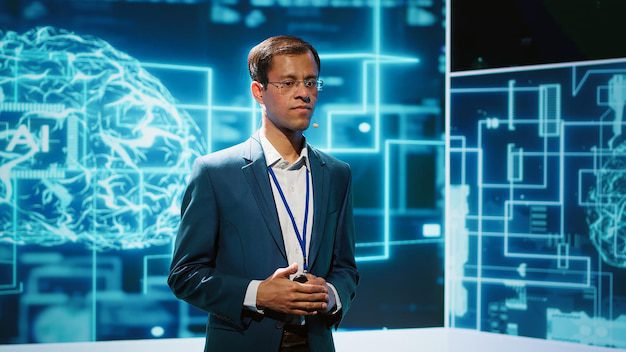
Tech leaders are increasingly warning that artificial intelligence is poised to automate the roles traditionally performed by chief executive officers. Advances in AI systems now enable sophisticated decision-making, strategic planning, data analysis, and management tasks that constitute a CEO’s core responsibilities. As AI tools become capable of processing vast amounts of data and anticipating market shifts, they can offer real-time insights and recommendations that could surpass human capabilities in certain domains.
This development matters because it challenges long-held assumptions about leadership and corporate governance. AI-driven CEO functions could redefine how companies operate by increasing efficiency, optimizing strategy, and potentially reducing the biases and inconsistencies inherent in human decision-making. However, the prospect also raises questions about accountability, ethics, and the nuanced human elements—such as vision, empathy, and stakeholder relationships—that leaders provide.
While AI replacing CEOs remains speculative, experiments where AI role-played CEO decisions in major companies highlight how AI might handle complex dilemmas differently, sometimes rejecting layoffs to maintain workforce loyalty or altering positions under stakeholder pressure. Industry opinions vary, with some experts predicting widespread job automation extending to top executive roles, while others emphasize AI as a tool that will augment rather than replace human leadership.
In sum, AI’s encroachment on CEO responsibilities signals a potential shift in corporate leadership models and decision-making paradigms, underscoring the need for businesses to reconsider their strategies in leveraging AI while addressing the attendant challenges of ethics and governance.
Frequently asked questions
What are the core responsibilities of a CEO that AI could automate?
AI systems can perform sophisticated decision-making, strategic planning, data analysis, and management tasks that constitute a CEO's core responsibilities.
What challenges does AI's encroachment on CEO roles present?
It raises questions about accountability, ethics, and the nuanced human elements such as vision, empathy, and stakeholder relationships that leaders provide.
How might AI handle complex dilemmas differently than human CEOs?
Experiments have shown AI sometimes rejects layoffs to maintain workforce loyalty or alters decisions under stakeholder pressure.