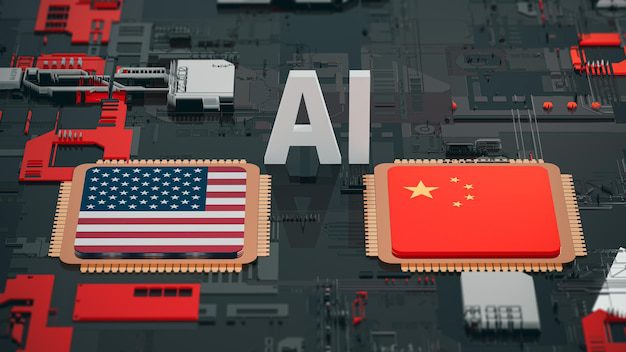
Chinese semiconductor company Moore Threads has introduced its new Huagang graphics architecture, marking an ambitious effort to compete with leading US chipmakers Nvidia and AMD. Central to this launch is the Huashan AI chip designed for AI training and inference tasks. According to Moore Threads’ founder and CEO James Zhang Jianzhong, a former Nvidia China general manager, the Huashan chip offers performance surpassing Nvidia’s previous-generation Hopper series and competes closely with Nvidia’s latest Blackwell lineup. Alongside Huashan, Moore Threads also unveiled the Lushan chip targeting high-performance graphics processing, which could appeal to China’s gaming market.
The Huagang architecture powers these new products and reportedly delivers about a 10% performance improvement over Moore Threads’ previous generation. It supports extensive computing precision levels from FP4 through FP64 and achieves a substantial increase in compute density — critical for AI workloads. This launch supports China’s strategic push to enhance semiconductor self-sufficiency amid ongoing geopolitical tensions and restrictions on chip imports from US companies.
Moore Threads’ emergence highlights growing domestic efforts to supply advanced AI and graphics processors compatible with cutting-edge AI frameworks. Its chips and software, including the revamped MUSA platform accommodating popular programming languages such as Triton, signal a notable step toward establishing China as a competitive player in the global AI chip arena. This development could influence markets as investors monitor shifts in the semiconductor ecosystem dominated by Nvidia and AMD.
Frequently asked questions
What is the Huashan AI chip designed for?
The Huashan AI chip is designed for AI training and inference tasks.
How does the Huashan chip compare to Nvidia's chips?
The Huashan chip offers performance surpassing Nvidia’s previous-generation Hopper series and competes closely with Nvidia’s latest Blackwell lineup.
What is the significance of Moore Threads' launch?
This launch supports China’s strategic push to enhance semiconductor self-sufficiency amid ongoing geopolitical tensions and restrictions on chip imports from US companies.