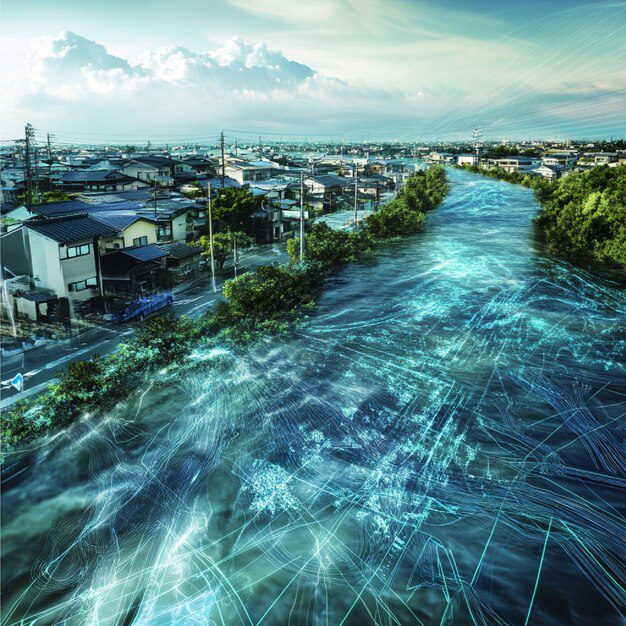
Northumberland County Council in the UK is pioneering the use of artificial intelligence to improve flood risk assessment and planning decisions. The council has launched a pilot project called “FloodAI,” focusing on integrating AI into local government workflows to enhance how flood and coastal resilience is managed. By leveraging AI, authorities aim to accelerate the evaluation of flood risks and enable faster, more accurate planning decisions related to flood defense and disaster preparedness.
This initiative is part of a broader effort to modernize public sector responses to increasingly severe weather events, driven by climate change. The AI system helps analyze data more rapidly than traditional methods, potentially identifying risks such as flash floods earlier and with greater precision. The council hopes this will translate into better protection for communities and infrastructure vulnerable to flooding.
If successful, the FloodAI project could serve as a model for other local governments facing similar challenges in flood management. This trial reflects a growing trend of adopting AI-driven tools in the public sector to support decision-making, improve safety, and enhance resilience against natural disasters. Northumberland’s approach underscores the practical benefits of AI in government planning, demonstrating how technology can contribute to more proactive and effective responses to climate risks.
Frequently asked questions
What is the FloodAI project?
The FloodAI project is a pilot initiative by Northumberland County Council that focuses on integrating artificial intelligence into flood risk assessment and planning decisions.
How does AI improve flood risk assessment?
AI enhances flood risk assessment by analyzing data more rapidly than traditional methods, allowing for earlier and more precise identification of risks such as flash floods.
What are the goals of the FloodAI project?
The goals of the FloodAI project include accelerating the evaluation of flood risks and enabling faster, more accurate planning decisions related to flood defense and disaster preparedness.