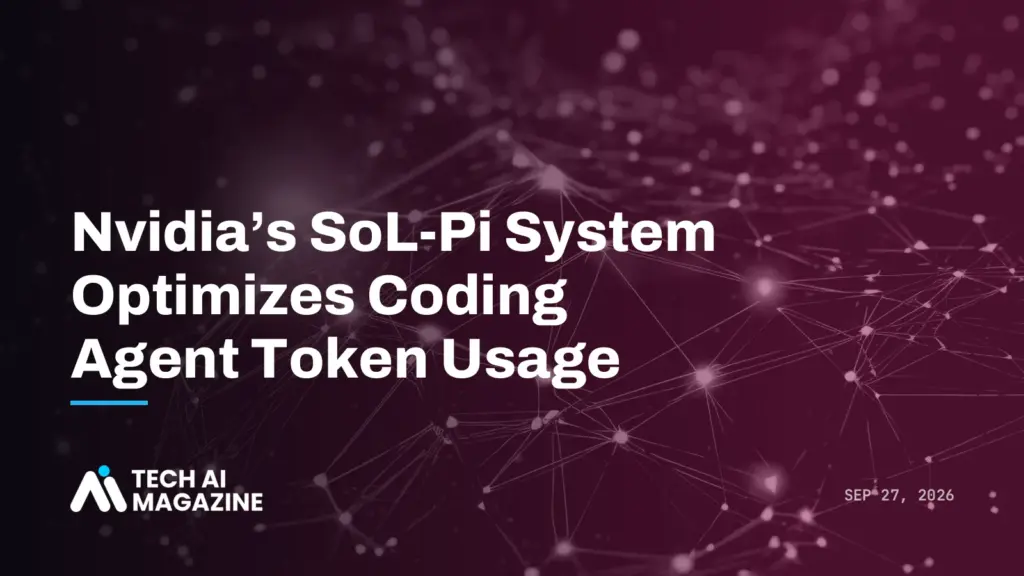
Nvidia has introduced the SoL-Pi system, a significant advancement in optimizing token usage for coding agents. This new system can reduce token consumption by up to 49 percent while maintaining performance levels, achieved through enhancements to the control layer that connects the model with its environment.
The development process involved testing 152 different approaches across more than 3,000 runs, showcasing Nvidia’s commitment to refining AI efficiency. Although the improvements were less pronounced in other benchmarks, the primary focus on token optimization represents a meaningful step forward in AI-driven coding technologies.
This innovation not only promises to streamline the coding process but also highlights the ongoing efforts within the tech industry to maximize the effectiveness of AI models. As coding agents become increasingly integrated into software development workflows, such optimizations are likely to play a crucial role in the future of programming.
Compiled automatically by the Tech AI Newsdesk from public AI-news sources and summarised in our own words.
Frequently asked questions
What is the SoL-Pi system?
The SoL-Pi system is a new development by Nvidia that optimizes token usage for coding agents.
How much can the SoL-Pi system reduce token consumption?
The system can reduce token consumption by up to 49 percent while maintaining performance levels.
What was involved in the development process of the SoL-Pi system?
The development process involved testing 152 different approaches across more than 3,000 runs.