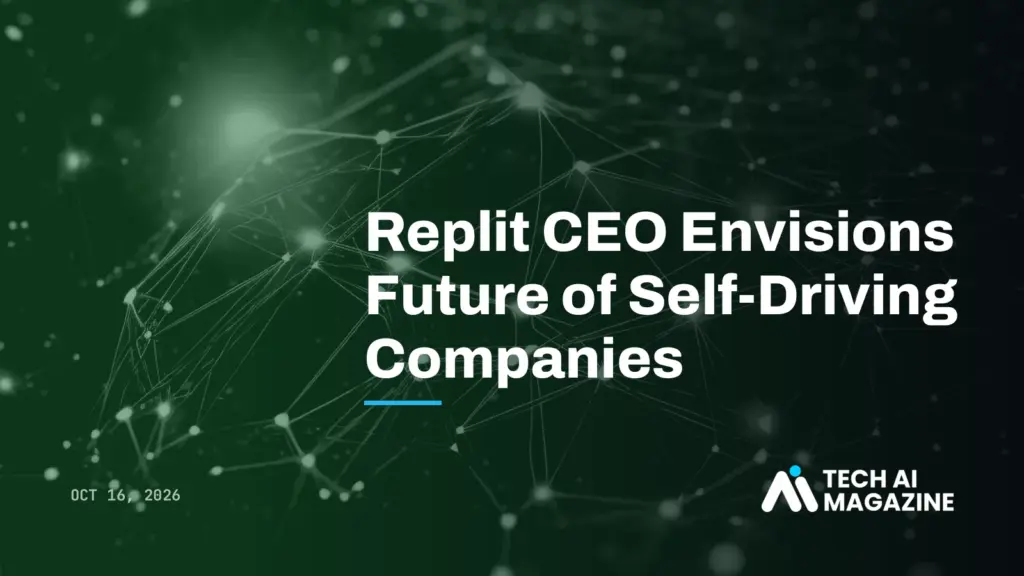
Amjad Masad, the CEO of Replit, has shared his vision for the future of work, proposing the idea of ‘self-driving companies.’ In this model, artificial intelligence agents would take over routine tasks, enabling human employees to concentrate on higher-level strategic decision-making.
This innovative approach aims to streamline operations and enhance productivity by leveraging AI’s capabilities to handle day-to-day functions efficiently. Masad believes that as AI technology continues to advance, it will play a crucial role in transforming the workplace landscape.
The concept highlights a significant shift in how businesses may operate, suggesting that the integration of AI could lead to more dynamic and responsive organizational structures. As companies begin to adopt these technologies, the implications for workforce roles and responsibilities will be profound.
Compiled automatically by the Tech AI Newsdesk from public AI-news sources and summarised in our own words.
Frequently asked questions
What are self-driving companies?
Self-driving companies are organizations where AI agents manage routine tasks, allowing human employees to focus on strategic decision-making.
How does AI impact workplace productivity?
AI enhances productivity by efficiently handling day-to-day functions, enabling a more streamlined operation.
What implications does AI integration have for businesses?
The integration of AI suggests a significant shift in business operations, potentially leading to more responsive organizational structures.