
At 9 a.m., a developer can face three diagrams, two agent transcripts, and one expensive model bill before the first commit. This month’s list points to projects attacking that mess from different angles: local agent offices, reusable skills, visual documentation, voice work, model access, and training from scratch. The strongest entries are practical enough to run or study now.
The cautions matter, too. Several repositories are young, fast-moving, and still carrying more open issues than their star counts suggest.
1. archify — Developer Tool
Developer Tool
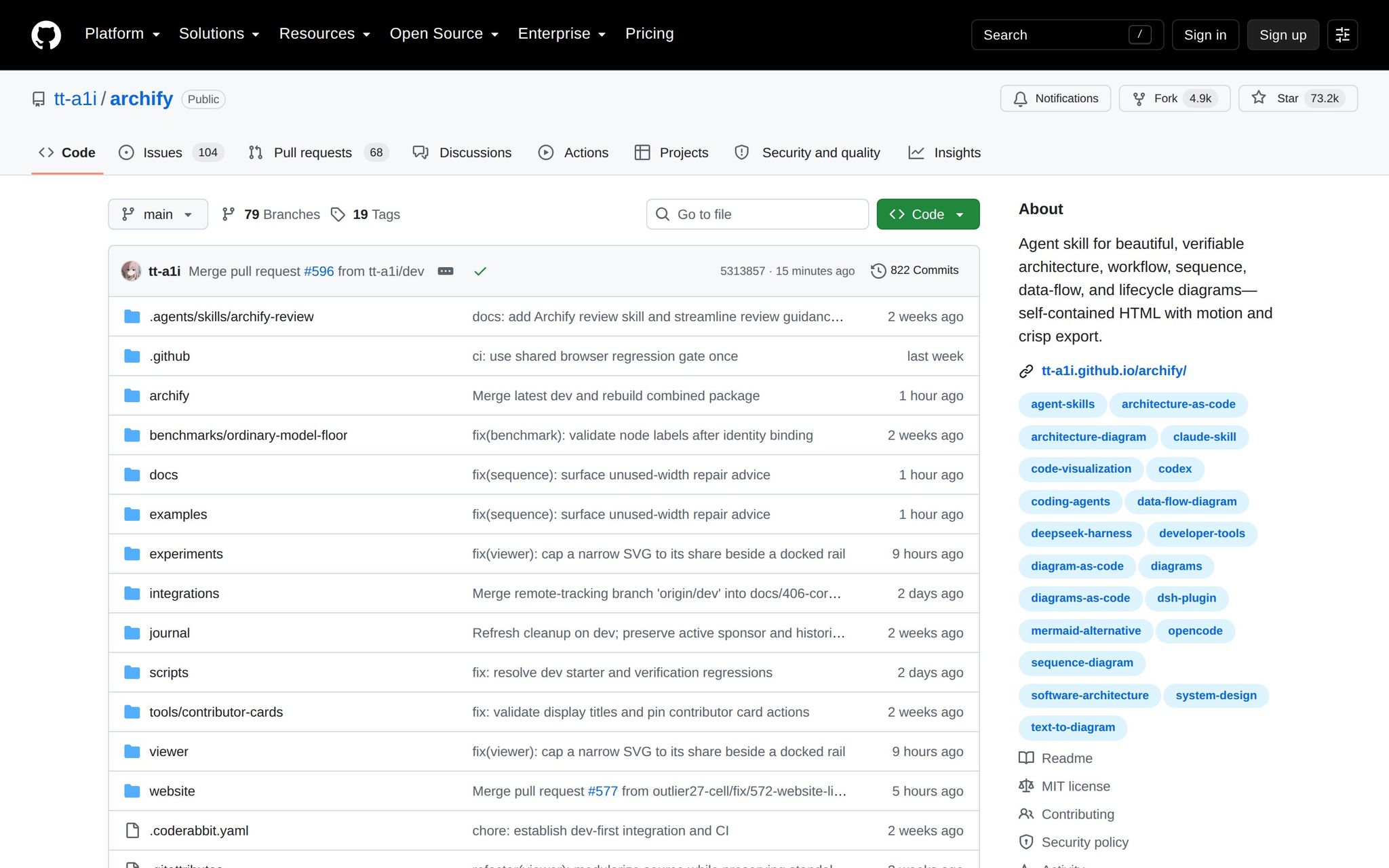
Archify is a JavaScript agent skill that turns architecture and workflow descriptions into self-contained HTML diagrams. It produces verifiable visuals with motion and crisp export, giving developers a faster way to document systems and data flows.
It added 52,260 stars this month, reaching 66,334, while its September 18 activity shows strong current momentum. The appeal is concrete: it offers a Mermaid alternative aimed at agent-assisted diagramming.
What You'd Build With It:
- Document a service architecture
- Render a sequence or data-flow diagram
- Create an interactive design review artifact
- Alternative To: Alternative to Mermaid
- Stack: JavaScript; the payload does not state installation, GPU, API-key, or paid-model requirements.
- Maturity: Created in April 2026 and MIT-licensed, it has 131 open issues, so adoption is ahead of demonstrated project maturity.
- Skill Level: Comfortable with the terminal
- Watch Out: The large open-issue count makes edge cases and documentation gaps plausible.
- Our Verdict: A strong pick for developers who need polished architecture visuals from an agent workflow, provided they can tolerate a young project’s rough edges.
- Setup Difficulty: ★★☆
- GitHub: https://github.com/tt-a1i/archify
2. diagram-design — Developer Tool
Developer Tool
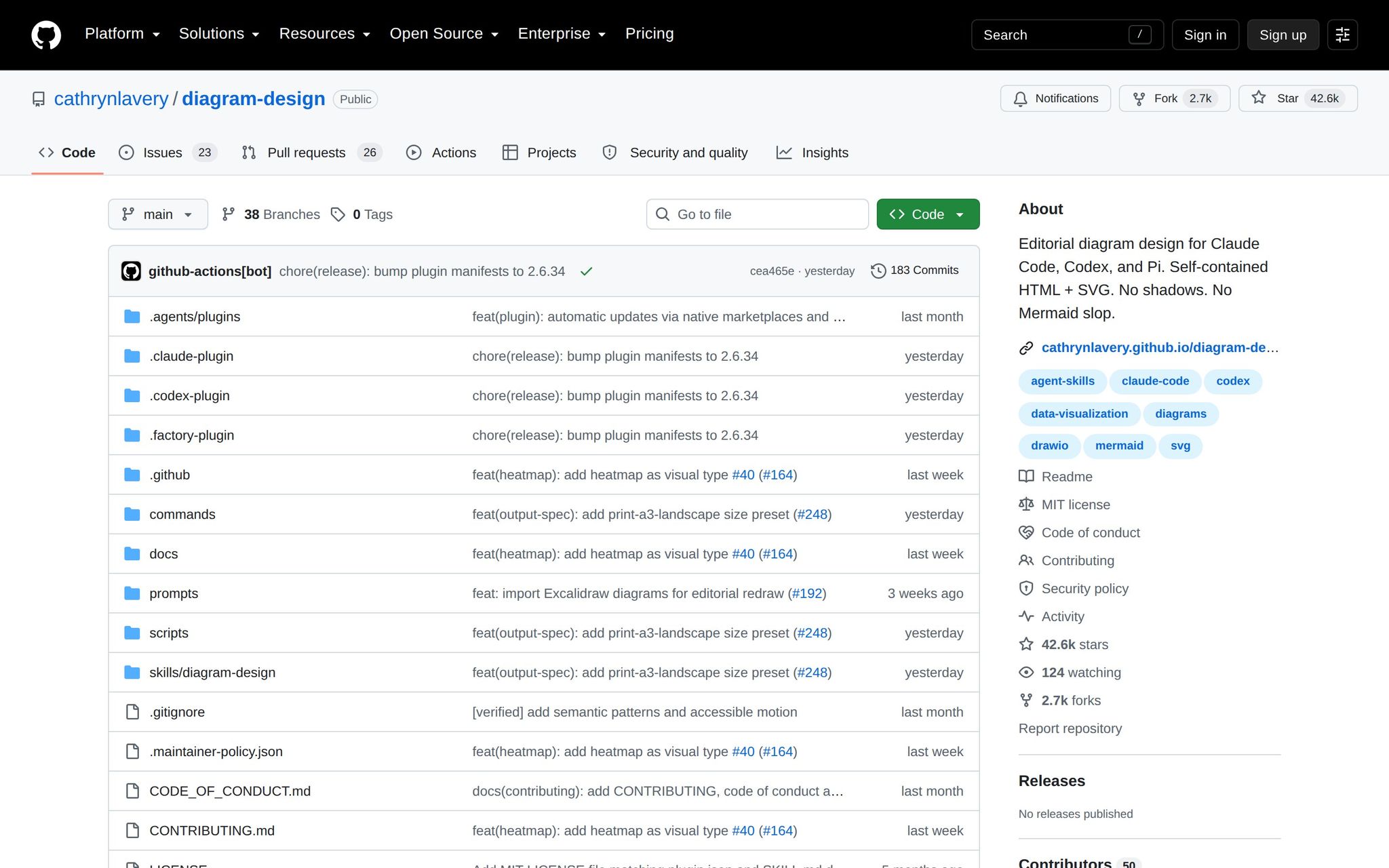
Diagram Design is an HTML-based collection of 38 editorial diagram types for Claude Code, Codex, and Pi. It generates self-contained HTML and SVG, helping developers replace default-looking diagrams with clearer visuals.
It gained 20,738 stars this month and reached 40,976, with a September 15 push. Its narrow promise—no shadows and no Mermaid-style clutter—lands well with developers polishing technical communication.
What You'd Build With It:
- Build a system overview
- Create an SVG sequence diagram
- Prepare a clean architecture presentation
- Alternative To: Alternative to Mermaid and draw.io
- Stack: HTML; the payload does not state installation, GPU, API-key, or paid-model requirements.
- Maturity: Created in April 2026, MIT-licensed, and carrying 48 open issues, it is promising but still early.
- Skill Level: Beginner friendly
- Watch Out: The repository description does not establish how complete its documentation or testing is.
- Our Verdict: A sensible choice for developers who value presentation-ready diagrams more than a broad modeling platform, especially when clean SVG output is the priority.
- Setup Difficulty: ★☆☆
- GitHub: https://github.com/cathrynlavery/diagram-design
3. freellmapi — Inference
Inference
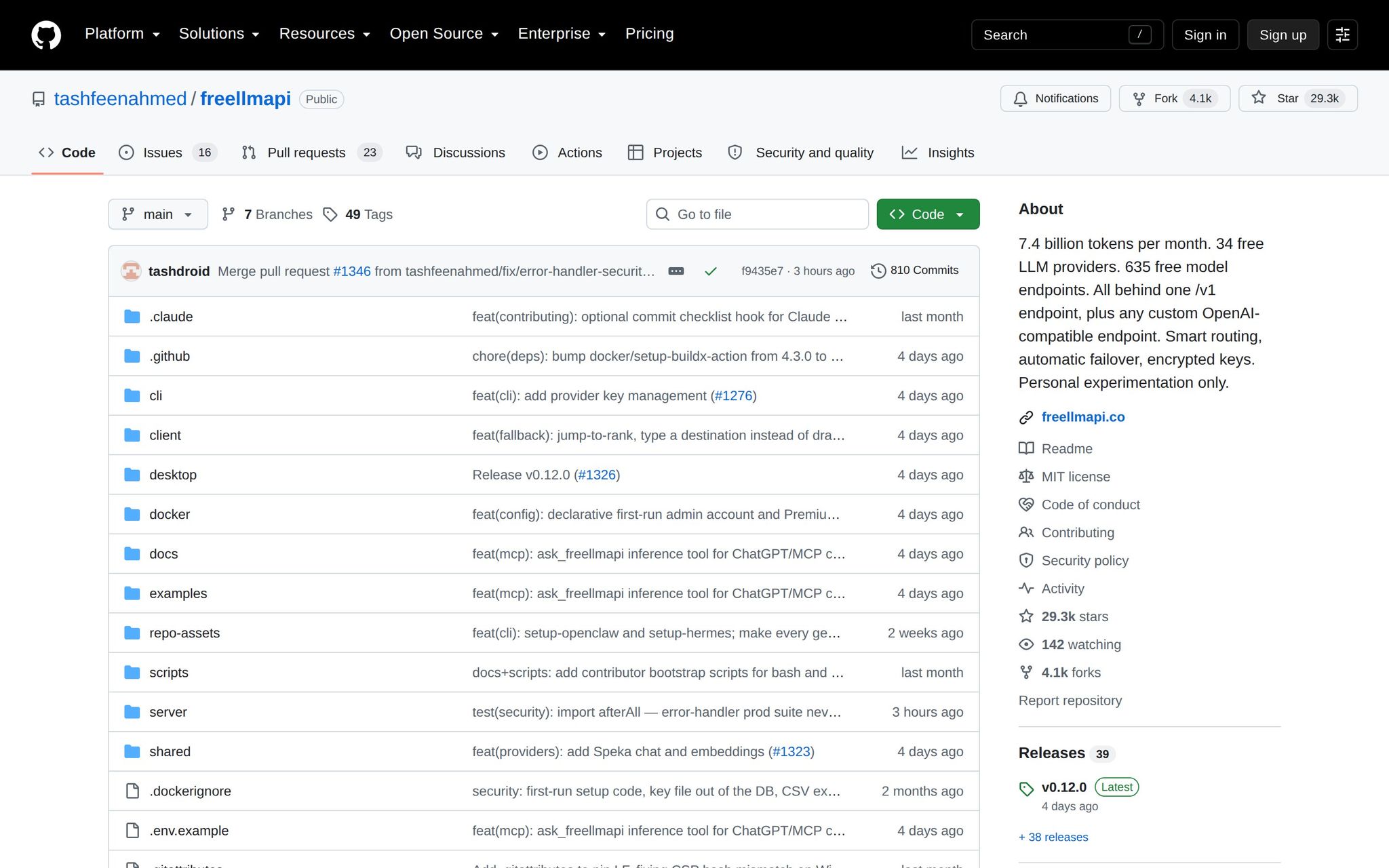
FreeLLMAPI is a TypeScript gateway that puts 34 free LLM providers and 635 model endpoints behind one OpenAI-compatible /v1 endpoint. It routes requests, fails over automatically, and encrypts keys for personal experimentation.
The project added 8,304 stars this month and now has 27,035. Its useful hook is operational: one client integration can reach many providers instead of hard-coding each endpoint.
What You'd Build With It:
- Prototype a provider-fallback chatbot
- Compare free models through one API
- Keep a personal experiment running across outages
- Alternative To: Alternative to managing separate OpenAI-compatible provider integrations
- Stack: TypeScript; it uses API keys and provider endpoints, and the payload does not state a GPU or paid-model requirement.
- Maturity: Created in April 2026, MIT-licensed, and recently active, it has 34 open issues and explicitly targets personal experimentation.
- Skill Level: Comfortable with the terminal
- Watch Out: Free-provider availability and quality can change, so production reliability is not established by the routing layer.
- Our Verdict: A useful laboratory gateway for developers testing models cheaply, but teams should not make it their production dependency without independently checking provider stability and data handling.
- Setup Difficulty: ★★☆
- GitHub: https://github.com/tashfeenahmed/freellmapi
4. minimind — Training & Fine-tuning
Training & Fine-tuning
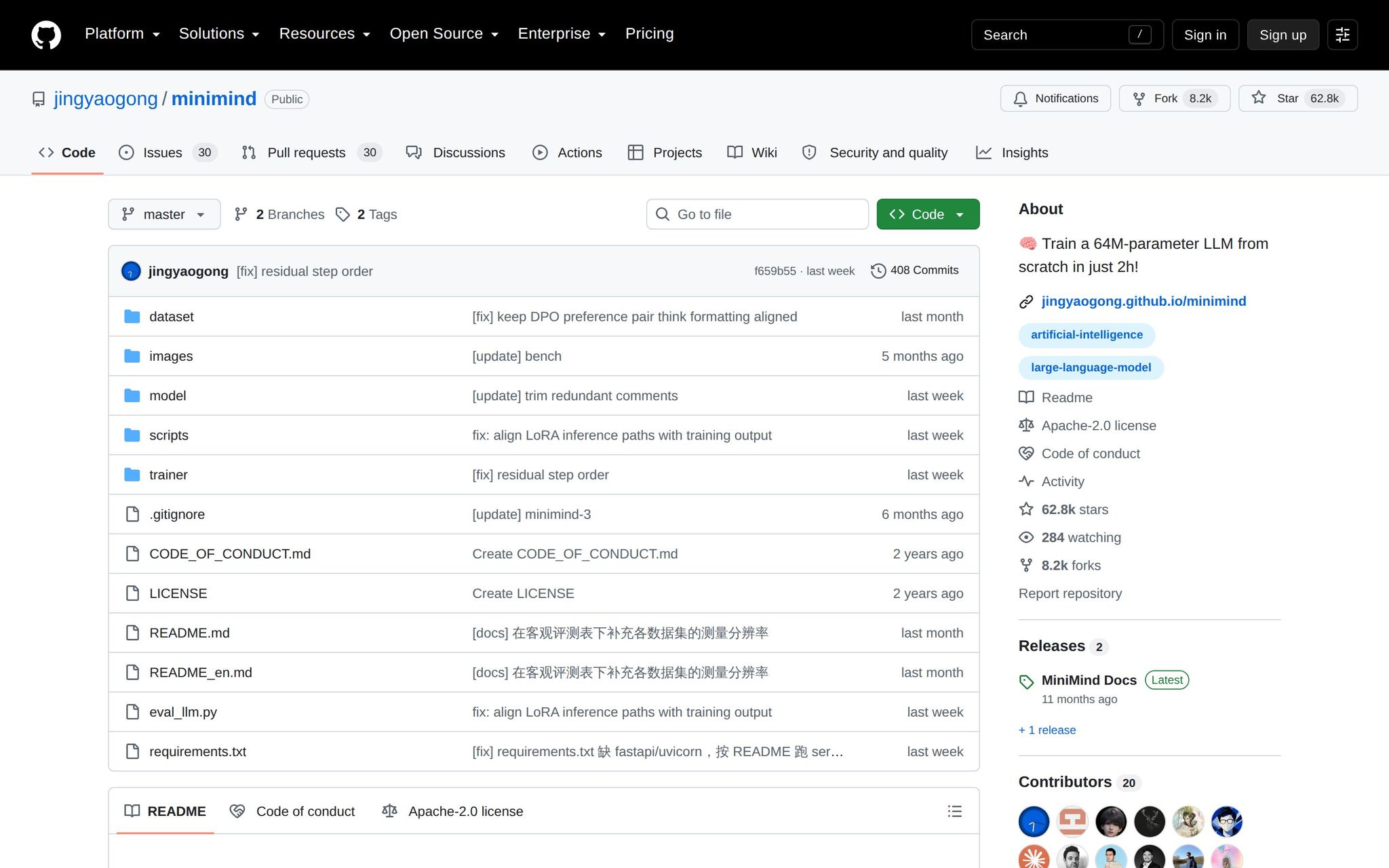
MiniMind is a Python project for training a 64-million-parameter language model from scratch. Its central teaching value is showing a small model-training path that can be completed in about two hours, rather than hiding the process behind a hosted API.
It gained 6,867 stars this month and has 61,548 overall, with a September 18 update. The compact training target makes the repository unusually approachable for studying LLM fundamentals.
What You'd Build With It:
- Train a small educational language model
- Inspect a from-scratch training workflow
- Experiment with model architecture changes
- Stack: Python; the payload does not state hardware, GPU, installation, API-key, or paid-model requirements.
- Maturity: Created in 2024 and Apache-2.0 licensed, it has a continuing update history and 65 open issues; it is educational rather than a frontier-model stack.
- Skill Level: Experienced developer
- Watch Out: A 64-million-parameter model is useful for learning, not evidence of production-grade language quality.
- Our Verdict: The best entry for developers who want to understand training by doing it, as long as they judge the result as a teaching model rather than a general-purpose replacement.
- Setup Difficulty: ★★★
- GitHub: https://github.com/jingyaogong/minimind
5. munder-difflin — Agents
Agents
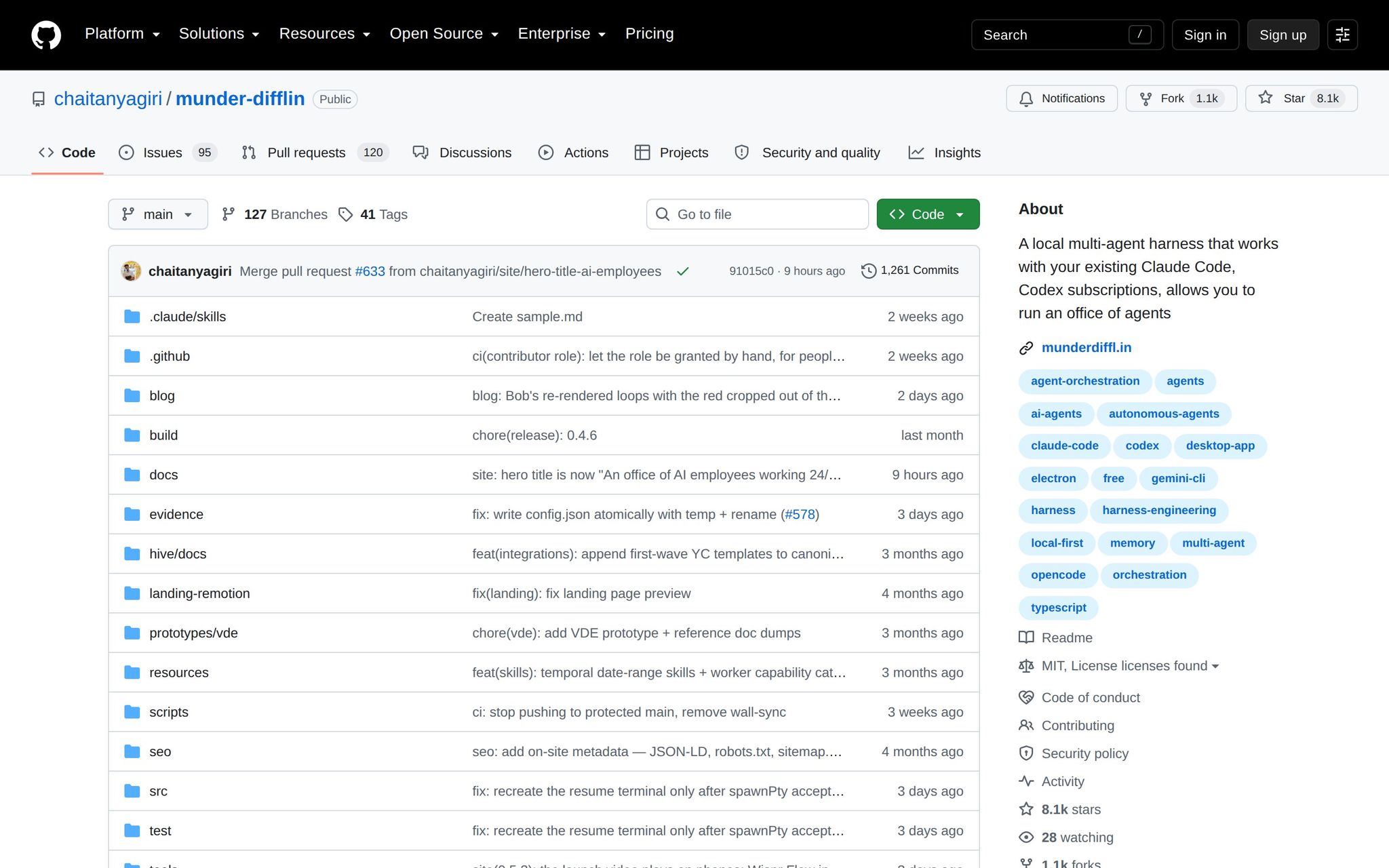
Munder-Difflin is a local TypeScript multi-agent harness that lets an office of agents use existing Claude Code or Codex subscriptions. It coordinates separate agents from a local-first desktop application so developers can divide work across roles.
It added 6,168 stars this month, reaching 7,580, and was pushed on September 17. The combination of familiar subscriptions, local orchestration, and a desktop interface explains the fast attention.
What You'd Build With It:
- Assign research and coding roles to agents
- Run a local multi-agent project office
- Coordinate work through Claude Code or Codex
- Alternative To: Alternative to single-agent coding harnesses
- Stack: TypeScript and Electron; it requires existing Claude Code or Codex subscriptions, while GPU needs are not stated.
- Maturity: Created in May 2026 and MIT-licensed, it has 187 open issues, making it a fast-moving but immature system.
- Skill Level: Experienced developer
- Watch Out: Multi-agent coordination can add complexity faster than it adds useful work, and the issue count is substantial for a young project.
- Our Verdict: A compelling experiment for developers already paying for supported coding agents, but it needs disciplined task boundaries before an office of agents becomes an office of duplicated effort.
- Setup Difficulty: ★★☆
- GitHub: https://github.com/chaitanyagiri/munder-difflin
6. maka — Agents
Agents
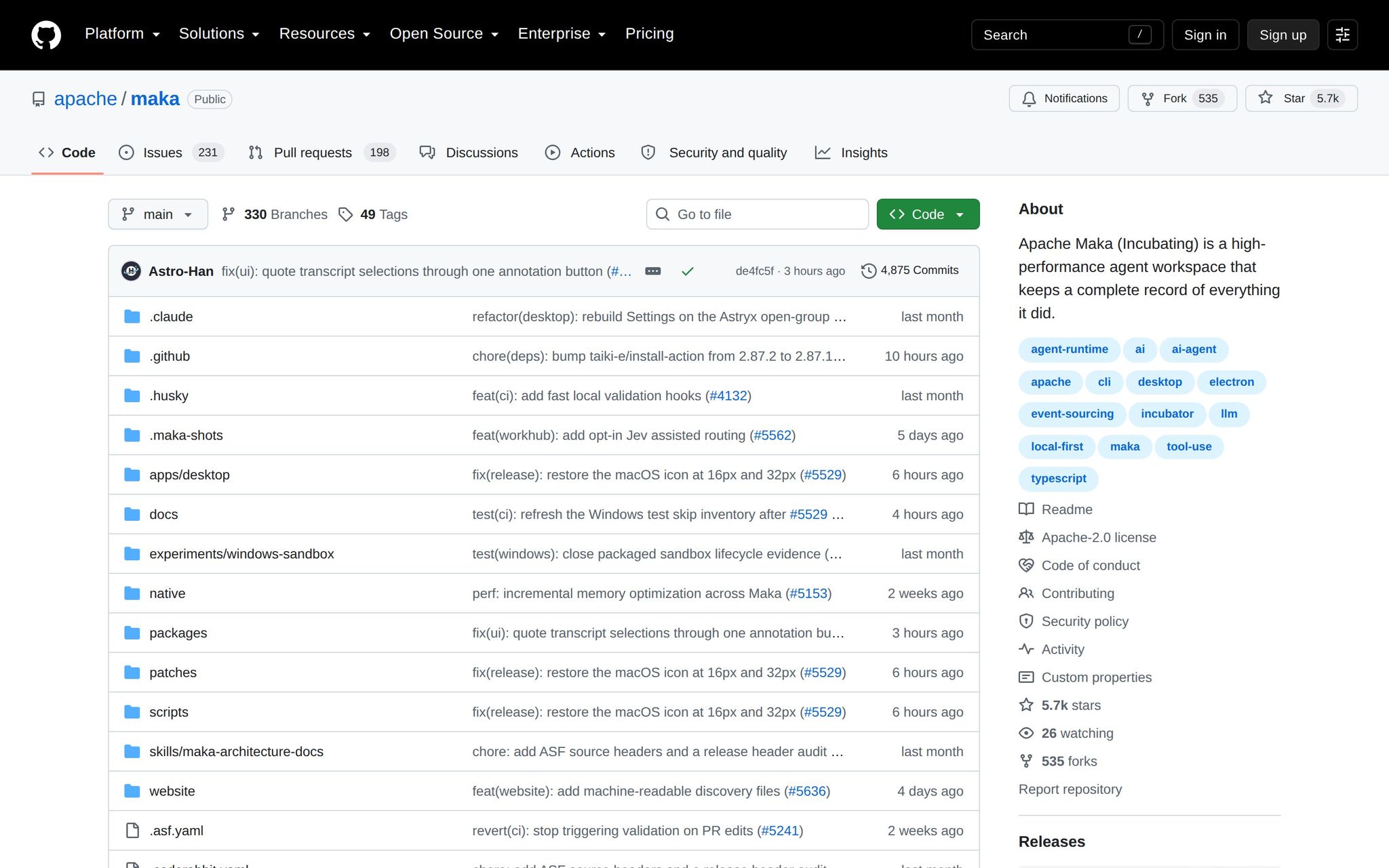
Apache Maka is a TypeScript agent workspace and CLI/desktop project that keeps a complete record of what an agent did. Its event-sourcing approach is aimed at making tool use and agent activity inspectable rather than disposable.
It gained 4,224 stars this month and was updated on September 18. The timely draw is accountability: a persistent activity record is valuable when developers need to understand an agent’s actions.
What You'd Build With It:
- Review an agent’s tool-use history
- Run a local agent workspace
- Trace steps in an automated task
- Alternative To: Alternative to opaque agent runners
- Stack: TypeScript and Electron; the payload does not state GPU, API-key, or paid-model requirements.
- Maturity: Created in May 2026 and Apache-2.0 licensed, it has 484 open issues and remains an Apache Incubator project.
- Skill Level: Experienced developer
- Watch Out: The unusually high issue count means the auditability promise may be ahead of a dependable day-to-day workflow.
- Our Verdict: Worth watching for teams that need agent provenance, but early adopters should treat it as infrastructure under construction rather than a settled workspace.
- Setup Difficulty: ★★☆
- GitHub: https://github.com/apache/maka
7. modular — Inference
Inference
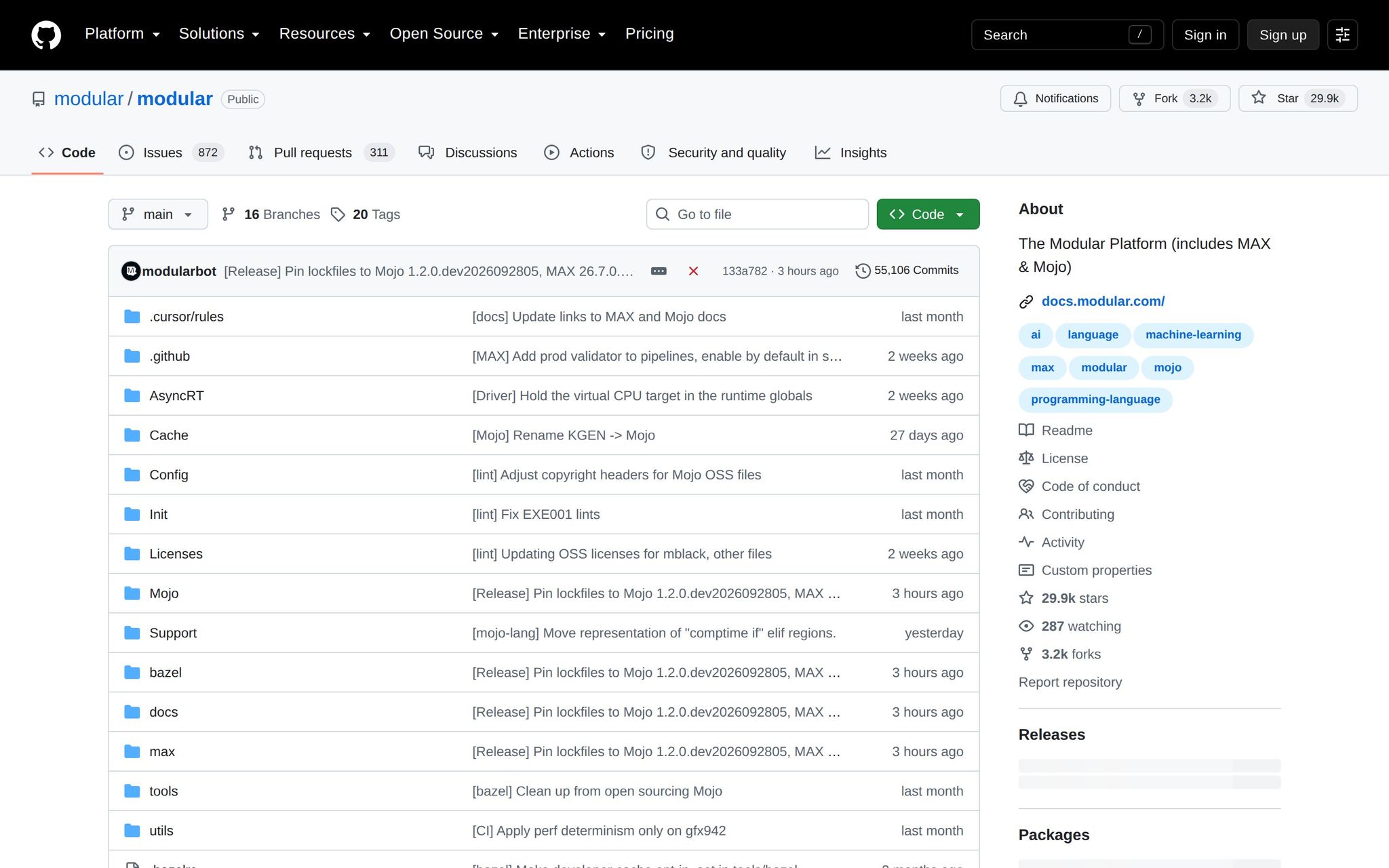
Modular is a platform repository containing MAX and the Mojo programming language. Developers use it as a foundation for machine-learning software and performance-oriented AI work, rather than as a single model or chatbot.
It added 3,082 stars this month and was pushed on September 17, reaching 29,813 overall. Its continuing activity reflects interest in combining an AI platform with a dedicated programming language.
What You'd Build With It:
- Study Mojo for AI-oriented programming
- Explore MAX-based machine-learning software
- Investigate performance-focused inference tooling
- Alternative To: Alternative to parts of the Python-centric AI platform stack
- Stack: Mojo; the payload does not state installation, GPU, API-key, or paid-model requirements.
- Maturity: Created in 2023 and updated recently, but it has 1,157 open issues and a NOASSERTION license field, so teams must inspect fit carefully.
- Skill Level: Deep expertise needed
- Watch Out: The broad platform scope and large issue backlog make it a poor first stop for a quick application prototype.
- Our Verdict: A serious option for engineers evaluating AI infrastructure and Mojo, not a casual weekend replacement for an established Python workflow.
- Setup Difficulty: ★★★
- GitHub: https://github.com/modular/modular
8. agent-skills — LLM Tooling
LLM Tooling
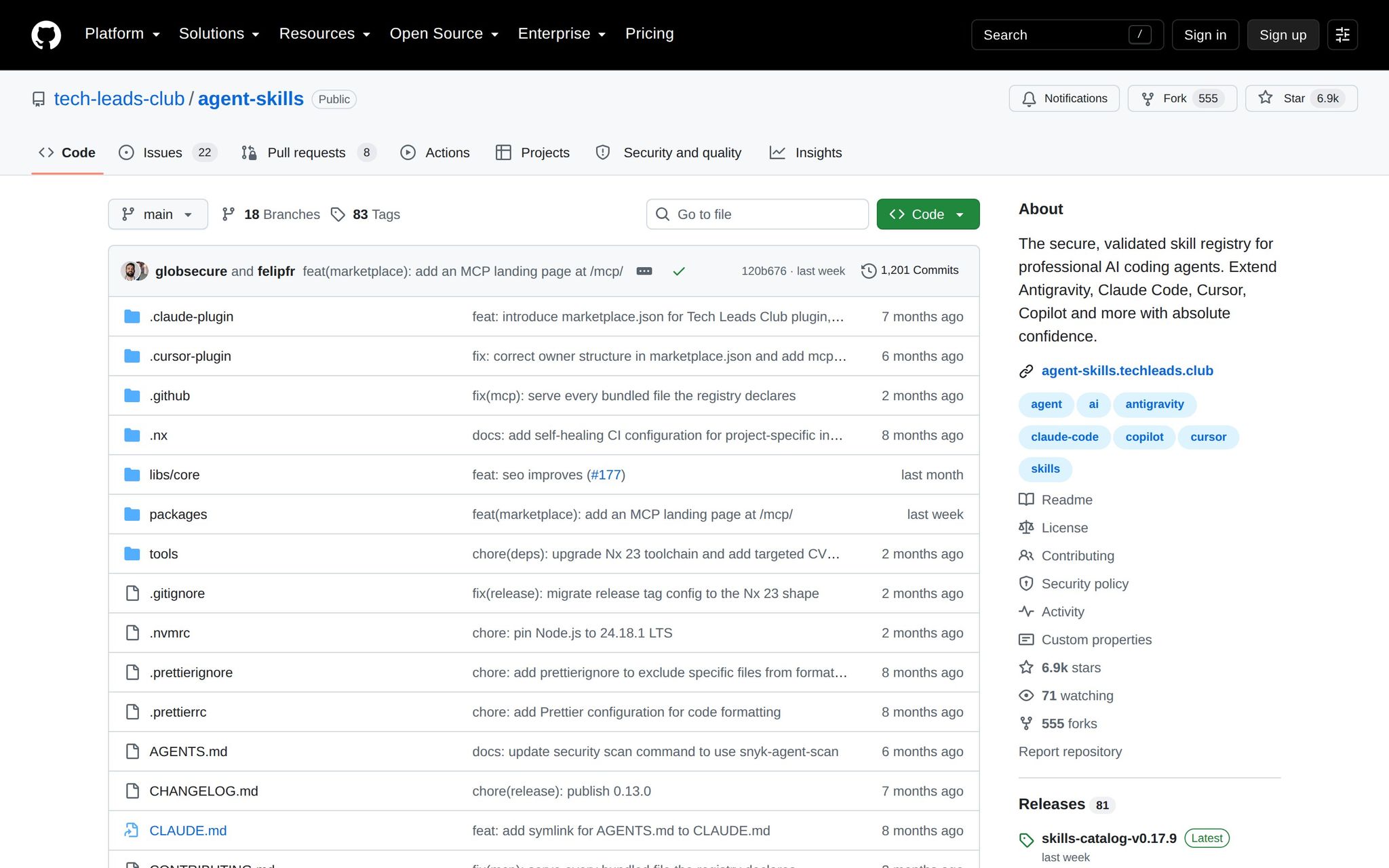
Agent-skills is a TypeScript registry for validated skills used by professional coding agents. It targets Antigravity, Claude Code, Cursor, Copilot, and more, giving developers a central place to extend those tools.
The repository added 1,398 stars this month and was updated on September 12. Its pitch is timely because reusable agent skills need a safer discovery and distribution layer.
What You'd Build With It:
- Find a skill for a coding agent
- Organize shared team skills
- Evaluate skills across supported assistants
- Alternative To: Alternative to ad hoc coding-agent prompt folders
- Stack: TypeScript; the payload does not state installation, GPU, API-key, or paid-model requirements.
- Maturity: Created in January 2026, it has 37 open issues and a NOASSERTION license field, so its validation and licensing model deserve review.
- Skill Level: Comfortable with the terminal
- Watch Out: The repository’s claim of secure validation is not independently established by the supplied facts.
- Our Verdict: Useful for teams beginning to standardize agent extensions, provided they inspect each skill rather than treating registry membership as a security guarantee.
- Setup Difficulty: ★★☆
- GitHub: https://github.com/tech-leads-club/agent-skills
9. VoiceStudio — Audio & Speech
Audio & Speech
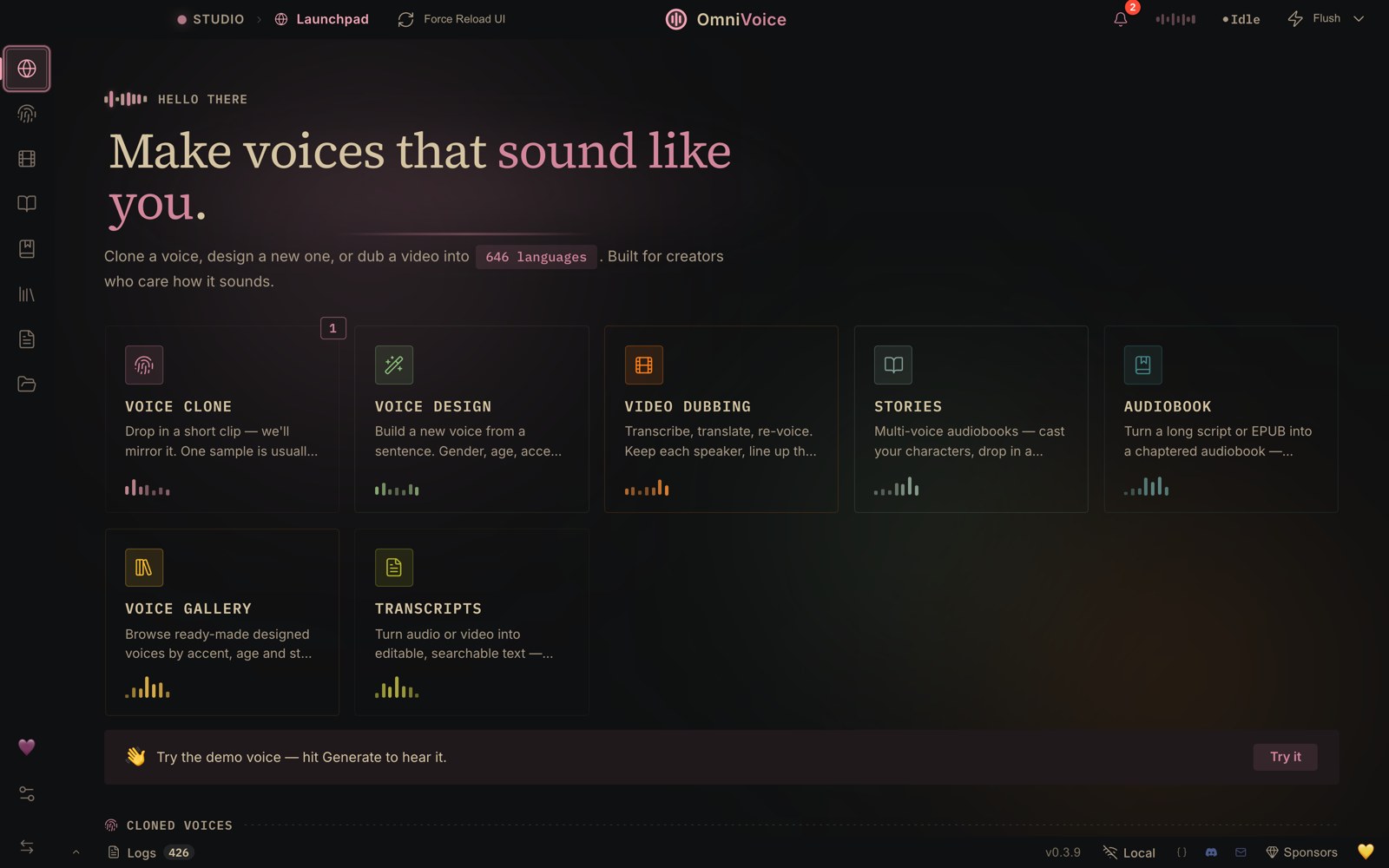
VoiceStudio is a Python, fully local voice application for cloning and designing voices, dubbing video, dictation, transcription, and audiobook creation. It targets 646 languages and is positioned as an open-source alternative to hosted voice services.
It gained 22,507 stars this month and reached 32,655, with a September 18 push. The strong movement follows a broad promise: many speech workflows without sending them to a hosted service.
What You'd Build With It:
- Create a narrated audiobook
- Transcribe or dictate locally
- Dub a video in another language
- Alternative To: Alternative to ElevenLabs
- Stack: Python with CUDA, MLX, and Tauri topics; the payload does not state exact hardware or API-key requirements.
- Maturity: Created in April 2026 and updated recently, it has 100 open issues and uses the AGPL-3.0 license.
- Skill Level: Experienced developer
- Watch Out: The AGPL-3.0 license and likely local compute requirements need careful review before commercial deployment.
- Our Verdict: A high-impact choice for developers who need local speech workflows and can accept AGPL obligations, compute setup, and a still-evolving project.
- Setup Difficulty: ★★★
- GitHub: https://github.com/debpalash/VoiceStudio
10. awesome-gpt-image-2 — Image & Video
Image & Video
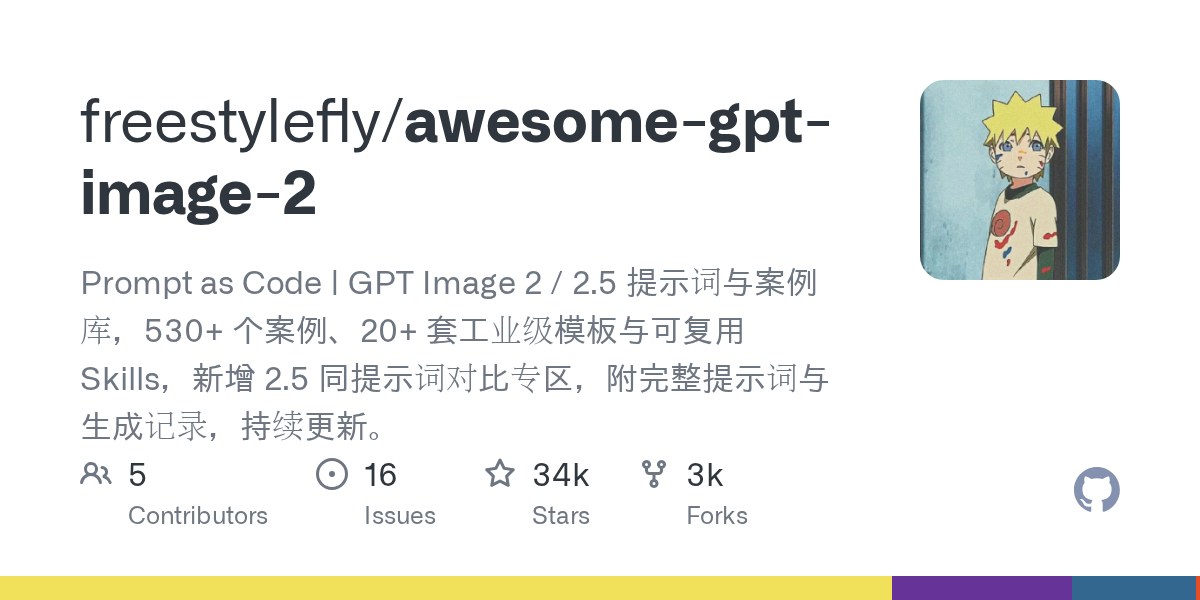
Awesome GPT Image 2 is a JavaScript prompt-as-code library and example collection for GPT Image 2 and 2.5. It contains more than 530 examples, over 20 templates, reusable skills, and generation records for repeatable image work.
It added 21,929 stars this month and reached 32,605, with a September 11 update. The momentum comes from turning prompt experimentation into reusable examples rather than one-off chat history.
What You'd Build With It:
- Build a repeatable image-prompt library
- Compare GPT Image 2 and 2.5 prompts
- Create template-driven marketing visuals
- Alternative To: Alternative to ad hoc image-prompt notebooks
- Stack: JavaScript; it targets GPT Image 2 and 2.5, so a model/API access path is required, while GPU needs are not stated.
- Maturity: Created in April 2026, MIT-licensed, and carrying 32 open issues, it is active and useful but still a young resource collection.
- Skill Level: Beginner friendly
- Watch Out: Prompt examples do not guarantee consistent results across model versions or real production workloads.
- Our Verdict: A practical starting point for developers systematizing image generation, especially when reproducibility matters more than inventing every prompt from scratch.
- Setup Difficulty: ★☆☆
- GitHub: https://github.com/freestylefly/awesome-gpt-image-2
The pattern is practical rather than futuristic: make agent work inspectable, turn prompts into assets, keep speech local, and lower the cost of experiments. Start with the smallest repository that solves a real task. Then read the license, open issues, and model requirements before it becomes infrastructure.
Frequently asked questions
What is Archify?
Archify is a JavaScript agent skill that turns architecture and workflow descriptions into self-contained HTML diagrams.
How does FreeLLMAPI function?
FreeLLMAPI is a TypeScript gateway that provides access to 34 free LLM providers through one OpenAI-compatible endpoint.