The playbook has changed for marketers. The savviest are attuning their workflow by deploying exciting must-have AI tools.
On the verge of AI technologies becoming the new normal, enterprises are looking to find sweet balance between speed and reliability processes for their brands. We will explore how marketers are integrating AI to drive productivity gains and strengthen their campaigns.
Marketers are using AI capabilities for data collection, data-driven analysis, natural language processing (NLP) proficiency and machine learning (ML) competence to deliver on brand’s needs, product insights, personalized customer service and automate marketing decisions. In 2026 vast amounts of omnichannel marketing content are produced, escalating the value of leveraging the real-time data. Marketers are curious to know more and deploy new AI breakthroughs that will provide them with essential advantage of speed, data intelligence, and customize automation. AI Adoption is becoming increasingly critical for businesses to incorporate into their marketing strategies as to remain competitive.
Executive members like John Boccuzzi Jr., President of ISG Research – a leading technology Advisory firm’s views AI as a strategic partner for business leaders. Emily Ketchen, CMO of intelligent devices at Lenovo, is strong willed on deploying AI and says, True leaders contemplate how AI can enhance their strategies and assist their teams. AI deployment is also considered a disruptive factor to marketers existing operations and processes, but it is not a hidden fact the change in technology is now evitable and marketers need to ensure they make the best use of AI Advancements to lower their risk of uncertain future. AI can refine balance of risk-reward tradeoffs of marketer’s campaigns with techniques like NLP and LLM to predict future trends and analytically make decisions from data they generate and create fresh content that fascinates the consumers and investors. Chief AI & Innovation Officer at Omnicom Media, Sean Betts, focuses on how fundamentals of marketing have changed after popularization of AI tools; the marketers target has shifted away from “how do I win the click?” toward “how do I become recommended by an AI platform?”
10 Types of AI tools for marketers:
1. Generative Engine Optimization (GEO)
GEO optimizes content to improve visibility at AI search results and overviews, improving content quality, performance and chances to appear in higher viewership generative response. GEO AI Tools like ChatGPT, Perplexity AI, Claude, Walkersands enables pairing brand content with hyper-personalization marketer buyers’ needs and real-time users’ search.
2. Predictive & Emotional AI
These tools methodology focuses on human – digital world interaction with the purpose to Adapt with needs and understanding human feelings. These tools help build strategies to build personalized marketing apps like Instagram and Myntra and encourage ways to retain customers. Predictive AI uses historical data and statistical modeling like A/B testing to forecast customer behaviors to reduce customer churn, while Emotional AI is Affective Computing concept that uses ML to interpret human emotional signals through facial expressions, voice, and text. Examples of predictive AI & emotional AI famous tools are DataRobot, DeskTalk, SentiSum, Hume AI, NVISO and Cogito.
3. Customer Relationship Management (CRM)
CRM AI tools are commonly leveraged by marketers to perform multiple functions such as to score and prioritize leads, automate routine follow-ups and tasks, fragment audience based on customer insights, monitor customer journeys and centralize transactional data into uniform customers profiles. CRM is one of the critical methods businesses employ to avoid internal silos. Examples of AI-powered CRM tools are HubSpot CRM (with AI features), Microsoft Dynamics 365, Pipedrive and Salesforce Einstein.
4. Content Creation
AI powered content creation tools make marketers work easier, efficient and stimulate creativity by providing professionals means to generate visual, audio and written content while maintaining brand consistency. Other Advantages of these tools include multiple versions of Ad copies, quicker editing capabilities, economical high quality of filming and repurposing content generation on a large scale. Examples of content creation AI tools are Jasper.AI, Writesonic, Canva, DALL-E, Midjourney, Synthesia, Gemini AI and Nano Banana.
5. Paid Advertising and PPC optimization
AI tools streamline paid Advertising and PPC optimization by automating bidding, substitute Ad creation, Ad optimization techniques, pipeline keyword research, provide performance analysis, and ways to maximize ROI on Ad Spend for Google Ads, Meta, and Microsoft Ads. These tools test and refine campaigns with real-time data of customer engagement and process optimize adjustments to marketer’s live digital Ads across multiple platforms. Leading tools from recent benchmarks include Optmyzr for advanced automation, Semrush for keyword and competitor insights and Madgicx automates cross-platform tracking and fraud prevention like ClickCease.
6. Marketing Analytics
AI-powered analytics tools transform raw data into actionable insights for marketers These tools have important functionality like understanding demographics, simplifying campaign performance, retaining customers, optimizing ROI across platforms and AI anomaly detection. Improvado and Cometly lead among other popular tools with 500+ data connectors for unified dashboards, and ability to run natural language queries. Some other examples of AI-powered marketing analytics tools are Google Analytics 4 (with AI features), HubSpot Marketing Analytics, and Brand24.
7. Localizing Marketing Content
Global marketing firms can benefit immensely from AI tools to localize and adapt global content crossways through different countries. These tools bring forth cost effective, time saving and supreme capabilities for translation & transcreation. Phrase and Crowdin use neural MT and style memory for context-aware drafts, handling idioms, tone, and cultural nuances. Key utilization of these tools can be to localize visuals & metadata with tools like Typeface that generates market-specific images and copy from prompts; Wedia tool auto-tags assets in 20+ languages via DeepL/Claude integration. Marketers can create localized workflows with Smartcat and Lokalise, those enable compliant pipelines for SEO, audio/video dubbing, and quality assurance.
8. Email Marketing
AI tools have transformed marketing through personalization of emails at different steps in customer’s journey, send-time optimization, predictive analytics, automated content acquisition and generate standardized emails from prompts. Leading tools integrate these features to boost open rates by 20-40% and customer conversions remarkably. Examples of email marketing AI tools are Seventh Sense, Mailchimp, HubSpot Email Marketing, Klaviyo, ActiveCampaign, Omnisend, Brevo and Mailmodo.
9. Social Media Management
AI tools empower social media marketing by automating content creation, scheduling posts at optimal times, analyzing audience reaction, record sentiment using NLP, identify high-performing content, enabling hyper-personalized targeting and repurposes content across platforms like Instagram, TikTok, and Snapchat. Marketers create streamline workflows to plan, create, publish, and analyze KPIs on a single dashboard. These tools make content creation fun, optimistic and converts manual work into processes. Examples of social media marketing AI tools are Sprout Social, Lately.ai, Hootsuite (with AI features), Publer and FeedHive.
10. Agentic AI Agents
Autonomous AI agents can effectively handle campaign management, budget allocation, and real-time content adaptation without manual intervention, compressing insight-to-action cycles via pod-based teams (strategy, creative, analytics). Agentic AI monitors customer signals (e.g., web behavior, social interactions), predicts intent, and triggers next-best-actions to optimize ROI. Marketers benefit from key applications of these tools like campaign autonomy, multi-channel execution, risk management and cyber security. Examples of agentic AI tools for some popular platforms deliver to marketers are Braze for journey orchestration, Adobe for scalable personalization, Optimove for micro-segment decisions.
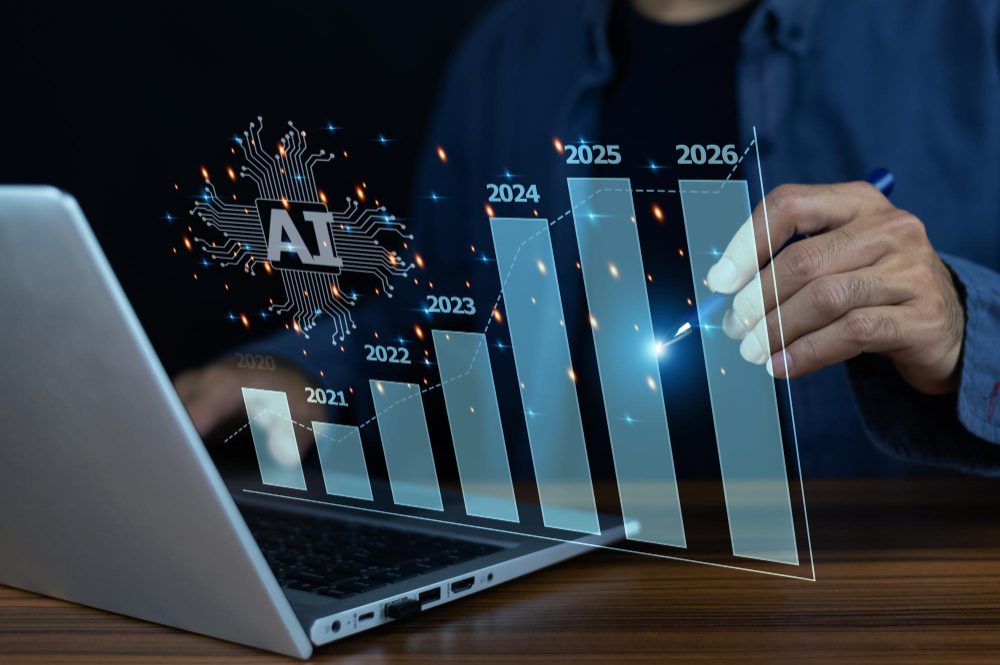
We have some compelling infographics that show marketing industry benefiting from AI. In 2026, 88% of marketers use AI tools daily with AI valuation in the industry is $47 billion dollars. Q1 2026 Industry reports have projected impact of AI on marketers’ performance by Ad ROI improving by 50% and cost reduction by 37% with maintaining increase in customer satisfaction by 8.5%. AI market growth is expected to jump to $107.58 by 2028.
To understand marketers’ AI deployment into their workflow, salesforce released data revealing professional priorities. 54% are using Predictive AI for customer behavior insights and 63% are experimenting with generative AI (63%) for content creation and automation. Content optimization (e.g., SEMrush AI, Ahrefs) are also AI’s cutting-edge technique to capture demand and expected to boost ROI by 70%.
Have a peak at high – engagement and quality AI content created by these brands to demonstrate their product and talent:
- Toys’R’Us – “Charles Lazarus’s vivid dream”: One of the first Ads to use OpenAI’s tool Sora to show company’s founder Charles Lazarus dream to start Toys’R’Us.
- Coca-Cola – “Create Real Magic”: The AI campaign enabled consumers to create art with their iconic assets and displayed curated Ad at Times Square and PiccAdilly Circus.
- Burger King – “Million Dollar Whopper Contest”: An AI generate hyper-realistic and personalized Ad showing consumers designing their own burgers.
- Popeyes – “AI for Music and Video”: Commercial used Suno AI to compose music and Veo to produce visuals. Overall, the content is ingenious tech-driven creative production.
- Nutella – “Unica” Campaign: The campaign consisted of 7 million unique, colorful packaging designs for personalized products. The campaign was generated by company’s created algorithm.
- Nike – “Never Done Evolving feat. Serena Williams”: Campaign is AI generated that uses digital records of Serena Williams tennis matches from 1999 to 2017, with their unique algorithms Nike excels AI’s capability to combine historical assets and AI generated assets into a compelling story.
Reliability and creativity are answers to stability in this time of change and digitalization. Here is the list of best practices for marketers to make best use of AI:
- Employ and take care of quality and accuracy of your data
- Trust in building robust business architecture with successful AI solutions such as CRM software, data management, content analytics.
- Ensuring good data governance is fundamental of enterprise’s digital world
- Practice regular monitoring of implemented AI tools and setting data curation framework
- Upskilling marketers and avoiding segmentation within the organization
- Cultivate vibrant and data confident environment (trick is not to rush)
- Localize data and aim to uplift the community with your content and AI capabilities
- Ignore FOMO, lean towards productivity with strategic planning
Enterprises are most enthusiastic about nurturing their brand presence with agentic AI and generative AI; some of the marketers are leading by developing AI agents to buy digital and TV space inventory, augmented customer service, finding right audience and much more. However, marketers should be caution not to overdo AI mechanics without looking at the broader picture for the product and people.
Here are consequences marketers should avoid when adopting AI into their workflow:
- Decision fatigue masquerading as strategy.
- Tool overload presented as innovation.
- Burnout that resembles productivity—until it collapses.
- Fragmented workflows that deplete energy faster than they deliver results.
Marketers must maintain brand’s health, cultural relevance, customer loyalty, competitive position, and creative authenticity over speed and innovation. AI can provide marketers with smarter marketing but with investment in human productivity, skills and trusted technology sponsored business architecture.
Frequently asked questions
What is Generative Engine Optimization (GEO)?
GEO optimizes content to improve visibility at AI search results, enhancing content quality and performance.
How do AI tools assist in email marketing?
AI tools personalize emails, optimize send times, and automate content acquisition, significantly increasing open rates and conversions.
What role does AI play in customer relationship management?
AI-powered CRM tools help marketers score leads, automate follow-ups, and centralize customer data to avoid internal silos.