
This month we look at the best AI courses developers are actually finishing in 2026, not just bookmarking. Completion rides on relevance and pacing as much as content, so we ranked these on real developer utility — agent-building, RAG, production-ready code — over marketing gloss.
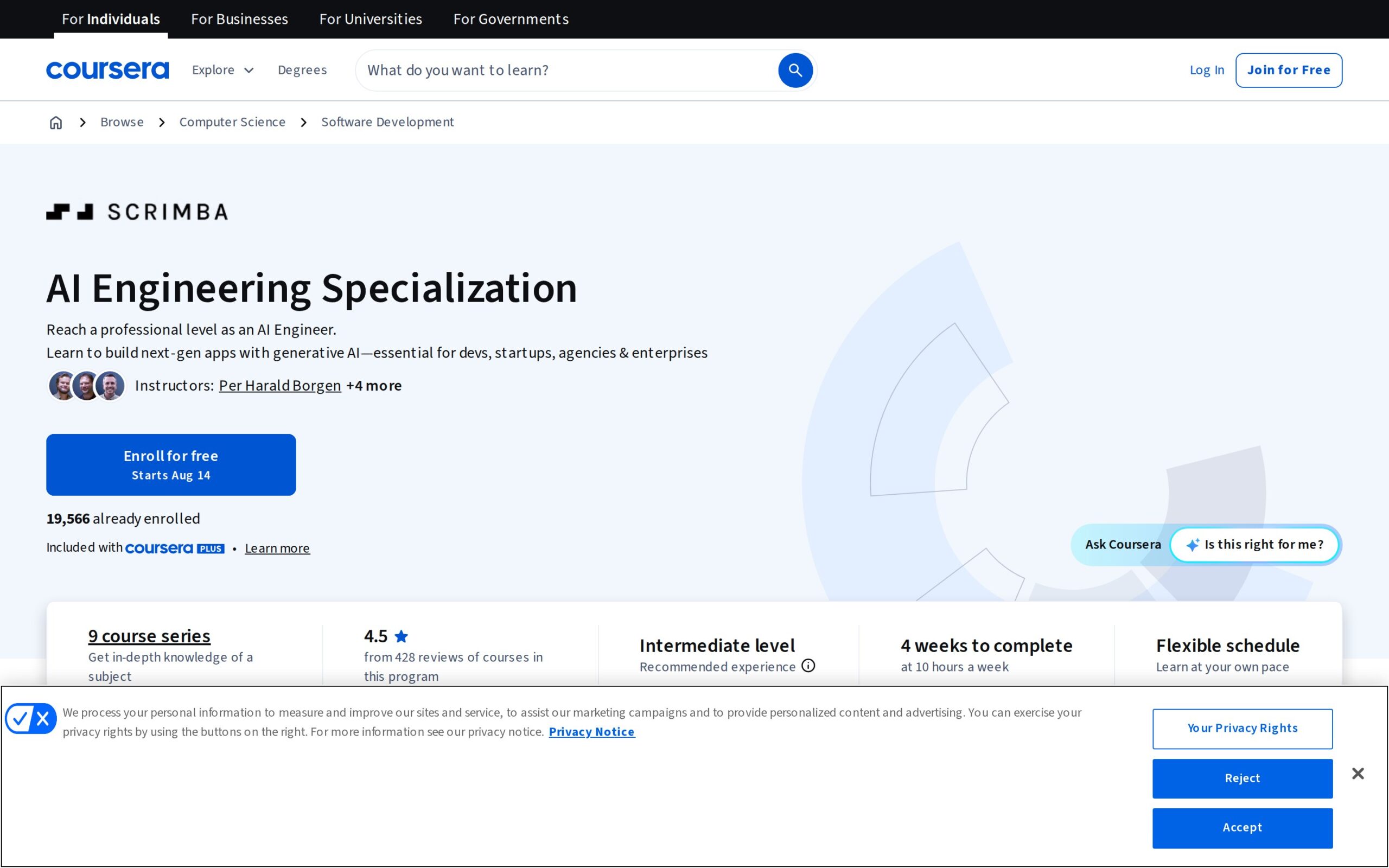
1. AI Engineering — Coursera Specialization
What You'll Learn:
- Build AI agents and work with vector databases
- Create text embeddings for retrieval systems
- Assemble end-to-end generative AI applications
What We Like:
- Hands-on projects that mirror real production tasks, not sandboxed exercises
- Comprehensive coverage from embeddings through to agents in one specialisation
Things To Consider:
- Intermediate level; prior experience is explicitly recommended, not optional
- Ten hours a week is a serious ask alongside a full-time job
- Best For: For developers who've already got some ML under their belt and want to build production-style generative AI applications, not toy demos.
- Time Commitment: Four weeks at ten hours a week — heavier than most Coursera specialisations.
- Career Impact: Finishing this signals you can build and ship agentic AI features, not just talk about them in an interview.
- Our Verdict: The most demanding course on this list. It's also the one that produces the most defensible portfolio work — worth the ten hours a week.
- Rating: ★★★★★
- Course: https://www.coursera.org/specializations/ai-engineering
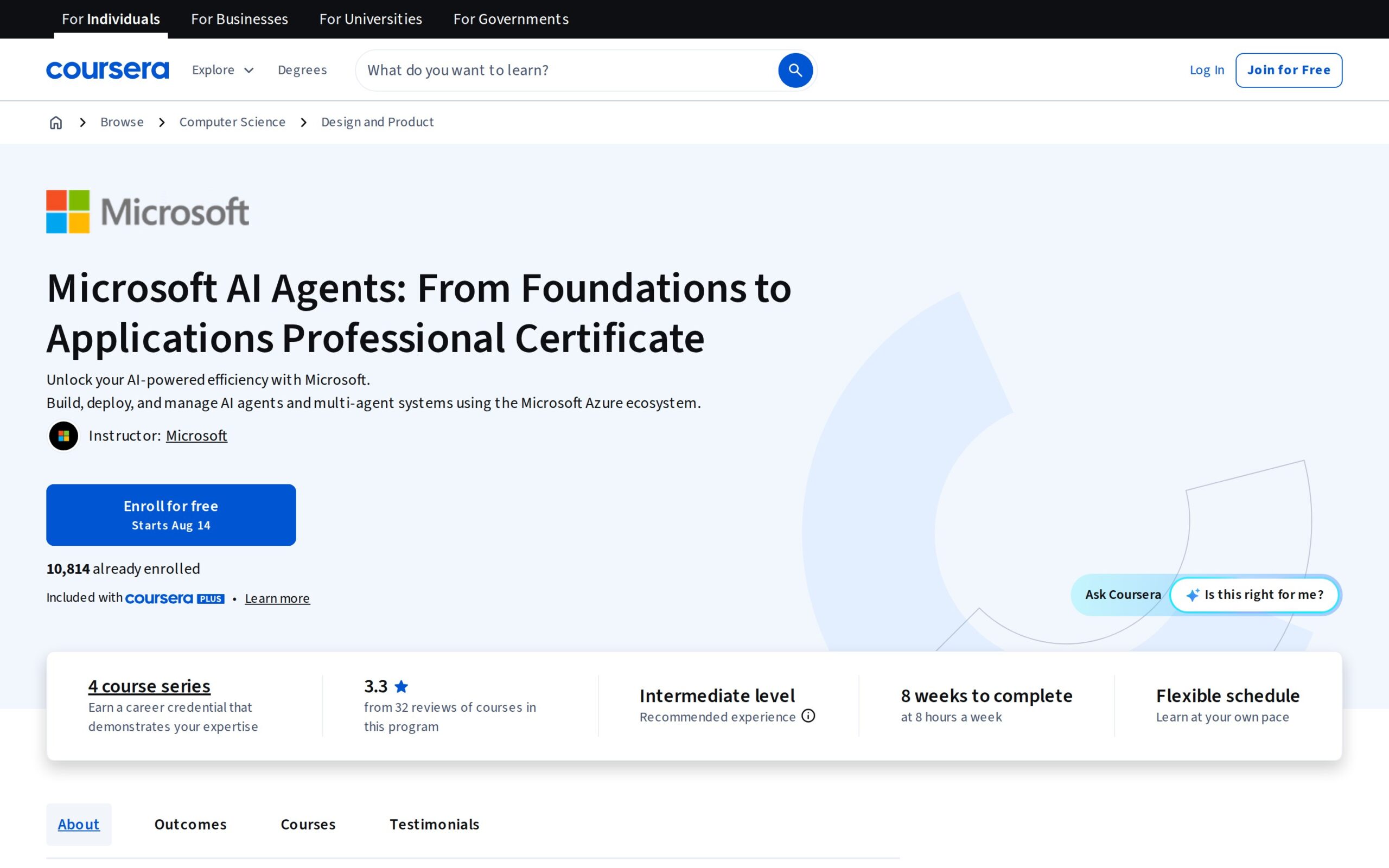
2. Microsoft AI Agents: From Foundations to Applications Professional Certificate — Coursera / Microsoft
What You'll Learn:
- Design and develop scalable, secure AI agents
- Build a portfolio of agent projects
- Prepare for enterprise-level agent deployment challenges
What We Like:
- A foundation specifically in agent architecture, not generic GenAI theory
- Portfolio-building is baked into the curriculum, not bolted on at the end
Things To Consider:
- You need programming basics going in; this isn't for true beginners
- Eight weeks is a long stretch to stay motivated through
- Best For: Aimed at developers who already know the basics of programming and want a structured, Microsoft-backed route into agent development.
- Time Commitment: Eight weeks at eight hours a week — a longer runway than most agent-focused courses.
- Career Impact: Suited to developers aiming at enterprise agent roles, where security and scalability matter as much as prototyping.
- Our Verdict: A close second to AI Engineering. The focus on agents specifically is narrower, but that narrowness is also the strength.
- Rating: ★★★★☆
- Course: https://www.coursera.org/professional-certificates/microsoft-ai-agents
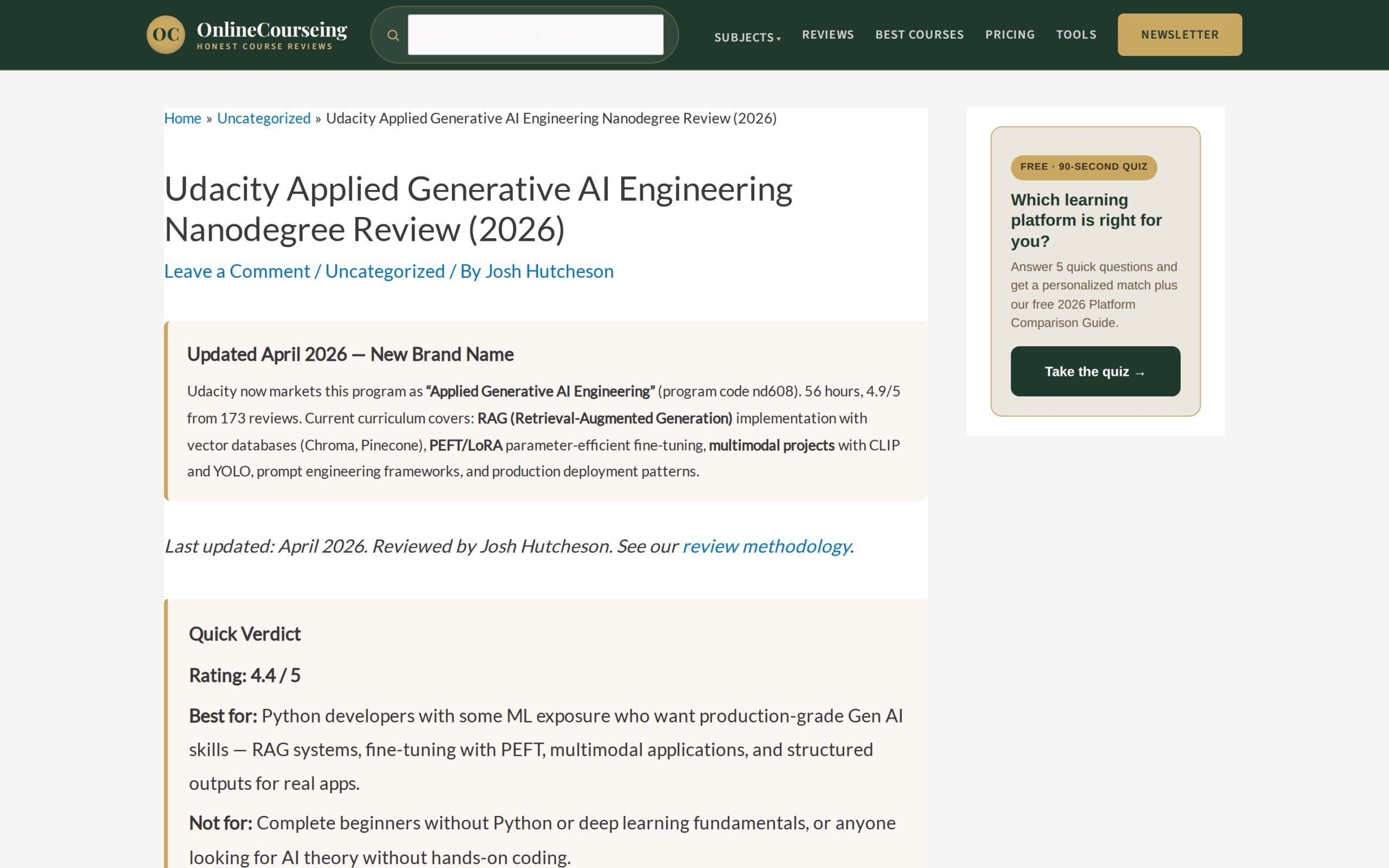
3. Udacity Applied Generative AI Engineering Nanodegree — Udacity Nanodegree
What You'll Learn:
- Build and deploy RAG systems
- Fine-tune generative models for specific tasks
- Ship multimodal generative AI projects
What We Like:
- High ratings from past learners on curriculum relevance
- Practical scope covering fine-tuning and multimodal work, not just prompting
Things To Consider:
- $249 a month, or $999 upfront — expensive next to the Coursera alternatives here
- Requires existing Python and ML knowledge; this is not a starting point
- Best For: Python developers with ML fundamentals who want to build production-grade generative AI systems, RAG pipelines included.
- Time Commitment: About 11 weeks self-paced, roughly 56 hours in total.
- Career Impact: Positions graduates for generative AI engineering roles specifically, rather than general AI literacy.
- Our Verdict: The content justifies the price for developers who'll use every hour of it. For casual learners, the cost is a real barrier.
- Rating: ★★★★☆
- Course: https://onlinecourseing.com/udacity-generative-ai-nanodegree-review/
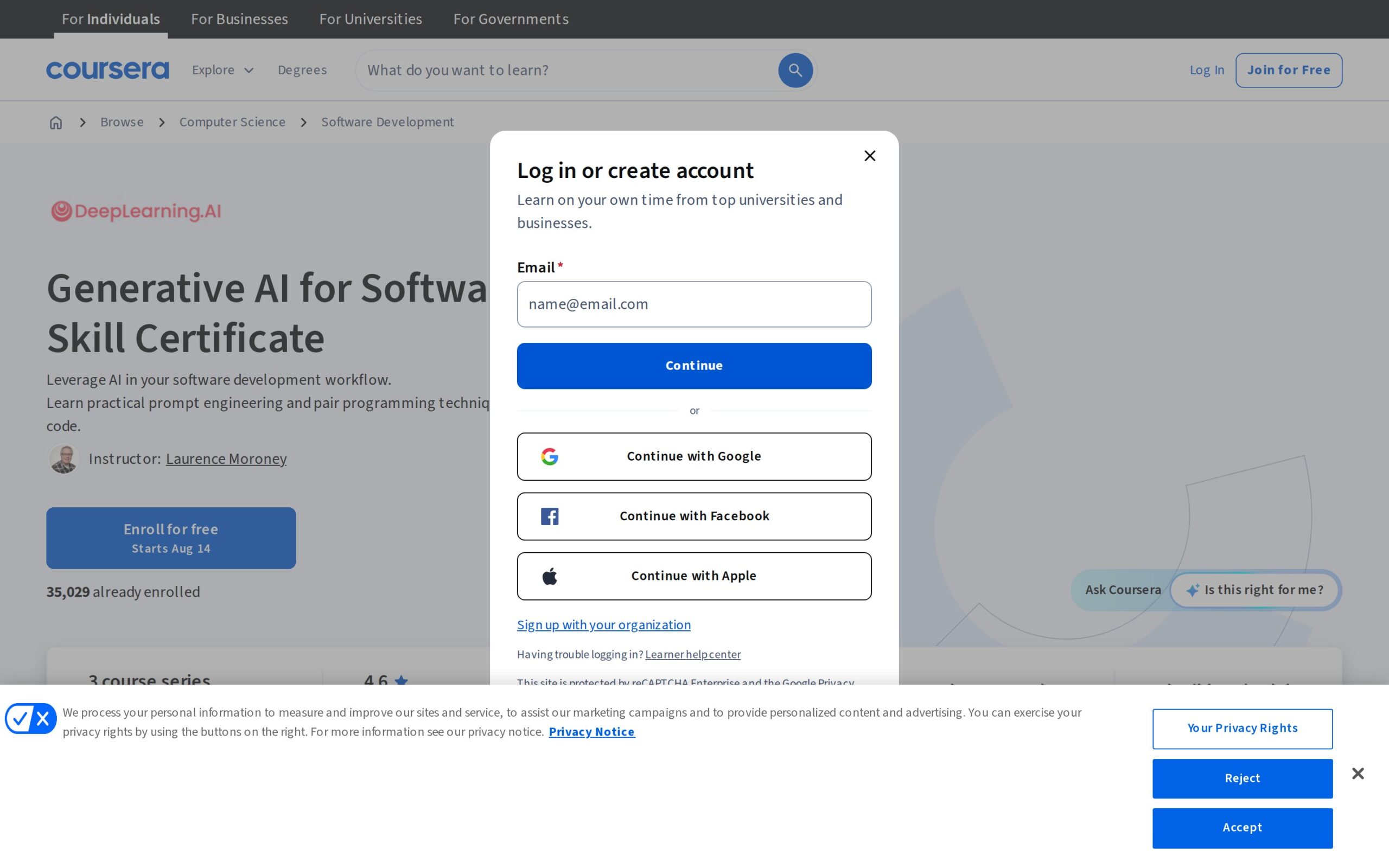
4. Generative AI for Software Development Skill Certificate — Coursera / DeepLearning.ai
What You'll Learn:
- Use LLMs for common coding tasks
- Optimise code quality with generative AI tools
- Prototype software ideas quickly
What We Like:
- Taught by a former AI lead at Google
- Hands-on projects rather than theory-heavy lectures
Things To Consider:
- Listed as beginner level, despite assuming some coding background
- The lighter time commitment means shallower depth than the specialisations above
- Best For: For developers newer to generative AI who want a fast, focused primer on using LLMs in day-to-day coding work.
- Time Commitment: Four weeks at five hours a week — the lightest load on this list.
- Career Impact: Good for developers chasing day-to-day productivity gains with AI tools; less useful as a credential for AI-specialist roles.
- Our Verdict: A solid, quick on-ramp. Good for finishing fast — just don't expect it to compete with AI Engineering on depth.
- Rating: ★★★☆☆
- Course: https://www.coursera.org/professional-certificates/generative-ai-for-software-development?action=enroll
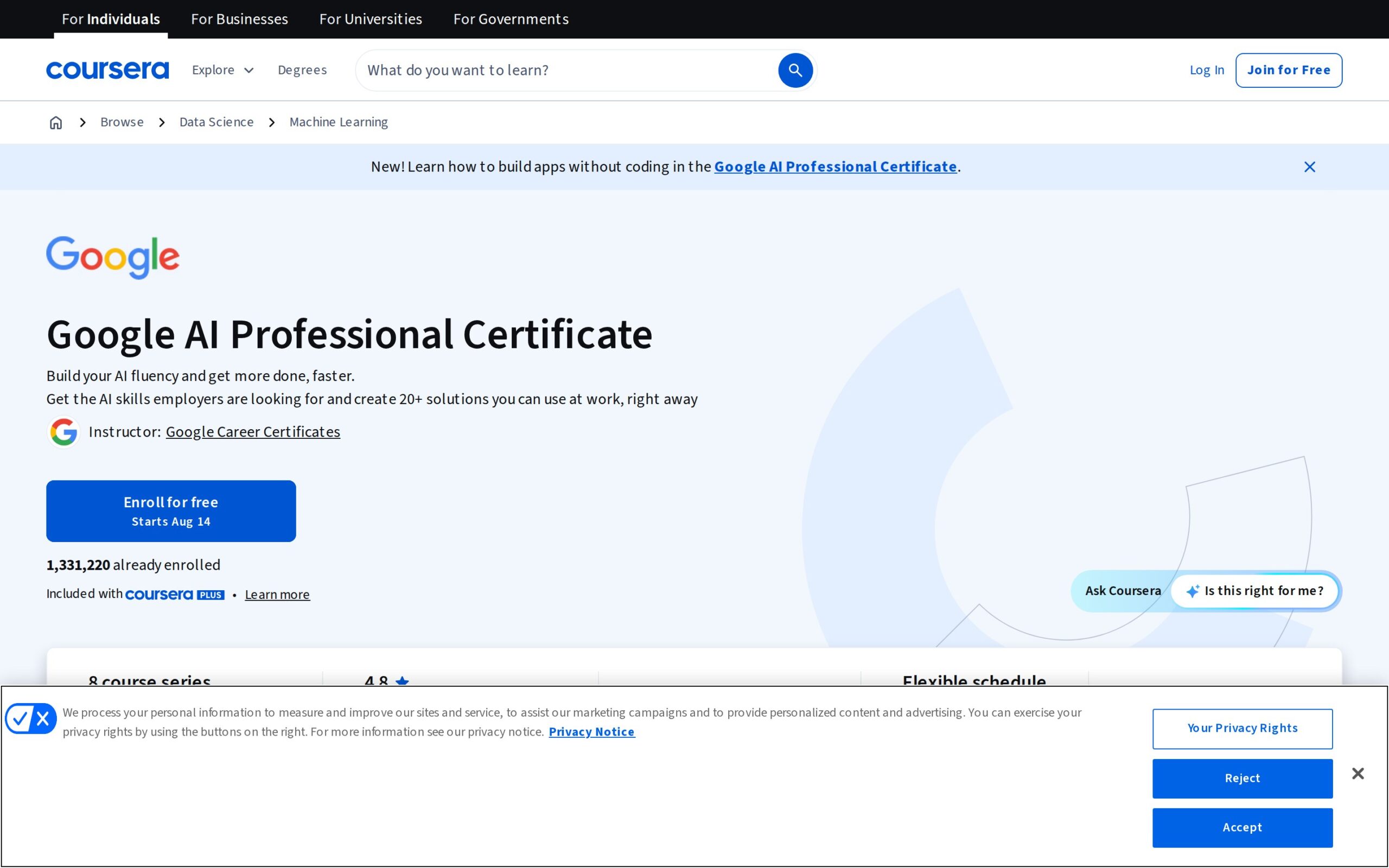
5. Google AI Professional Certificate — Coursera / Google
What You'll Learn:
- Build custom AI tools without heavy coding
- Clean and analyse data with AI assistance
- Automate routine tasks responsibly
What We Like:
- An extremely low time commitment for a completion-friendly certificate
- Curriculum validated by employers for baseline AI literacy
Things To Consider:
- No coding experience required, which also means little for developers to actually learn
- Thin technical depth compared with everything else on this list
- Best For: Business users and non-technical professionals after AI literacy, not developers looking to build systems.
- Time Commitment: Roughly eight hours, fully self-paced.
- Career Impact: Fine as a line on a CV for AI awareness. It won't move a developer's technical career forward.
- Our Verdict: Included for completeness. Is it worth a developer's time? Not really — treat this as the outlier here, and skip it unless you need the business-facing framing.
- Rating: ★★☆☆☆
- Course: https://www.coursera.org/professional-certificates/google-ai
Five courses, one pattern: the ones developers actually finish are the ones that respect both their time and what they already know. Pick based on your existing skills, not whatever's trending this quarter.
Frequently asked questions
What is the most demanding AI course listed?
The most demanding course on this list is AI Engineering, which requires a significant time commitment and produces defensible portfolio work.
Which course is best for beginners?
Generative AI for Software Development is aimed at developers newer to generative AI, providing a fast, focused primer on using LLMs in coding.