

A developer at 9 p.m. has a decision to make. You can spend three hours wiring an agent. Or you can spend those same three hours learning why it fails.
That second choice is the one. This month's list finds the courses that turn limited evening time into something you can use: a working agent, a deployed model, a workflow, a mathematical instinct.
Seven earned a spot. Some are genuinely hands-on. Others are short orientation ramps.
That's not just phrasing. It decides your evening.
1. Hugging Face Agents Course
What It Teaches
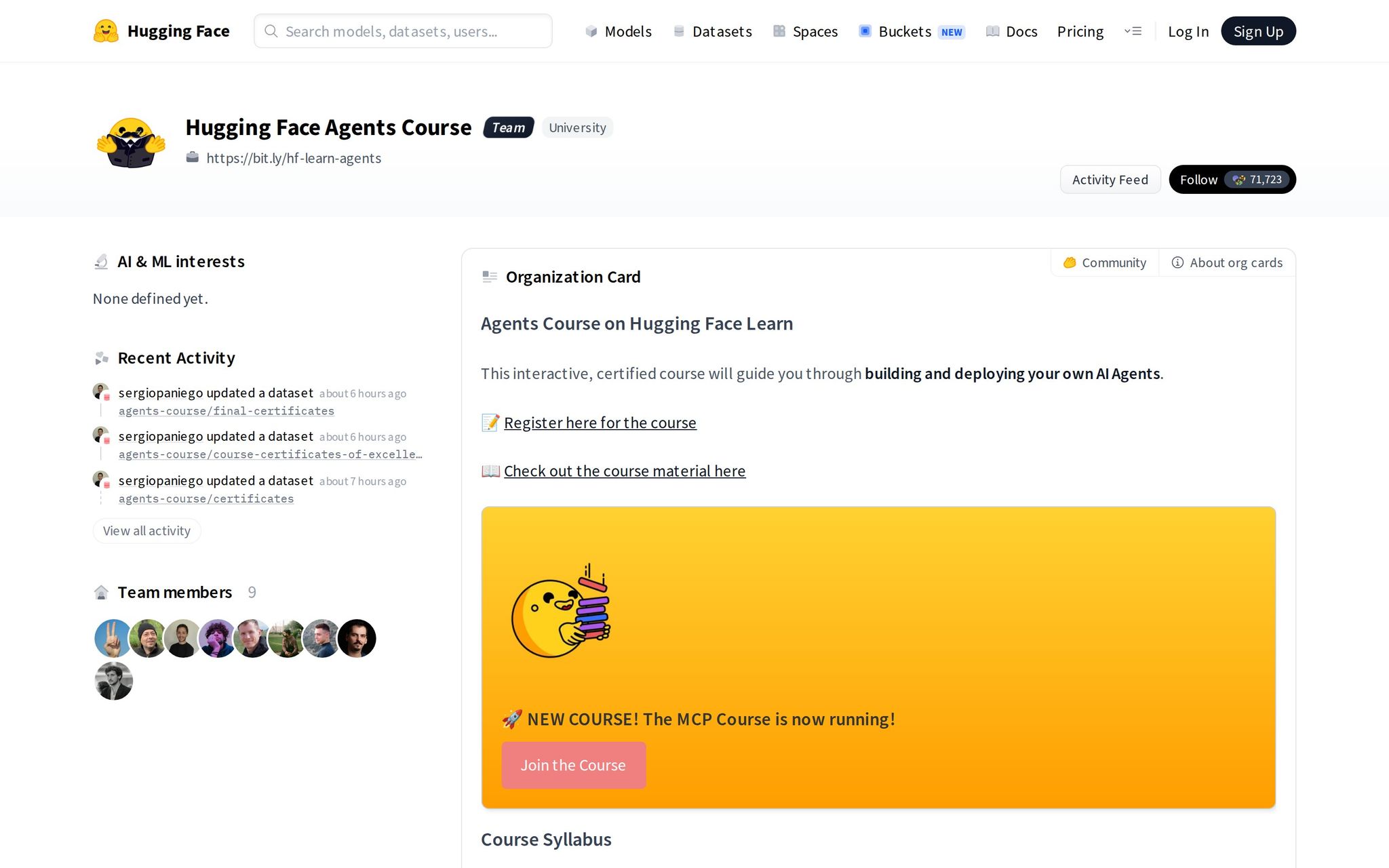
This free interactive course walks you through designing, prompting, evaluating, and building AI agents using libraries like smolagents, LlamaIndex, and LangGraph. You finish by creating your own agents, culminating with one aimed at the GAIA benchmark.
Why It's Trending
The course page was refreshed in September 2026. It uses the latest libraries and tools, which matters because the frameworks and patterns in agent development shift fast.
Key Learning Areas
- Agent design — structure agents that can reason and act
- Agent libraries — build with smolagents, LlamaIndex, and LangGraph
- Evaluation — test a final agent against the GAIA benchmark
Best For
- Developers — building a first serious agent
- Students — learning agent concepts through challenges
- AI professionals — comparing current agent libraries
What Makes It Different
It blends written lessons, live sessions, quizzes, challenges, and community sharing instead of relying on video lectures alone. The final benchmark project gives you a real finish line, something a casual framework tutorial won't.
Duration & Format
Interactive online course with live sessions and self-paced material — each chapter takes about 1 week at 3–4 hours per week.
Pricing
Free — completion assignments qualify learners for a course certificate.
Things to Consider
- Prerequisites: Python, LLM prompting, and a Hugging Face account
- Time commitment: about 3–4 hours weekly per chapter
- Practical component: the course centers on building agents and a GAIA-focused final project
- Certification value: the certificate records completion but is not an external credential
- Course freshness: the material was updated in September 2026 and emphasizes current libraries
Our Verdict
A strong fit for developers moving from prompt experiments to working agents, provided they already know Python and can commit several focused hours each week. The certificate is secondary; the builds are the real payoff.
Course: https://huggingface.co/agents-course
2. Practical Deep Learning for Coders
What It Teaches
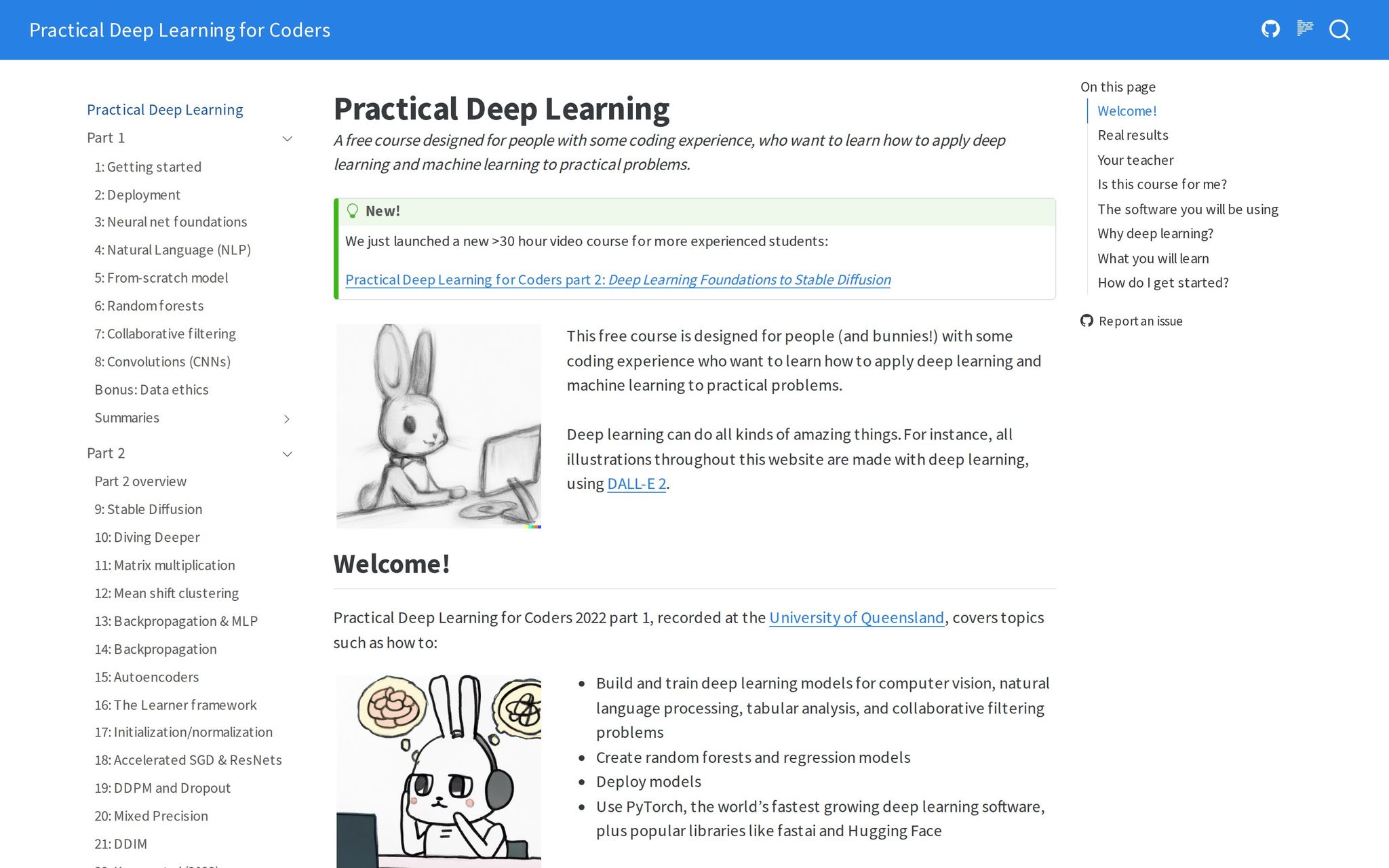
This free, hands-on course teaches you to train practical models for computer vision, natural-language processing, tabular data, and recommendations, then deploy them. Part 2 goes deeper, making you implement Stable Diffusion and related diffusion methods from scratch.
Why It's Trending
The main course page was updated in September 2026, and Part 2 launched with over 30 hours of video in August 2026. Its current coverage of diffusion methods keeps an old workhorse course relevant.
Key Learning Areas
- Model building — train models across vision, language, tabular, and recommendation tasks
- Deployment — turn trained models into web applications
- Diffusion — implement Stable Diffusion-related methods from scratch
Best For
- Developers — building and deploying models
- Students — learning through practical projects
- AI professionals — refreshing hands-on deep-learning skills
What Makes It Different
It moves fast: from model concepts to usable systems, with free resources for learning and deployment. Part 2 digs past application into the machinery behind diffusion models, a step most short courses skip.
Duration & Format
Self-paced online video course — about 13.5 hours for the nine-lesson main course, with Part 2 adding more than 30 hours.
Pricing
Free — no certificate was visible on the course page.
Things to Consider
- Prerequisites: some coding experience
- Time commitment: the main course takes about 13.5 hours; Part 2 needs over 30 more
- Practical component: includes model training, web apps, deployment, and from-scratch diffusion work
- Certification value: no stated certificate; you must show skills through projects
- Course freshness: the main page was updated September 2026, Part 2 in August 2026
Our Verdict
Rank this highly if you need durable model-building instincts and can spare the longer Part 2 commitment. Skip it if you want instructor feedback, formal grades, or a quick agent-building path.
Course: https://course.fast.ai/
3. Claude Academy
What It Teaches
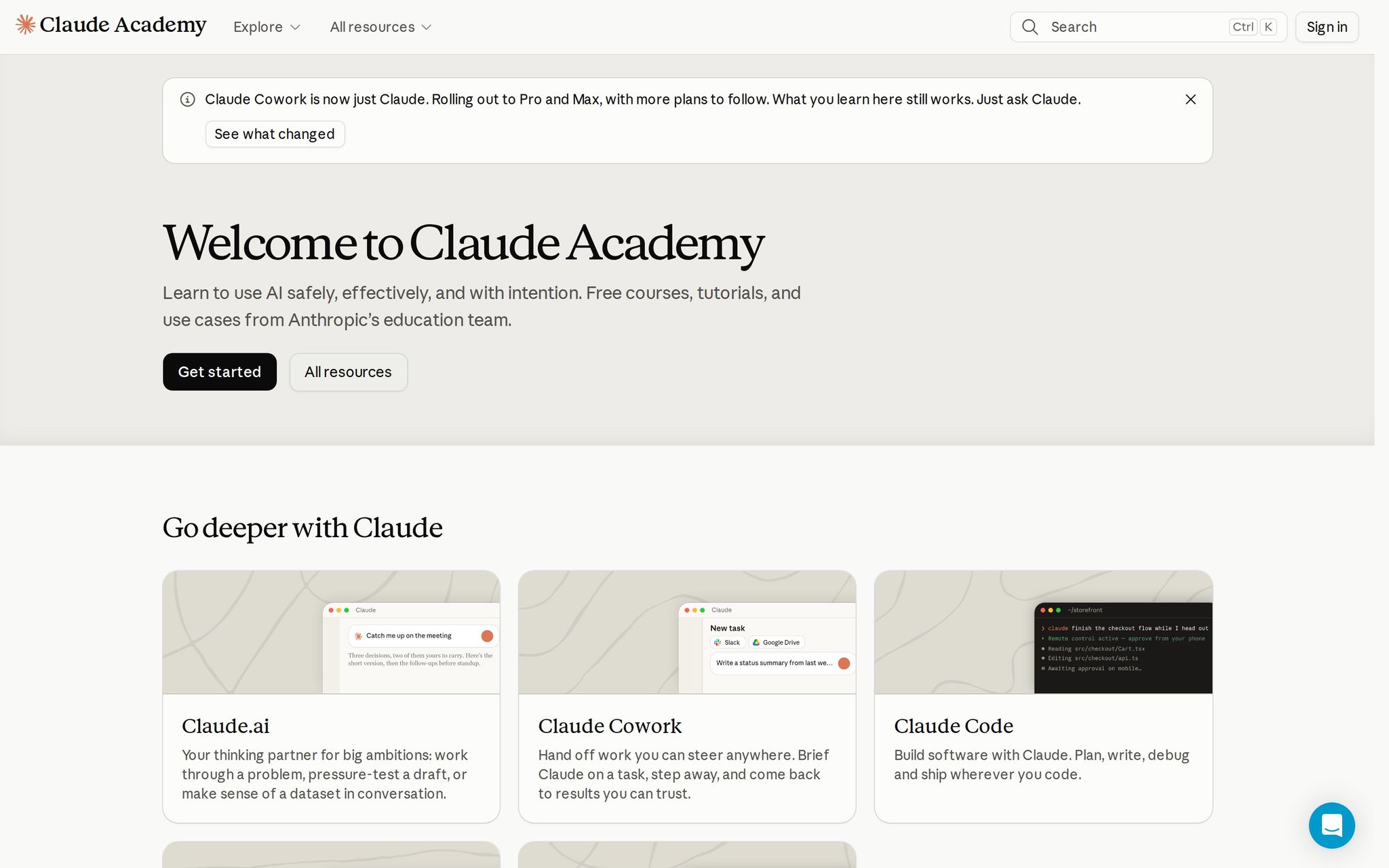
This is Anthropic’s structured learning hub for using Claude at work and building with it. Paths cover AI fluency, model capabilities and limits, personal use, builder workflows, and Claude development with MCP.
Why It's Trending
The learning pages and catalog were updated in September 2026, with builder and MCP content highlighted. It's a timely ramp for anyone trying to understand current Claude workflows without enrolling in a long program.
Key Learning Areas
- AI fluency — apply a framework for working with Claude
- Capabilities and limits — choose appropriate Claude workflows
- Builder paths — learn practical Claude development and MCP concepts
Best For
- Beginners — getting oriented with Claude
- Developers — starting Claude and MCP workflows
- Business leaders — understanding practical AI collaboration
What Makes It Different
The catalog is concise and organized for specific audiences: students, educators, small businesses, builders. That focus gives it clarity a general AI survey doesn't have, but it also means less technical depth.
Duration & Format
Self-paced online learning paths with video lessons, quizzes, and completion badges — visible courses run about 2.5 to 4 hours.
Pricing
Free — public learning pages show completion badges rather than a separate certificate price.
Things to Consider
- Prerequisites: no hard prerequisites stated; difficulty varies by path
- Time commitment: visible courses run 2.5 to 4 hours
- Practical component: builder tracks support collaboration and development, but the public pages don't show a full graded project
- Certification value: completion badges aren't presented as an external credential
- Course freshness: the catalog and learning pages were updated in September 2026
Our Verdict
Beginners and teams adopting Claude can get useful workflow vocabulary in one evening. Developers should treat it as onboarding, not specialization. It works when your goal is competent Claude use, not deep model engineering.
Course: https://academy.claude.com/
4. Probability for Artificial Intelligence
What It Teaches
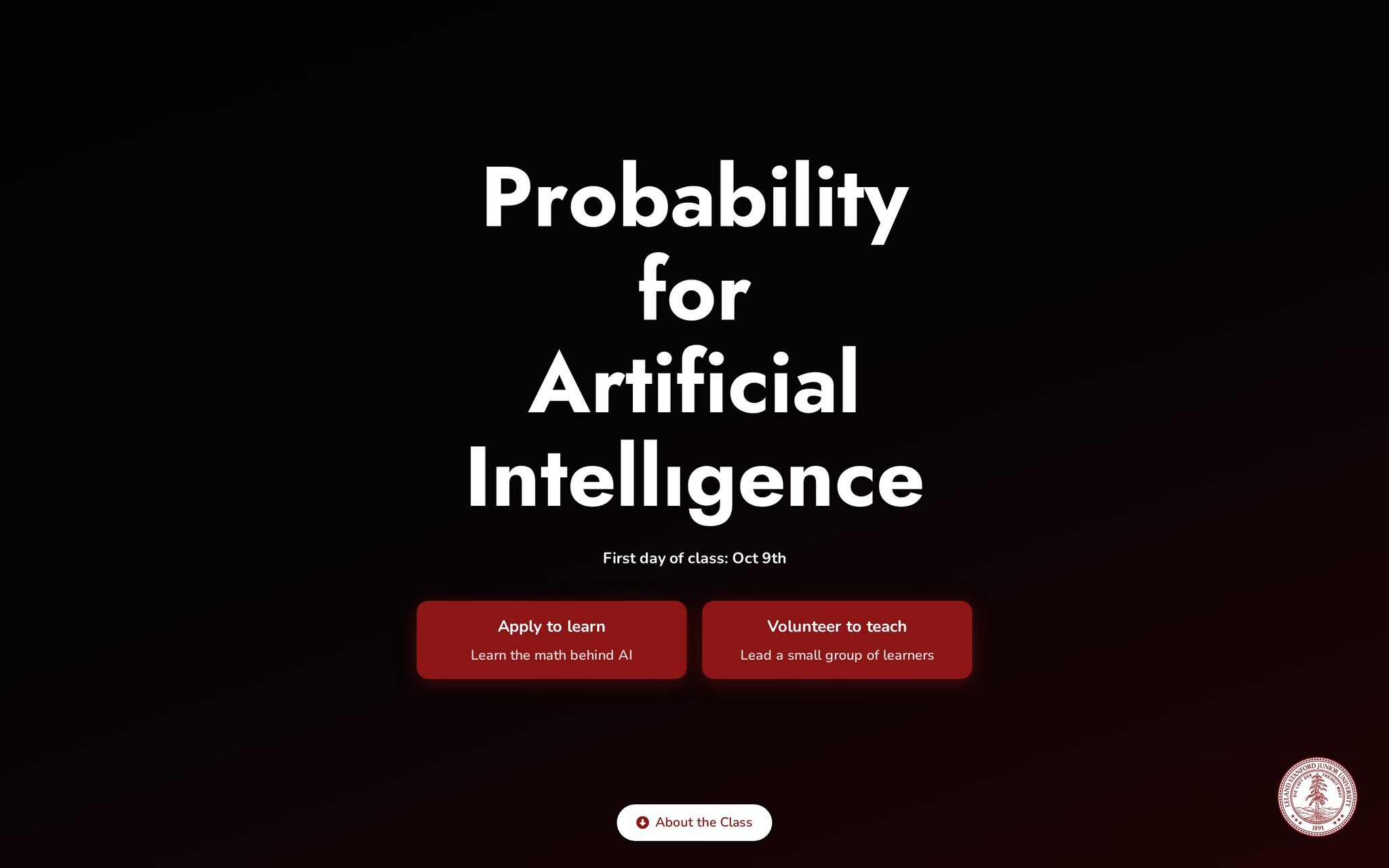
This Stanford online course teaches the probability behind modern AI, then connects it to neural-network fundamentals through hands-on projects. You build a portfolio of shareable apps, including an AI Word Detective, instead of just working through equations.
Why It's Trending
The page was updated September 16, 2026, and the six-week class starts October 9, 2026. Its promise—mathematical grounding with practical output—is timely, delivered without fees or a premium tier.
Key Learning Areas
- Probability — understand the mathematical language behind AI
- Neural-network fundamentals — connect probability ideas to modern models
- Code projects — create shareable apps for a public portfolio
Best For
- Beginners — building mathematical confidence in AI
- Students — connecting algebra and probability to projects
- Developers — strengthening theory behind model behavior
What Makes It Different
It pairs a math-focused curriculum with a portfolio of working applications and self-paced scheduling. That mix separates it from a pure math lecture series and from a tools-first agent course.
Duration & Format
Self-paced online course with hands-on projects — 6 weeks at a few focused hours per week, starting October 9, 2026.
Pricing
Free — the course states there are no fees or premium tier.
Things to Consider
- Prerequisites: no experience required, but you should be comfortable with algebra
- Time commitment: a few focused hours each week for six weeks
- Practical component: includes an AI Word Detective project and a portfolio of shareable apps
- Certification value: a public Stanford portfolio substitutes for a traditional certificate
- Course freshness: the page was updated September 16, 2026, ahead of the October 9 start
Our Verdict
If you understand code but distrust your AI math foundation, consider this before another framework course. It only pays off if you actually engage with the probability, not treat the portfolio projects as a shortcut around it.
Course: https://pai.stanford.edu/
5. Generative AI Explained

What It Teaches
This is a two-hour, no-coding introduction to generative-AI concepts and applications. It gives you a shared vocabulary and an orientation, full stop. It doesn't promise a build, a deployment exercise, or technical specialization.
Why It's Trending
The cited learning page was updated in March 2026 and the course is still in NVIDIA's active 2026 learning paths. It earns a place as a fast entry point, not for deep technical work.
Key Learning Areas
- Generative-AI concepts — explain how the field’s main ideas fit together
- Applications — recognize common uses of generative AI
- AI orientation — prepare for more technical learning paths
Best For
- Beginners — getting a two-hour overview
- Business leaders — learning basic generative-AI vocabulary
- Students — deciding which deeper AI topic to study next
What Makes It Different
Its advantage is speed. No coding required, basic context established in one sitting. That's also its limit: compared to the others, it offers the least evidence of hands-on learning.
Duration & Format
Self-paced online course — about 2 hours.
Pricing
Free — no certificate is stated on the cited page.
Things to Consider
- Prerequisites: no coding prerequisite is stated
- Time commitment: the course takes about 2 hours
- Practical component: no build outcome or substantial project is promised
- Certification value: no certificate is stated on the cited page
- Course freshness: the cited page was updated in March 2026 and remains listed in NVIDIA’s 2026 catalog
Our Verdict
Business leaders, students, and complete beginners can use this as a low-risk orientation before committing to deeper study. Developers should skip it unless they need a quick shared baseline; it won't teach you to build anything.
Course: https://www.nvidia.com/en-sg/learn/ai-learning-essentials/
6. OpenAI Academy: Agents and Workflows
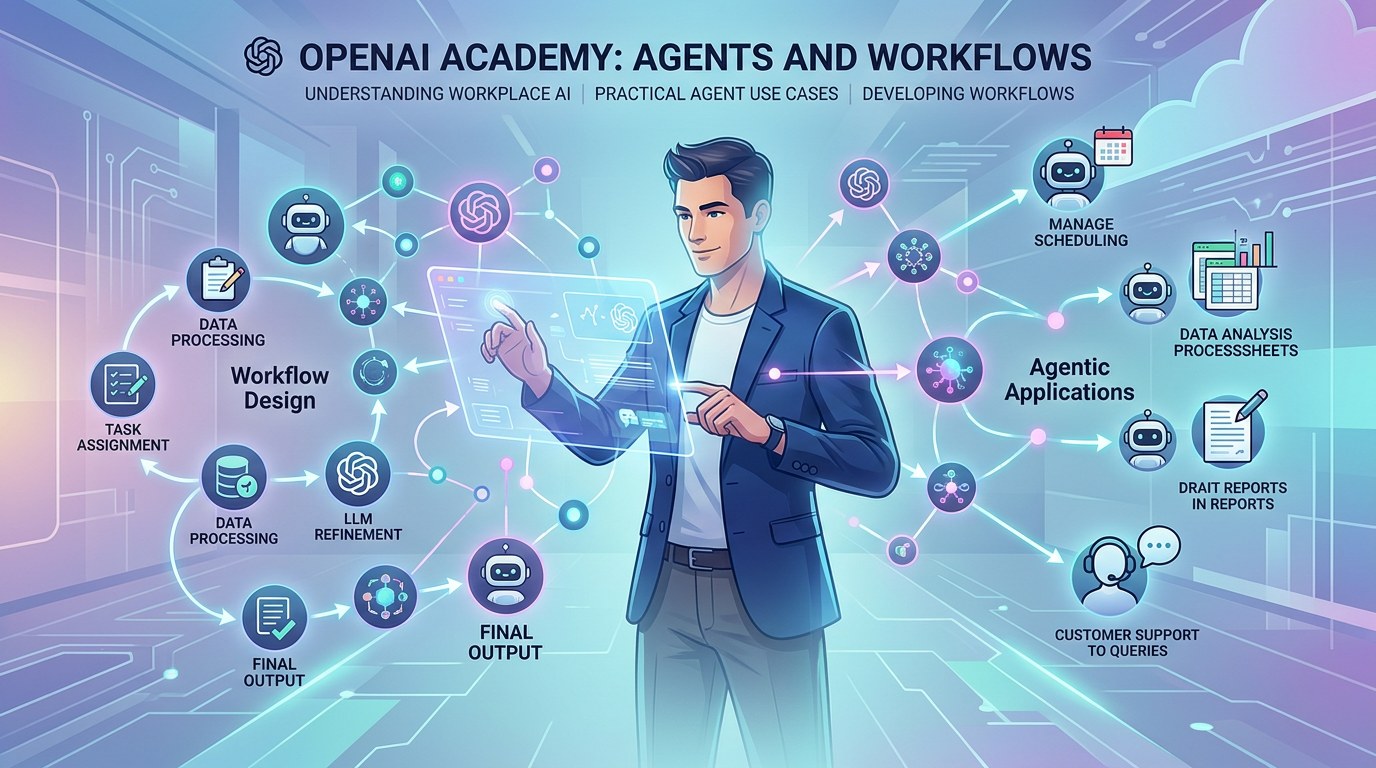
What It Teaches
This online Academy course focuses on applying AI at work through practical workflows and agentic applications. The information suggests the outcome is designing work-oriented AI workflows, but a single final project or detailed technical build isn't identified.
Why It's Trending
OpenAI added this as one of three new courses in June 2026. The launch puts it right in front of the demand for agent-assisted work, though the public information leaves key details unverified.
Key Learning Areas
- AI foundations — develop practical understanding for workplace use
- Workflow design — organize repeatable tasks around AI assistance
- Agentic applications — explore work-oriented agent patterns
Best For
- Beginners — understanding workplace AI workflows
- Business leaders — identifying practical agent use cases
- Developers — surveying OpenAI’s current workflow framing
What Makes It Different
It's directly aligned with OpenAI's own current framing of agents and workplace workflows. The drawback is also direct: the public page doesn't expose enough detail to compare its technical depth with a project-led agents course.
Duration & Format
Online Academy course — duration and delivery schedule are not clearly stated on the available page.
Pricing
Paid — price is not clearly stated on the available page.
Things to Consider
- Prerequisites: not clearly stated on the indexed course information
- Time commitment: duration is not clearly stated, so evening planning is difficult
- Practical component: practical workflows and agentic applications are described, but no single final project is specified
- Certification value: certificate details are not clearly stated
- Course freshness: the course launched in June 2026
Our Verdict
If you're a business leader or developer curious about OpenAI’s workplace-agent approach, sample this once the missing logistics are confirmed. It's a weaker choice if you need a known workload, a defined project, or a verifiable credential before enrolling.
Course: https://openai.com/index/academy-courses-applying-ai-at-work/
7. Design and build integrated AI agent solutions in Copilot Studio

What It Teaches
This Microsoft instructor-led course trains you to build integrated Copilot Studio agents and multi-agent solutions for production. The work covers reasoning, automation, external integrations, testing, deployment, monitoring, and application lifecycle management.
Why It's Trending
The course page says it will be available September 30, 2026, right before this October issue. Its tight focus on production-ready enterprise agents is relevant to teams moving beyond demonstrations.
Key Learning Areas
- Agent architecture — design Copilot Studio and multi-agent solutions
- Enterprise integration — connect agents to external systems and workflows
- Operations — test, deploy, monitor, and manage agent lifecycles
Best For
- Developers — building integrated enterprise agents
- AI professionals — formalizing agent deployment practices
- Business leaders — evaluating production workflow automation
What Makes It Different
It concentrates on the operational concerns most introductory agent courses skip: integrations, monitoring, deployment, and lifecycle management. The trade-off is timing—the course isn’t yet available on the page as of the latest update.
Duration & Format
Instructor-led online or in-person training, with self-paced preparation also described — 3 days.
Pricing
Paid — public pricing is not listed.
Things to Consider
- Prerequisites: no detailed math requirements listed; practical solution-building and enterprise workflow familiarity matter more
- Time commitment: a concentrated 3-day block
- Practical component: focuses on building, testing, deploying, and monitoring integrated agents
- Certification value: includes an achievement code and prepares you for a related Microsoft certification; it is not itself a standalone certificate
- Course freshness: the page says availability begins September 30, 2026, so check access before booking
Our Verdict
Enterprise developers and solution builders should pick this when deployment, monitoring, and integrations matter more than broad AI theory. Whether it fits depends on confirmed availability and employer-backed pricing, because access and cost aren't fully public yet.
Course: https://learn.microsoft.com/en-us/training/courses/ab-620t00
The short courses let you establish vocabulary. The stronger technical picks demand more: Python, algebra, several evenings of construction. Choose by the artifact you want at the end.
An agent. A deployed model. A portfolio app.
Or just enough context to pick the next course intelligently.