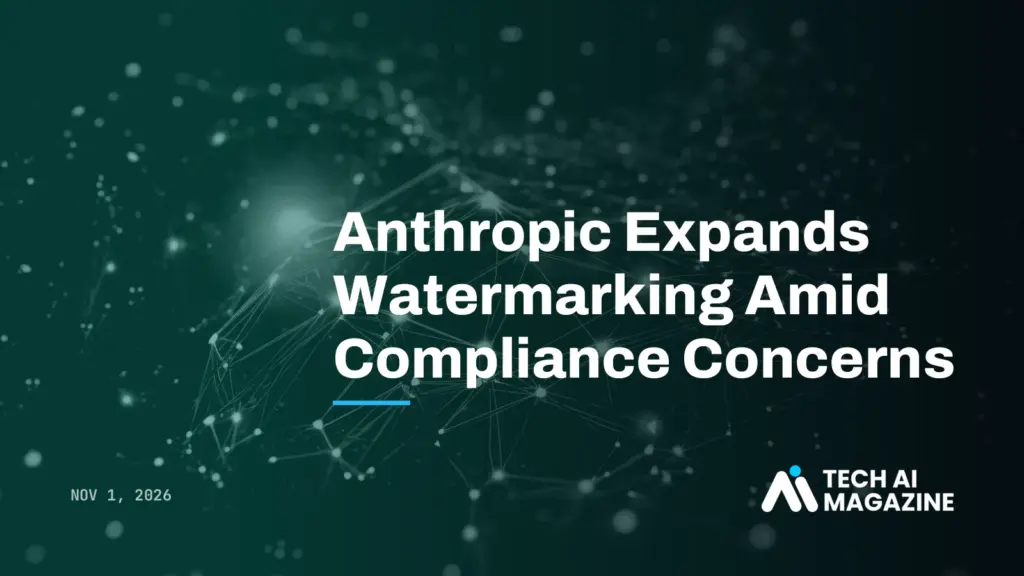
Anthropic is rolling out its text watermark feature to four additional Claude models in an effort to comply with the EU AI Act’s deadline in December. This initiative aims to enhance transparency and accountability in AI-generated content.
However, a significant loophole has been identified in two of its older models, Claude Opus 4.6 and Sonnet 4.6. Developers can bypass the watermark by adjusting a single sampling parameter, raising concerns about the effectiveness of the compliance measures.
In response to this issue, Anthropic has chosen to issue a compliance warning rather than an immediate fix. This decision highlights the ongoing challenges AI companies face in balancing innovation with regulatory requirements, especially as scrutiny over AI technologies intensifies.
Compiled automatically by the Tech AI Newsdesk from public AI-news sources and summarised in our own words.
Frequently asked questions
What is the purpose of Anthropic's text watermark feature?
The text watermark feature aims to enhance transparency and accountability in AI-generated content.
What issue has been identified with older Claude models?
A significant loophole allows developers to bypass the watermark by adjusting a single sampling parameter.
What action did Anthropic take in response to the compliance concerns?
Anthropic chose to issue a compliance warning rather than an immediate fix, highlighting ongoing regulatory challenges.