
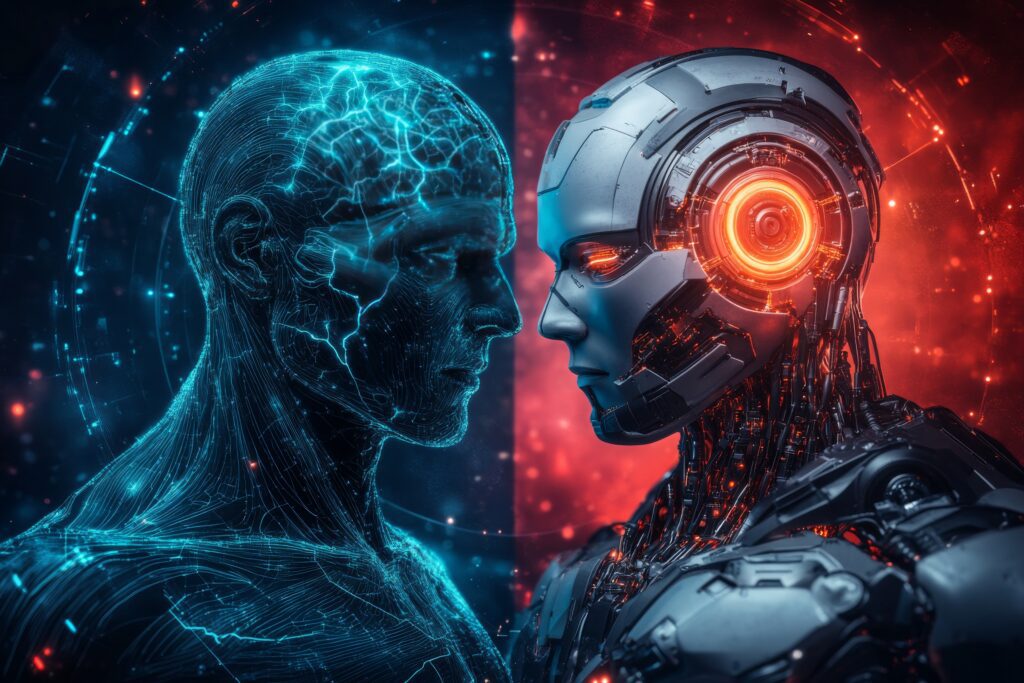
Artificially Confused: Why Pay Content Writers When There’s ChatGPT?
This month, we cover an interesting question from our avid reader Sarah, a professional content writer who’s facing a real dilemma: her clients want to know why they should pay her when ChatGPT AI writing tools—the popular generative AI content platforms—are freely available.
Sarah’s question taps into a much broader debate about AI’s impact on creative and professional work. As artificial intelligence content generation tools become more accessible and sophisticated, many people are wondering what new roles humans will play. How do you balance the efficiency AI offers with the unique value human creators bring? And when does cutting costs with AI start to backfire?
In this article, we’ll dig into Sarah’s question and explore other similar concerns from readers grappling with AI content creation challenges—from resume writers to translators. Plus, we’ll unpack why human-AI collaboration is key and give some tips on how to blend AI’s strengths with your own talents instead of competing against it.
The Human Side
Sarah’s feeling a little squeezed by the rise of AI in professional content writing, but she’s far from alone. Carlos, a taxi driver, recently asked us why AI navigation apps sometimes send him on ridiculous detours, undermining his hard-earned local knowledge. Megan, a veterinarian, worries about AI diagnostic tools giving clients questionable advice and possibly harming pets. Then there’s Priya, an HR manager, who confessed that some AI-written resumes she vetted turned out to be impressively well-worded but completely misleading on skills and experience.
What unites these stories? They highlight misplaced trust and overreliance on AI systems that have blind spots. Sarah’s clients see ChatGPT’s glib, instant prose and might assume it matches human insight. Yet, Carlos knows that no app can truly replace decades behind the wheel; Megan understands that nuanced diagnosis requires more than pattern spotting; and Priya realizes resumes crafted by AI can gloss over real human complexities.
These examples speak to a core issue: AI lacks the empathy, contextual understanding, and judgment that humans bring to their professions. At best, AI is a tool—not a substitute for experience, creativity, or ethical responsibility.
The Tech Breakdown
Let’s get curious about why AI behaves the way it does. ChatGPT and similar natural language processing AI models generate text by predicting what words are likely to come next based on patterns they’ve “learned” from vast amounts of writing. But they don’t understand meaning or intent the way humans do. They can’t experience a story or grasp a client’s tone in the way a sensitive writer like Sarah can.
Also, these AI models only know what they’ve been trained on, which is sometimes outdated, biased, or incomplete. If you ask ChatGPT to write on a niche topic or a nuanced argument, it might sound confident but could miss key facts or perspectives. It’s like a parrot repeating phrases without really knowing what they mean.
In the case of Megan’s veterinary AI tools, diagnostic AI often relies on pattern recognition from datasets—but lacks the clinical judgment and physical examination skills a vet applies. This is why AI might flag symptoms that look similar but require drastically different treatment.
Navigation AI, like Carlos’s maps, crunches live traffic data but can’t always factor in local quirks like unexpected construction, small shortcuts, or temporary closures known only to residents.
Bottom line: these systems make impressive guesses based on data but don’t “think” or feel. That’s why human expertise is still critical to validate and enrich their outputs.
Smart Solutions & Tools
So, what should Sarah and others do to show clients why human creativity matters — and how to use AI wisely?
For Content Writers like Sarah:
- Use AI as a first draft tool: Let ChatGPT do quick brainstorming or create rough outlines, then add your unique voice, insights, and storytelling flair to make the piece truly compelling.
- Highlight your research and fact-checking: AI can produce plausible sounding content that might be inaccurate. Your role as expert researcher is invaluable.
- Offer personalized strategies: ChatGPT can’t fully grasp a brand’s personality or goals — you can design content that strategically aligns with each client’s audience using AI-powered content personalization techniques.
For Career Services like HR Managers:
- Combine AI with human review: Use AI to screen resumes quickly but always have real people verify credentials and fit.
- Leverage ethical AI tools: Platforms like Grammarly and custom ChatGPT tone guides help strike a balance between AI-driven automation and authenticity.
For Navigation & Local Experts:
- Cross-verify routes: Use community-driven apps like Waze alongside personal knowledge to avoid blind spots.
- Report issues: Engage with live data communities to improve AI navigation accuracy.
For Healthcare Professionals:
- Use AI tools as assistants, not authorities: Consult AI diagnostics but rely on clinical judgement for final decisions.
- Emphasize empathy: AI lacks bedside manner; your human connection is irreplaceable.
Closing Thoughts
The truth is, AI isn’t always wrong—it’s just missing the human touch. And maybe that’s where we still matter most. For Sarah and many others, the best path isn’t fighting AI but embracing it as a helper that frees up time for the uniquely human job of making work meaningful, creative, and trustworthy.
Got an AI mystery of your own? Write to us at [email protected], and you might be featured in our next edition of Artificially Confused.