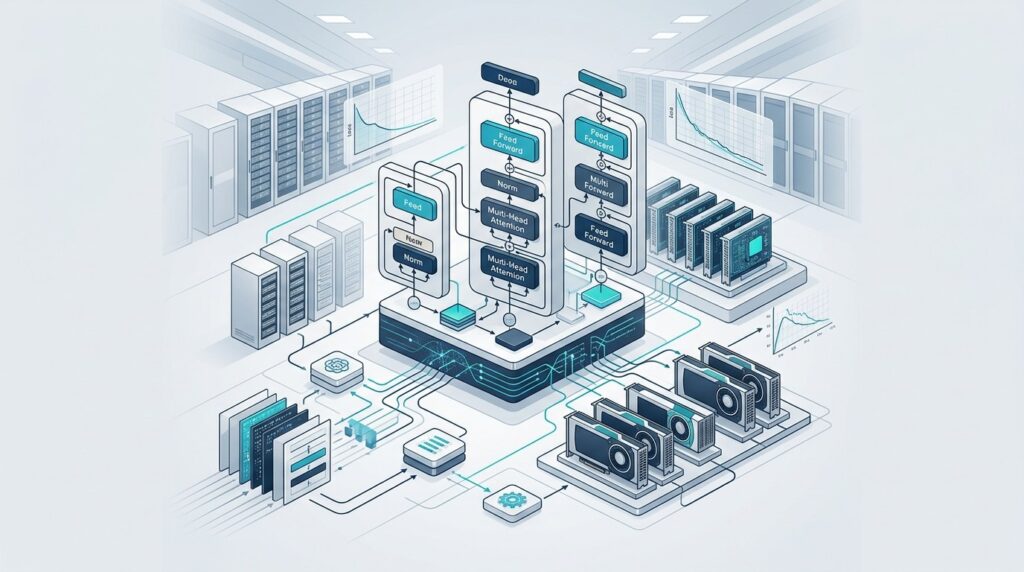

The useful question is no longer which model sounds smartest, but which one fits the job, budget, and deployment rules. This month’s list spans low-cost text models, million-token context windows, open weights, multimodal reasoning, music generation, and retrieval. Some entries are new releases; others remain relevant because developers still need predictable, inexpensive building blocks.
The evidence is uneven, so missing benchmarks and access details matter as much as the headline capabilities.
1. GPT-5.6 Luna

What It Does
GPT-5.6 Luna is a text-in, text-out model in OpenAI’s application programming interface, or API. Developers can use it for chat, extraction, summarization, and other language tasks where low token cost matters more than multimodal input.
Why It's Trending
OpenAI presents Luna as the low-cost option in its GPT-5.6 family, with promotional pricing available at least through November 2026. September 2026 documentation also shows a 1,050,000-token context window, enough for unusually large text collections.
Key Capabilities
- Reasoning: Handles general text tasks, although no benchmark scores were captured.
- Long context: Supports 1,050,000 tokens in the GPT-5.6 documentation.
- Tool/agent capabilities: API access can serve as a language component inside developer-built workflows; specific tool features were not captured.
Best For
- Developers — building inexpensive text-processing APIs
- AI applications — summarization, extraction, and chat at controlled token cost
What Makes It Different
Its main distinction is price: short-context usage costs $0.20 per million input tokens and $1.20 per million output tokens. It offers the GPT-5.6 family’s million-token context at a lower price than Astra, but remains closed and text-only.
Model Access
API — through OpenAI’s API.
Things to Consider
- Cost: Long-context usage rises to $0.40 per million input tokens and $1.80 per million output tokens.
- License: Weights are closed, with no open license stated.
- Safety limitations: The captured material does not expose its refusal policy.
- Vendor dependency: Applications depend on OpenAI’s API and pricing.
Our Verdict
A sensible choice for developers processing large amounts of text without needing images or audio, provided the lower promotional price remains available and closed-API dependence is acceptable.
2. GPT-6 Astra
What It Does
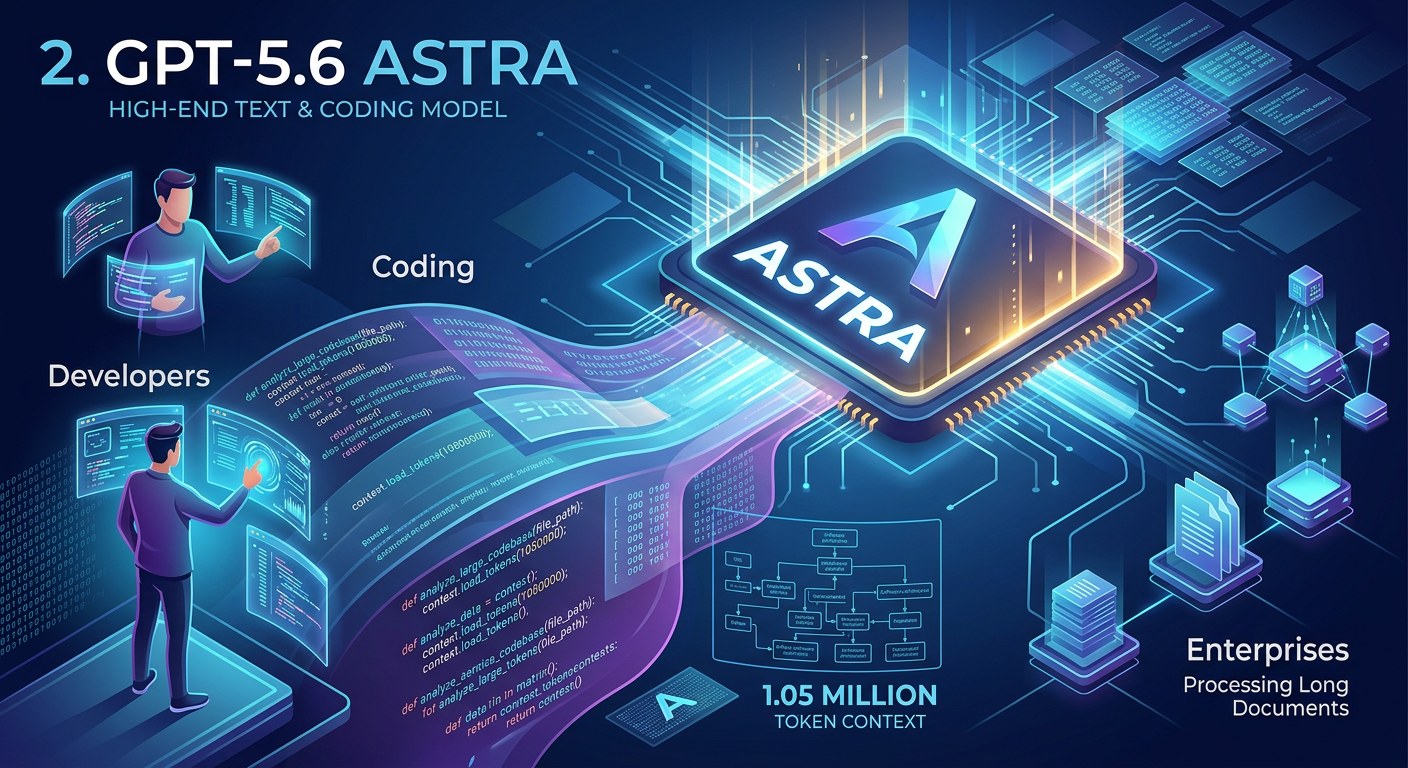
GPT-6 Astra is a high-end text and coding model accessed through OpenAI’s API. A developer could use it to analyze a large codebase, generate software changes, or handle long documents without repeatedly splitting them into small pieces.
Why It's Trending
The model appeared in OpenAI’s current lineup in September 2026, and long-context pricing was documented September 11–17. Its 1.05-million-token context is the feature most likely to put it in front of teams now.
Key Capabilities
- Coding: Supports coding tasks, including work over long prompts.
- Long context: Accepts 1,050,000 tokens.
- Reasoning: Positioned as a high-end general-purpose model, but no benchmark scores were captured.
- Tool/agent capabilities: API use allows integration into developer systems; specific tool support was not captured.
Best For
- Developers — working across large repositories or specifications
- Enterprises — processing long internal documents through an API
- AI applications — high-end text generation and analysis
What Makes It Different
Astra is the expensive, high-end counterpart to Luna, with standard pricing of $10 per million input tokens and $50 per million output tokens. The available evidence supports its scale and price, not a measured quality advantage.
Model Access
API — through OpenAI’s API documentation and service.
Things to Consider
- Cost: Standard output pricing is $50 per million tokens, before any long-context charges.
- License: Weights are not open, and no open license was listed.
- Vendor dependency: Production systems rely on OpenAI’s API.
- Evidence: No benchmark page or detailed limitations page was captured.
Our Verdict
Astra suits enterprises and developers whose prompts genuinely exceed ordinary context limits, but the high output price means smaller workloads should first test whether Luna or a compact model is sufficient.
3. Kimi K3
What It Does
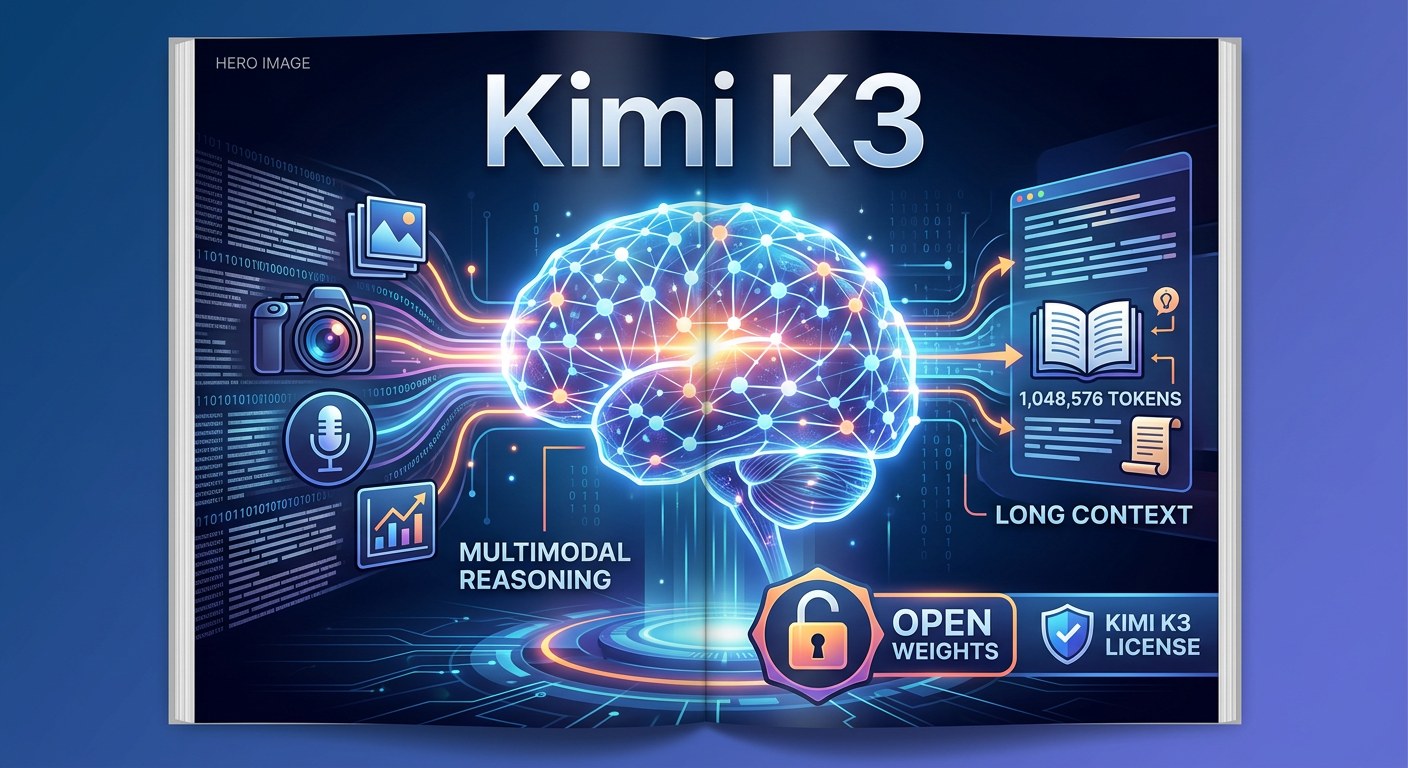
Kimi K3 is a multimodal reasoning model: it accepts text and other captured input types, then returns text. Developers can use it to examine mixed media alongside written instructions, especially when a single prompt must contain a very large working set.
Why It's Trending
Moonshot released Kimi K3 in July 2026, and the latest captured material comes from July and August. The model combines native multimodal reasoning with a 1,048,576-token context window, giving developers a notable alternative to closed frontier APIs.
Key Capabilities
- Reasoning: Performs reasoning across multimodal input.
- Multimodal: Accepts multimodal inputs and produces text.
- Long context: Supports 1,048,576 tokens.
- Tool/agent capabilities: No specific tool or agent features were captured.
Best For
- Developers — prototyping multimodal analysis
- Researchers — testing open-weight reasoning systems
- AI applications — handling large mixed-media prompts
What Makes It Different
Kimi K3 offers open weights under the Kimi K3 License, unlike the closed OpenAI models above. Its $3 per million input-token and $15 per million output-token API pricing is lower than Astra’s, though the captured pages provide no first-party benchmark table.
Model Access
Open weights, API, cloud app — through Kimi’s API and Kimi app; the captured material identifies open weights under the Kimi K3 License.
Things to Consider
- License: The Kimi K3 License is not the same as an unrestricted open license.
- Cost: API use costs $3 per million input tokens and $15 per million output tokens.
- Safety limitations: Detailed refusal behavior was not captured.
- Evidence: The available pages do not include first-party benchmark tables.
Our Verdict
Kimi K3 deserves attention from researchers and builders who need multimodal, million-token reasoning with more control than a closed API provides, if its license fits the deployment.
4. Qwen 3.8 Max

What It Does
The supplied material describes Qwen 3.8 Max as a native multimodal reasoning model with a million-token context window. That combination could support document, image, and other mixed-input applications that return written analysis, although the payload gives no separate model-specific details.
Why It's Trending
The captured material dates its release to July 2026 and describes strong developer attention. However, the supplied record repeats Kimi K3’s laboratory, access, pricing, and license details for Qwen 3.8 Max, so those claims should be verified before production use.
Key Capabilities
- Reasoning: Presented as a multimodal reasoning model.
- Multimodal: Accepts multimodal inputs and produces text.
- Long context: Listed with a 1,048,576-token context window.
- Tool/agent capabilities: No specific tool or agent features were captured.
Best For
- Developers — experimenting with multimodal applications
- Researchers — comparing large-context reasoning models
- AI applications — analyzing large mixed-input prompts
What Makes It Different
Its stated differentiator is the combination of native multimodality and a 1,048,576-token context. The payload does not provide a reliable comparison with Kimi K3 or a separate Qwen price, license, benchmark, or access record.
Model Access
API, cloud app — the supplied material lists API and Kimi app access, but this attribution is not separately confirmed for Qwen 3.8 Max.
Things to Consider
- Evidence: The payload repeats Kimi K3’s metadata, so Qwen-specific facts remain unconfirmed.
- License: The supplied record lists the Kimi K3 License, not a separately verified Qwen license.
- Cost: The listed $3 and $15 token prices may belong to Kimi K3.
- Safety limitations: Refusal behavior was not captured.
Our Verdict
Qwen 3.8 Max is a research-watch entry for teams exploring multimodal, long-context systems, not a settled production recommendation until its separate access, license, and pricing details are verified.
5. GLM 5.2
What It Does
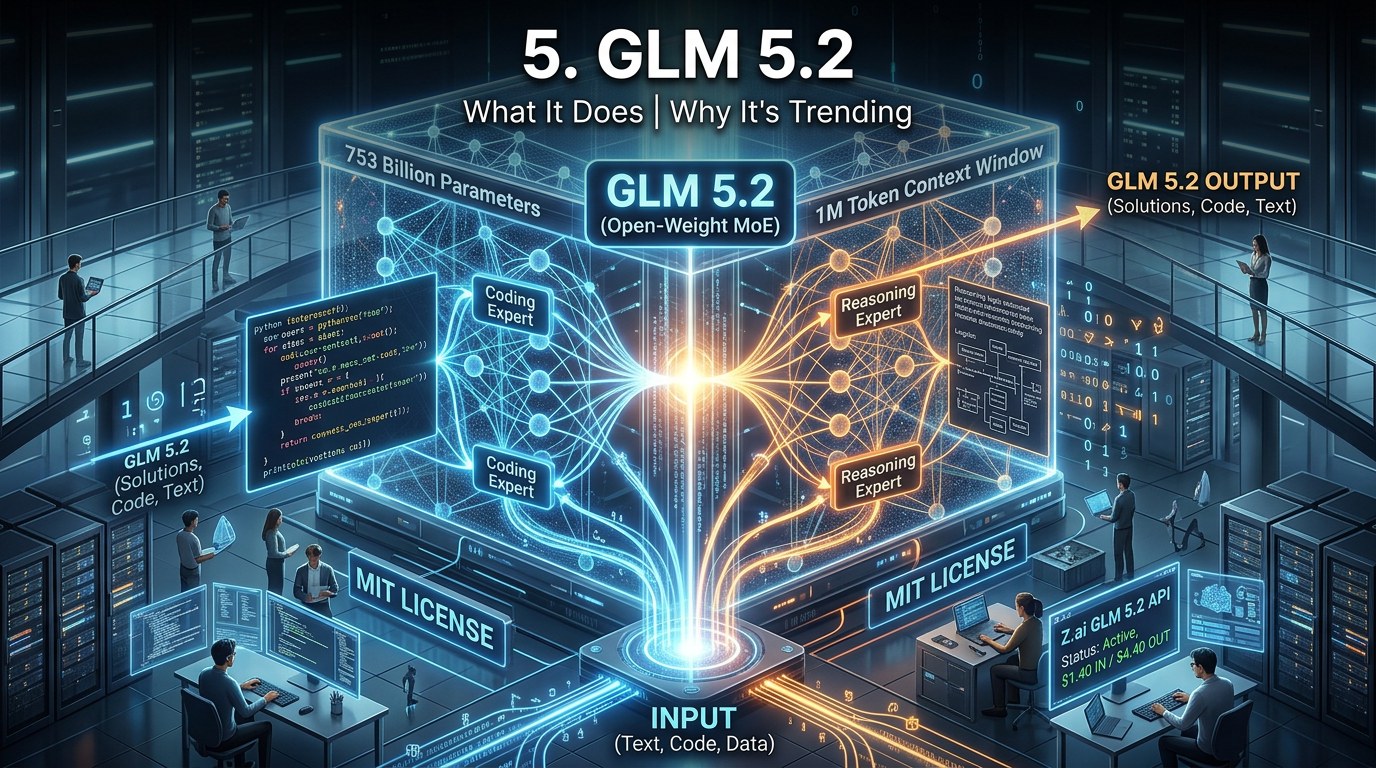
GLM 5.2 is an open-weight mixture-of-experts language model, meaning it uses selected parts of a much larger network for each request. It handles text and coding tasks, giving developers a route to a large model without relying only on closed providers.
Why It's Trending
Z.ai released GLM 5.2 on June 13, 2026 under the MIT license. The captured material describes it as roughly three to seven times cheaper than leading closed models, with API pricing of $1.40 per million input tokens and $4.40 per million output tokens.
Key Capabilities
- Reasoning: Positioned among frontier models, though the full score table was not captured.
- Coding: Handles coding and general language tasks.
- Long context: Supports a 1-million-token context window.
- Tool/agent capabilities: No specific tool or agent features were captured.
Best For
- Developers — building text and coding applications
- Researchers — evaluating open-weight mixture-of-experts models
- Enterprises — considering alternatives to closed APIs
What Makes It Different
GLM 5.2 combines open weights, an MIT license, and a 1-million-token context. Its roughly 753-billion-parameter size is substantial, while the API price is far below the closed models it is compared with; the available evidence does not establish equal quality.
Model Access
Open weights, API — through Z.ai’s direct API; the payload also identifies open weights under MIT.
Things to Consider
- Hardware requirements: The approximately 753-billion-parameter size may make local deployment demanding; a precise hardware figure was not captured.
- License: MIT is permissive, but deployment obligations still need checking.
- Evidence: Complete benchmark breakdowns and latency figures were not provided.
- Safety limitations: Refusal behavior was not captured.
Our Verdict
GLM 5.2 fits researchers and enterprises seeking an open, large-context model with a permissive license, provided they can validate hardware, latency, and quality on their own workloads.
6. GPT-5.4 mini
What It Does
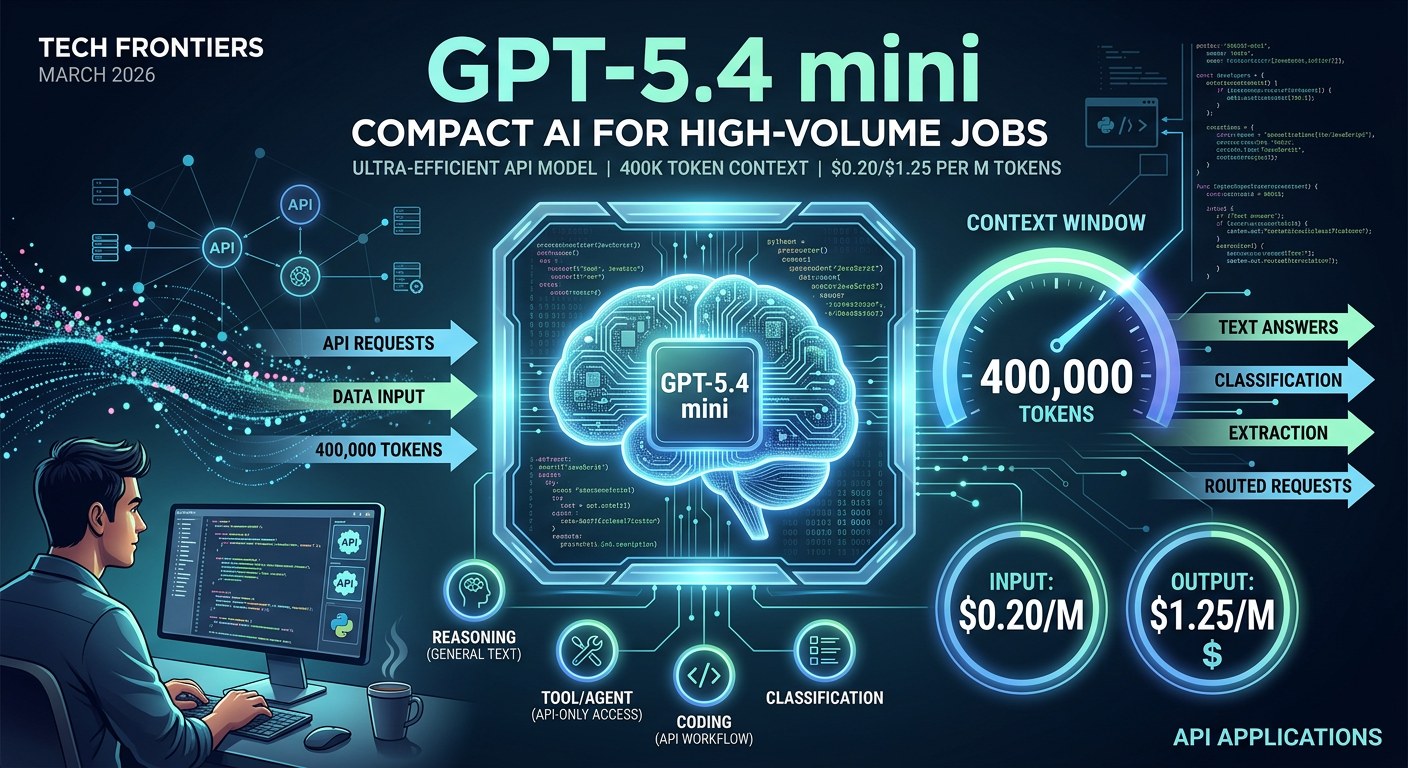
GPT-5.4 mini is a compact text model for API applications. It can power classification, short answers, extraction, and other high-volume jobs where developers need useful language output without paying frontier-model prices.
Why It's Trending
OpenAI introduced it on March 17, 2026, and its pricing remained in the September 2026 documentation. The model offers a 400,000-token context window and costs $0.20 per million input tokens and $1.25 per million output tokens.
Key Capabilities
- Reasoning: Supports general text tasks, but no benchmark scores were captured.
- Long context: Provides a 400,000-token context window.
- Tool/agent capabilities: API-only access lets developers place it inside their own workflows; specific tool features were not captured.
- Coding: The payload does not specifically document coding performance.
Best For
- Developers — adding language features to cost-sensitive applications
- AI applications — high-volume extraction and classification
- Enterprises — routing routine text requests through an API
What Makes It Different
Its appeal is predictable low-cost API use with more context than a small prompt usually requires. GPT-5.4 mini is not open, and the available material does not show a benchmark advantage over newer or larger models.
Model Access
API — OpenAI API only, according to the March 2026 announcement.
Things to Consider
- Cost: Output costs $1.25 per million tokens, so large generated responses still add up.
- License: Weights are closed, with no open license listed.
- Vendor dependency: Applications depend on OpenAI’s API.
- Evidence: No benchmark or limitations page was captured.
Our Verdict
GPT-5.4 mini suits developers building high-volume text features where cost and a 400,000-token window matter more than multimodality, but teams should measure quality before routing every request to it.
7. GPT-4.1 mini
What It Does
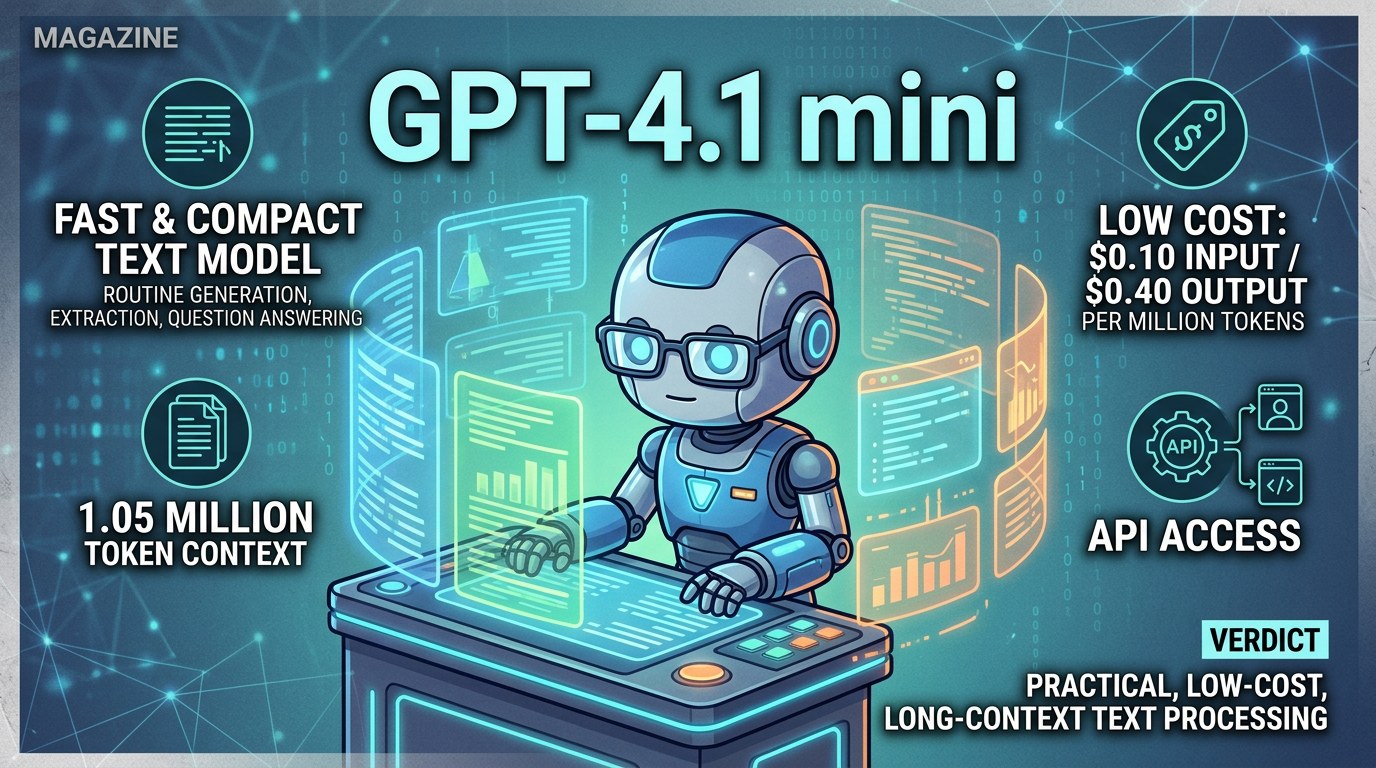
GPT-4.1 mini is a compact text model that turns prompts into written responses through an API. It can handle routine generation, extraction, and question answering, while its documented 1.05-million-token context supports unusually long text inputs.
Why It's Trending
This is a slow-burn pick, not a new launch: OpenAI announced GPT-4.1 mini on April 14, 2025, and still listed it in September 2026 documentation. Its continued place comes from low pricing and a million-token context rather than a recent capability event.
Key Capabilities
- Reasoning: Handles general text work; captured snippets contain no benchmark numbers.
- Long context: Supports a 1.05-million-token context window.
- Tool/agent capabilities: API access supports developer-built workflows; specific tool support was not captured.
- Coding: The payload identifies it as general-purpose, without separate coding results.
Best For
- Developers — maintaining inexpensive text APIs
- AI applications — long-document extraction and answering
- Enterprises — running established text workloads
What Makes It Different
GPT-4.1 mini pairs a very large context window with pricing of $0.10 per million input tokens and $0.40 per million output tokens. It is older than this month’s new models, but the payload gives no evidence that newer options are better for every routine task.
Model Access
API — through OpenAI’s API.
Things to Consider
- License: Weights are not open, and no open license was listed.
- Vendor dependency: Production use depends on OpenAI’s service.
- Evidence: The captured material has no current benchmark scores or limitations page.
- Cost: The listed pricing comes from OpenAI’s April 2025 announcement and should be checked against current billing.
Our Verdict
GPT-4.1 mini remains a practical fit for teams that value low-cost, long-context text processing over novelty, although buyers should confirm its current price and quality against GPT-5.4 mini.
8. MiniMax M3
What It Does
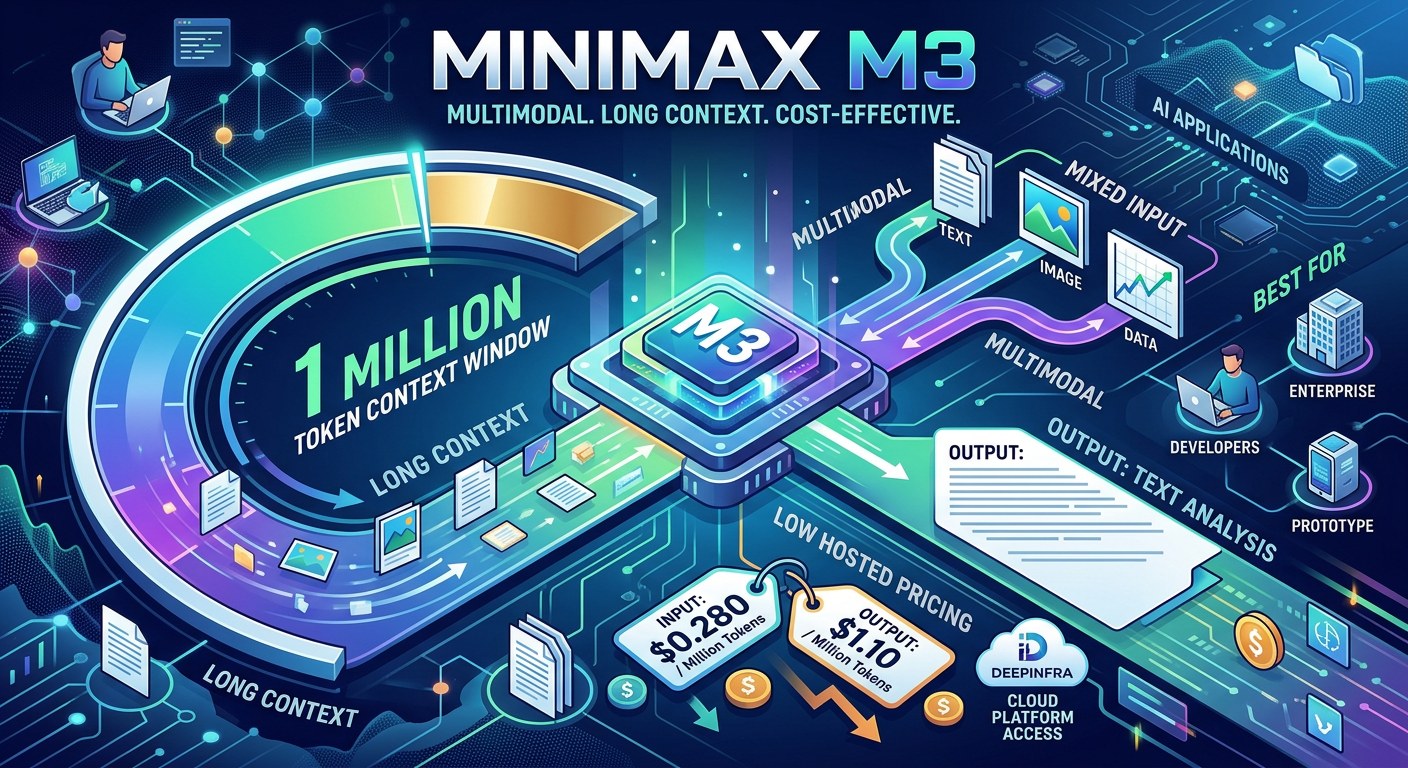
MiniMax M3 is a multimodal language model that accepts mixed input and returns text. Developers could use it to combine written instructions with other media in document analysis or assistant applications, especially when a large prompt must stay together.
Why It's Trending
MiniMax released M3 in June 2026 with multimodal input and a 1-million-token context window. By September 2026 it remained current, while access through DeepInfra was listed at $0.280 per million input tokens and $1.10 per million output tokens.
Key Capabilities
- Multimodal: Accepts multimodal input and returns text.
- Long context: Supports a 1-million-token context window.
- Reasoning: The payload identifies it as a language model but gives no reasoning benchmark.
- Tool/agent capabilities: No specific tool or agent features were captured.
Best For
- Developers — prototyping mixed-input assistants
- AI applications — analyzing long multimodal documents
- Enterprises — testing lower-cost hosted inference
What Makes It Different
M3 combines multimodal input, a million-token context, and low listed hosted pricing. Its commercial details are less complete than the leading API entries, and the payload does not establish whether its quality or latency matches them.
Model Access
Cloud platform — pricing is listed through DeepInfra; first-party access details were not captured.
Things to Consider
- Access: The captured page does not specify first-party access or a complete deployment route.
- License: License terms were not specified.
- Cost: DeepInfra lists $0.280 per million input tokens and $1.10 per million output tokens; other charges were not captured.
- Evidence: No benchmark, latency, or refusal details were provided.
Our Verdict
MiniMax M3 merits testing by application teams that need multimodal, million-token input at a low hosted price, but incomplete access and license information argues against adopting it blindly.
9. Lyria 2
What It Does
Lyria 2 is Google DeepMind’s music and audio generation model. A text prompt becomes generated music or audio, giving developers and researchers a foundation for sound experiments rather than another chatbot or coding assistant.
Why It's Trending
Lyria 2 is current in Google DeepMind’s September 2026 lineup. The captured material gives no exact announcement date, recent benchmark, adoption figure, or new price, so its place is a slow-burn choice based on its specialized audio capability.
Key Capabilities
- Multimodal: Takes text prompts and produces audio or music.
- Reasoning: Not applicable to the captured music-generation description.
- Coding: Not documented.
- Tool/agent capabilities: No specific tool or agent features were captured.
Best For
- Developers — prototyping prompt-driven music features
- Researchers — studying audio generation
- AI applications — creating generated music or sound
What Makes It Different
Lyria 2 is the only dedicated audio-generation model in this list. Its specialization separates it from text and multimodal reasoning models, but the payload supplies no benchmark, pricing, or deployment comparison.
Model Access
Cloud platform — through a Google DeepMind product surface; the exact access route was not captured.
Things to Consider
- Access: The captured material does not specify an API, local deployment route, or product access details.
- Cost: No pricing figure was captured.
- License: Weights are not open, and no open license was listed.
- Evidence: No benchmark or limitations page was captured.
Our Verdict
Lyria 2 is relevant to developers building music or audio applications, while teams needing clear costs, local control, or documented evaluation should wait for fuller access details.
10. OpenAI text-embedding-3-large
What It Does
OpenAI text-embedding-3-large converts text into a vector, a row of numbers that represents meaning. Search systems use those vectors to find related documents, group material, and retrieve passages for a question-answering application.
Why It's Trending
This is another slow-burn pick. The model remained current in September 2026 and is commonly used for retrieval workflows, but the payload gives no recent launch, price change, benchmark, or named customer event.
Key Capabilities
- Reasoning: Not a reasoning model; it represents text for similarity and retrieval.
- Long context: No context-window figure was captured.
- Tool/agent capabilities: Serves as a retrieval component inside developer-built systems.
- Multimodal: The captured description covers text only.
Best For
- Developers — adding semantic search to applications
- Enterprises — retrieving passages from internal documents
- AI applications — building retrieval pipelines and clustering text
What Makes It Different
Unlike the other entries, this model does not generate answers. Its job is to turn text into searchable meaning, which makes it a foundation component for retrieval-augmented systems rather than a conversational endpoint.
Model Access
API — through OpenAI’s embeddings guide and API.
Things to Consider
- Cost: No pricing figure was captured, so operating cost cannot be compared here.
- License: Weights are not open, and no open license was listed.
- Vendor dependency: Retrieval pipelines depend on OpenAI’s hosted embedding service.
- Evidence: No current benchmark, context-window, or limitations details were captured.
Our Verdict
OpenAI text-embedding-3-large suits developers building search and retrieval systems, provided they can accept a hosted, closed model and verify cost and retrieval quality on their own data.
The practical split is clear: choose Luna, GPT-5.4 mini, or GPT-4.1 mini for economical text; Astra or GLM 5.2 for very large context; Kimi K3, Qwen 3.8 Max, or M3 for multimodal experiments; Lyria 2 for audio; and text-embedding-3-large for search. The payload leaves several production questions unanswered, so testing remains part of the choice.