
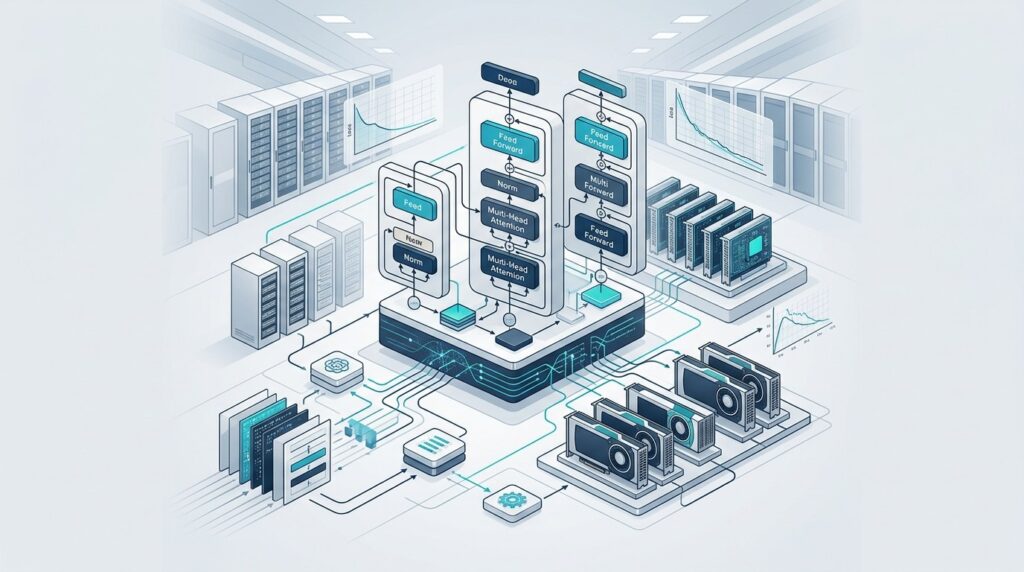
This month we look at the best foundation models actually worth your money in September 2026 — from premium reasoning engines to budget open-weight releases. Skip the benchmark scores; here's what each one is actually for, what it costs, and where it falls short.
1. GPT-5.6 Sol — OpenAI
Think of GPT-5.6 Sol as the model you hand a messy, multi-step problem to and then walk away from your desk. It chains tools, pulls sources, and holds a plan together across a dozen steps without losing the thread — that's the actual use case, not an abstract reasoning score. OpenAI cut pricing on its lower tiers on July 30, 2026, which matters because Sol's top-tier pricing used to be the main argument against it. It's still not cheap at scale, but the on-ramp is easier now.
Best For:
- Complex business reports and analysis
- Scientific and technical reasoning
- Multi-step agentic workflows
Strengths:
- Class-leading performance on reasoning-heavy workflows
- Handles chained, multi-tool tasks reliably
- Recent price cuts lowered entry cost
Limitations:
- Still carries high-tier pricing at scale
- Costs add up fast on high-volume workloads
- Overkill for simple drafting or Q&A tasks
- When Should You Use It? Reach for GPT-5.6 Sol when the job genuinely requires deep, chained reasoning and you can stomach the token bill.
- Our Verdict: It's the most capable all-rounder for demanding professional and scientific work right now. Just watch your token budget once volume climbs — that's where the bill stops being a footnote.
- Rating: ★★★★★
2. Claude Opus 4.8 — Anthropic

Claude Opus 4.8 is the one you use when the same project needs both working code and clean prose — debug a pipeline in the morning, write the technical memo about it in the afternoon, same model. It launched May 28, 2026 at $5/$25 per million tokens and topped coding-focused benchmarks immediately, which is the kind of day-one result that gets teams to switch. The catch: its context window trails newer open-weight entrants like Kimi K3, so very long documents can hit a wall.
Best For:
- Agentic coding and debugging workflows
- Long-form content and technical writing
- Business documentation and reports
Strengths:
- Top-tier performance on coding-focused benchmarks
- Polished, reliable long-form writing quality
- Competitive launch-day pricing versus rivals
Limitations:
- Smaller context window than newer open-weight models
- Shorter reliability track record than established incumbents
- Context limits can strain very long documents
- When Should You Use It? Pick this when you need dependable code generation and genuinely good long-form writing out of a single model, not two.
- Our Verdict: A strong coding-and-writing combo overall — the context ceiling is the one place it visibly loses ground, and it loses it to a free-weights model, which stings a little.
- Rating: ★★★★★
3. Gemini 3.1 Pro — Google
Gemini 3.1 Pro's real selling point is boring and useful: dump an entire book, a stack of contracts, or hours of video transcript into it and it still holds the thread, courtesy of a genuinely usable 2M-token context window. Pair that with strong multimodal comprehension across text, image, and video, and you've got the model for research jobs where the input itself is the bottleneck, not the reasoning. Google has kept shipping incremental updates since launch, so it hasn't gone stale. It isn't the top scorer in every category, and Google still hasn't published pricing, which makes it hard to budget against.
Best For:
- Research and long-document analysis
- Multimodal tasks spanning text, image, video
- Summarizing lengthy transcripts or reports
Strengths:
- Massive 2M-token context ceiling
- Strong multimodal comprehension
- Frequent incremental improvements post-launch
Limitations:
- Not the top benchmark in every category
- Pricing details remain unpublished
- Pure coding specialists can outperform it
- When Should You Use It? Use it when you need to reason over huge or mixed-media inputs in a single pass, not when you need the single sharpest answer.
- Our Verdict: The practical pick for anyone drowning in long PDFs or multimedia research — pure coding specialists will still beat it head-to-head, and that's fine, because that's not the job it's for.
- Rating: ★★★★☆
4. Kimi K3 — Moonshot AI
Kimi K3 is what you reach for when you want frontier-scale capability without a subscription attached — Moonshot AI published the full weights on July 27, 2026, and at 2.8 trillion parameters it's the largest open-weight release on the market. Run it yourself, own the pipeline, and use it for long-context reasoning or agentic coding without sending a token to someone else's API. The tradeoff is real: performance swings noticeably depending on the task, and you'll need serious hardware to run it well — this isn't a laptop model.
Best For:
- Self-hosted long-context reasoning
- Agentic coding pipelines
- Open-weight experimentation for enthusiasts
Strengths:
- Full open weights for total control
- Strong long-context reasoning ability
- Capable at agentic coding tasks
Limitations:
- Performance varies noticeably across task types
- Serious hardware needed to run it well
- Hosting and support ecosystem still maturing
- When Should You Use It? Choose Kimi K3 when open weights and long-context reasoning matter more than consistency.
- Our Verdict: An impressive open-weight release, genuinely. But the uneven results mean it's not yet a clean swap for a closed frontier model — treat it as a serious option, not a replacement.
- Rating: ★★★★☆
5. Qwen 3.8-Max — Alibaba

Qwen 3.8-Max is the model for teams building multimodal features on a real budget — image, text, and everything in between, at $2/$6 per million tokens, which undercuts most Western rivals by a wide margin. Alibaba shipped it August 3, 2026 after a preview run, and at 2.4 trillion parameters it isn't a toy version of a flagship, it's an actual flagship. The gap shows up in edge cases rather than everyday use: it's not on par with the leading US models on every task, and the support ecosystem is younger than incumbents like Gemini or Claude.
Best For:
- Budget-conscious multimodal projects
- High-volume business applications
- Startups scaling AI features cheaply
Strengths:
- Aggressive low per-token pricing
- Large-scale multimodal capability
- Fresh release with active improvements
Limitations:
- Not on par with leading US models on every task
- Shorter track record than established rivals
- Documentation and support still maturing
- When Should You Use It? Use it when cost per token matters as much as raw capability — which, for most startups, it does.
- Our Verdict: The best value multimodal flagship on the market right now. You'll hit the occasional gap versus the very top tier; at this price, that's a trade most teams should take.
- Rating: ★★★★☆
6. Grok 4.6 — xAI
Grok 4.6 is built for teams that need an agent working live tools and data — pulling from the web, orchestrating tasks in real time — without paying frontier-model prices for it. xAI shipped it in August 2026 as a direct upgrade over Grok 4.5, with sharper coding and the same intelligence-per-dollar pitch that's been xAI's whole argument for a while now. What it doesn't do is compete on advanced reasoning, and xAI hasn't disclosed pricing specifics, which makes real cost comparisons harder than they should be.
Best For:
- Real-time agentic tool use
- Cost-sensitive coding tasks
- Live or dynamic data workflows
Strengths:
- Strong intelligence-per-dollar ratio
- Improved coding over its predecessor
- Effective real-time tool orchestration
Limitations:
- Lags behind rivals on advanced reasoning
- Pricing specifics undisclosed, complicating comparisons
- Limited track record since its August release
- When Should You Use It? Pick Grok 4.6 when you need capable agentic tool use on a budget, not the deepest possible reasoning.
- Our Verdict: A genuinely good value pick for agent-style tasks. Skip it the moment the problem gets hard — that's not where it's built to compete.
- Rating: ★★★☆☆
7. Llama 5 — Meta

Llama 5 is Meta's answer for teams that want total control over deployment and a context window nobody else touches — 5 million tokens, open weights, no per-token API bill once you're set up. It launched April 8, 2026, positioned squarely as the budget-friendly, self-hosted option. The number is the headline, but early reception has been mixed on real-world capability, and a huge context window doesn't automatically mean the model reasons well across all of it — those are two different problems, and Llama 5 has only clearly solved one.
Best For:
- Self-hosted long-context applications
- Budget-conscious deployments
- Enterprises needing full data control
Strengths:
- Enormous 5M-token context ceiling
- Open weights for self-hosting
- Budget-friendly positioning versus closed rivals
Limitations:
- Mixed reception on real-world capability
- Doesn't match closed models on performance
- A huge context window doesn't guarantee quality reasoning over it
- When Should You Use It? Use Llama 5 when context length and self-hosting control matter more than peak reasoning quality.
- Our Verdict: The context ceiling is eye-catching on a spec sheet. Early use suggests the reasoning underneath hasn't caught up to it yet.
- Rating: ★★★☆☆
8. DeepSeek V4-Pro — DeepSeek

DeepSeek V4-Pro is the one students and small teams reach for to prototype reasoning-heavy ideas without burning through a budget — it shipped April 2026 billed as the cheapest near-frontier reasoning model available, and it's held that position through continued updates since. It's genuinely good at basic reasoning at high volume. It's also genuinely not built for complex work — ask it something demanding and the gap to rivals shows up fast, and DeepSeek still hasn't disclosed exact pricing details, which is an odd omission for a model selling on cost.
Best For:
- Basic reasoning under tight budgets
- High-volume simple tasks
- Students and hobbyist projects
Strengths:
- Very low cost per token
- Near-frontier reasoning on basic tasks
- Continued updates since its April launch
Limitations:
- Struggles on complex tasks versus rivals
- Exact pricing details remain undisclosed
- Not suited to demanding professional workloads
- When Should You Use It? Choose it when budget is the primary constraint and your tasks stay straightforward.
- Our Verdict: A solid budget option for simple reasoning work. Complex tasks find its ceiling almost immediately — don't push it there.
- Rating: ★★★☆☆
9. Mistral Large 3 — Mistral
Mistral Large 3 exists to answer one question: can you keep the data in the EU and still get something usable? For compliance-conscious buyers, yes — it's an efficient, low-cost model built for private-cloud or on-prem deployment, with ongoing updates since early 2026. Set compliance aside, though, and there's not much of a case for it: performance lags both US and Chinese frontier models, and there's little standout capability once you get past the regulatory pitch.
Best For:
- EU businesses needing data sovereignty
- Cost-sensitive deployments
- On-prem or private-cloud setups
Strengths:
- Data stays within EU jurisdiction
- Efficient, low-cost deployment
- Low-tier pricing versus larger rivals
Limitations:
- Performance lags US and Chinese frontier models
- Few standout capabilities beyond compliance
- Limited differentiation on raw benchmarks
- When Should You Use It? Pick Mistral Large 3 when EU data residency outweighs raw capability — and only then.
- Our Verdict: A compliance-driven choice rather than a capability-driven one. Useful for the right regulatory situation, forgettable outside it.
- Rating: ★★☆☆☆
10. Muse Code — Meta
Muse Code skips the desktop app entirely and lives where a lot of developers already do — the terminal. Meta launched it alongside Muse Spark 1.2 on August 5, 2026 as a coding agent for macOS and Linux that you talk to straight from the command line, API-priced at $3/$15 per million tokens. It's narrower in scope than a full IDE assistant, and there's no subscription option — API access only — which rules it out for anyone who wants a flat monthly bill instead of metered usage.
Best For:
- Terminal-first coding workflows
- Command-line scripting tasks
- Lightweight coding assistance without an IDE
Strengths:
- No desktop app required
- Fits naturally into developer terminal habits
- API pricing at $3/$15 per million tokens
Limitations:
- No subscription model available
- No desktop app for less technical users
- Narrower scope than full IDE assistants
- When Should You Use It? Use Muse Code when you live in the terminal and want a coding agent without installing yet another app.
- Our Verdict: A niche but genuinely useful tool for terminal-first developers. The lack of a subscription tier keeps it from being an easy everyday recommendation for casual use.
- Rating: ★★★☆☆
There's no universal winner this cycle — pick based on whichever constraint actually bites. If reasoning quality and reliability matter more than the invoice, go with GPT-5.6 Sol or Claude Opus 4.8. If it's budget, open weights, or EU compliance driving the decision, look at DeepSeek V4-Pro, Qwen 3.8-Max, or Mistral Large 3 instead — and don't pay frontier prices for a job that doesn't need frontier reasoning.
Frequently asked questions
What is GPT-5.6 Sol best used for?
GPT-5.6 Sol is best for complex business reports, scientific reasoning, and multi-step workflows.
How does Claude Opus 4.8 compare to other models?
Claude Opus 4.8 is strong in coding and long-form writing but has a smaller context window than newer models.
What are the limitations of Kimi K3?
Kimi K3's performance varies across tasks, and it requires serious hardware to run effectively.