The Creativity Paradox: Can AI Truly Be Original?
A tool that cuts your work time by 75% but leaves you wondering if what you’ve created is truly yours defines the paradox of AI and creativity today: generative AI creativity tools have slashed content production time by nearly three-quarters and boosted productivity for 83% of marketers. Yet despite this surge, voices warn of a “creative recession,” where originality wanes amidst a flood of AI-generated content originality concerns. How can creativity simultaneously flourish in speed and falter in novelty? This is the riddle at the heart of our age—a puzzle worth unpacking carefully.
The numbers are striking: nearly every marketer today reports that AI has revolutionized their workflow. An 83% majority notes faster ideation and output, a 75% reduction in production time paints a compelling picture of efficiency. Instagram has even committed to labeling AI-generated content transparency to ensure transparency, reflecting widespread anxiety about authenticity in this new era.
Yet productivity and speed are not the same as originality. This brings us to a nuanced tension, the essence of the AI creativity paradox. A 2025 study published in Science Advances found that while AI tools elevate individual creative capacity—helping users brainstorm and push past mental blocks—they inadvertently homogenize creative outputs across groups. The reason is fundamental: AI learns from existing data and repurposes patterns without true novelty. A mosaic built from the same tiles arranged in slightly different ways—each artful on its own, but collectively constrained.
This tension echoes in a peer-reviewed study highlighting “creative flattening,” where reliance on AI decreases the diversity of new ideas. Think of it as a forest thinning out—individual trees grow faster, but species variety declines. AI’s statistical fluency enables it to generate ideas that, on the surface, may seem fresh; a 2025 experiment with ChatGPT showed it outperformed humans in divergent thinking AI tasks 8 out of 10 times. This suggests AI can be a formidable creative partner on an individual scale. Yet, as computational linguist Emily Bender reminds us, AI echoes contexts without understanding: its outputs are high-quality copies, not born of emotion or lived experience.
The Human Side
Exposure to AI-generated content encourages people to write 166% longer pieces, demonstrating that AI influences and extends human creative behavior. This is akin to how a good jazz bandleader can inspire soloists to improvise more boldly—not replacing the musician’s originality but pushing their limits.
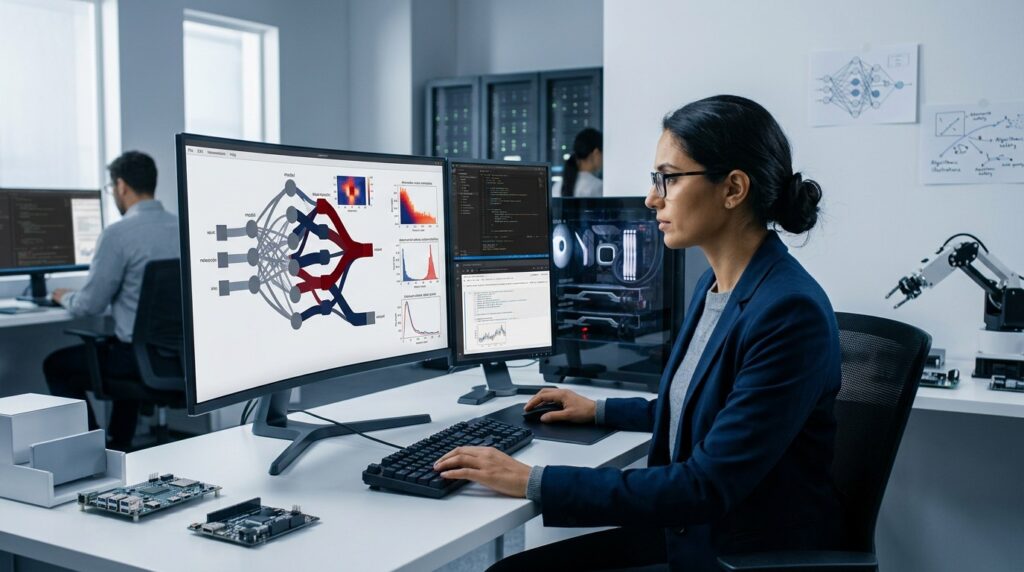
Education offers a revealing microcosm. Teachers save weeks each year thanks to AI, freeing time to nurture deeper creative thinking rather than bogging down in routine tasks. But as Penn State’s Paul DiStefano notes, the benefits depend crucially on skill: seasoned creatives leverage AI as collaborators, novices risk being drowned in derivative work. This relationship between human skill and AI augmentation is a new creative frontier, rendering the tool not a shortcut but a partner that must be understood and mastered. It highlights the rising importance of AI-human collaboration in creativity as a key theme for 2025 and beyond.
The Tech Breakdown
Ethical questions swirl around AI creativity as well. Who owns AI-generated work that mimics existing human outputs? What counts as plagiarism in this context? Platforms like Meta are stepping in with transparency mandates, labeling AI content to uphold trust in digital spaces. This labeling reveals a social bias: AI content is often seen as less authentic, complicating how we value machine-generated versus human-originated works. Google’s CEO Sundar Pichai recently underscored the dual nature of AI—it automates tedious parts of creativity but requires thoughtful governance to protect originality and intent.
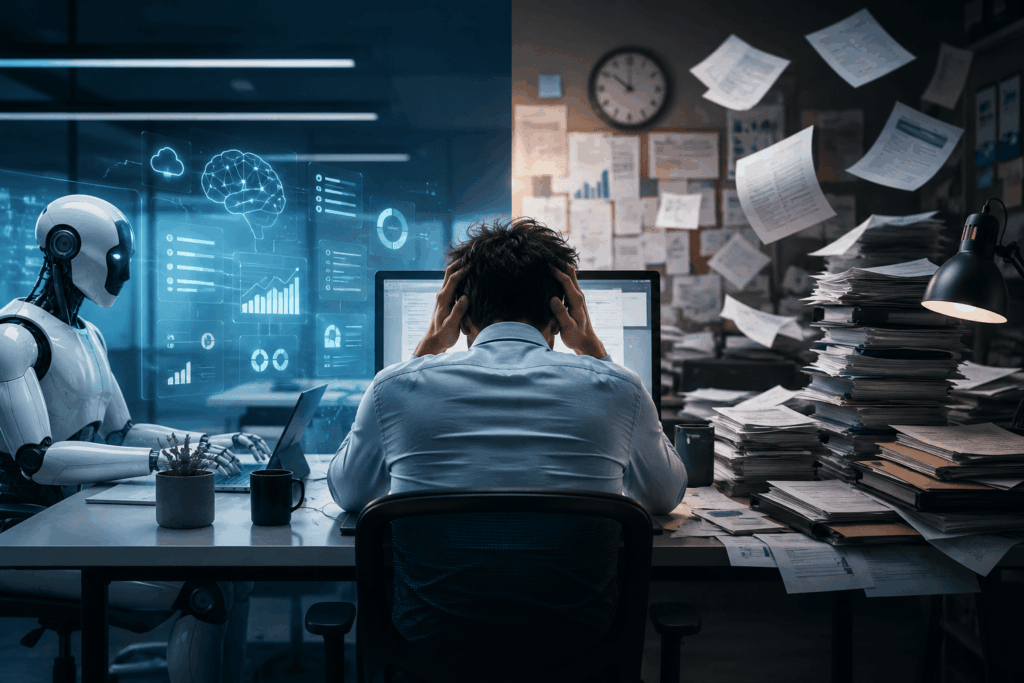
In practical terms, AI is shifting creative roles across industries. In marketing, human creatives are less about generating content from scratch and more about curating and refining AI’s outputs. This is a profound transformation of the creative profession, not a simple replacement. Education and entertainment face similar inflections, balancing democratized creative access against the risk of cultural homogenization. If everyone uses the same statistical patterns and datasets, the rich tapestry of innovation risks fraying into a narrow thread.
The Road Ahead
The future likely holds a middle ground: AI-human collaboration becoming the norm. Developers work to instill emotional nuance and context in AI systems, but the irreplaceable spark of human creativity—the capacity to imagine, to err, to take risks—remains essential. Regulatory frameworks will tighten around AI content to maintain a balance between innovation and authenticity.
In this age, creative expression is a dynamic interplay: fluency and efficiency provided by AI intersect with the uniquely human elements of emotion, context, and risk. The paradox challenges us to recognize that while AI accelerates production and stimulates ideas, it cannot yet replicate the intangible qualities that define originality. Our collective task is to wield these powerful tools wisely—to amplify human creativity without allowing it to converge into dull uniformity.
As AI continues to twist threads of creativity into new forms, the question remains open: where does true originality reside when machines remix the human past? This paradox invites creators and technologists alike to rethink what it means to create in the age of intelligent machines.
Frequently asked questions
What is the AI creativity paradox?
The AI creativity paradox refers to the phenomenon where generative AI tools boost productivity and speed but raise concerns about the originality of the content produced.
How does AI influence human creativity?
AI influences human creativity by encouraging longer pieces and helping users brainstorm, but it can also lead to a decrease in the diversity of new ideas.
What are the ethical concerns surrounding AI-generated content?
Ethical concerns include ownership of AI-generated work, potential plagiarism, and the perception that AI content is less authentic.