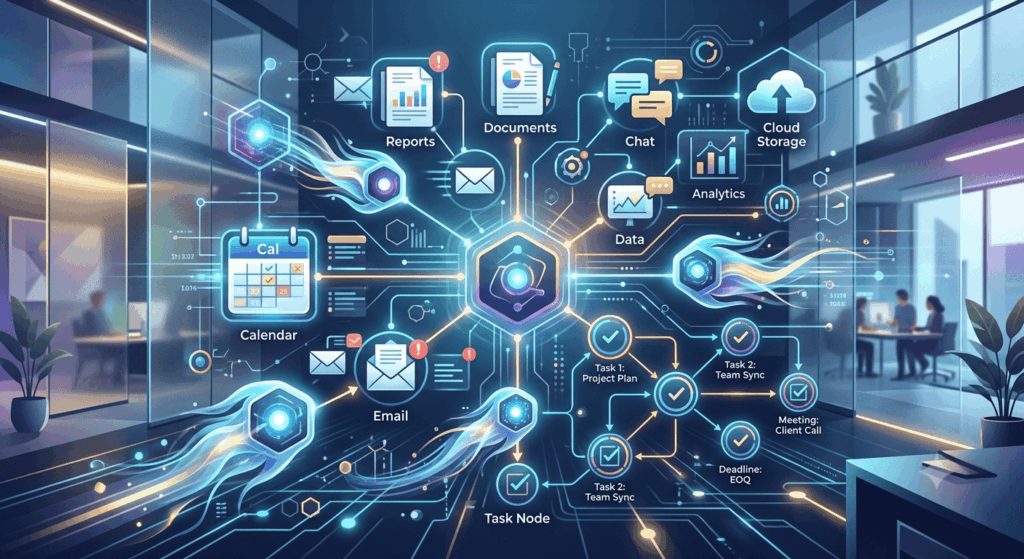

The landscape of software development is undergoing a seismic shift. With advancements in artificial intelligence (AI) and machine learning, AI agents are emerging as critical players in software creation, testing, and deployment. As companies increasingly adopt these technologies, many are left asking: Will AI replace programmers in 10 years? Will AI replace software engineers in 2030? The answers to these questions could redefine not only the role of software engineers but also the entire tech ecosystem.
The rapid evolution of AI agents threatens traditional software stacks, reshaping how companies develop and implement technology. By 2030, likely, the role of traditional programmers will dramatically shift, with many fearing they may be replaced by AI. As AI tools become more sophisticated, businesses need to adapt to avoid losing a competitive advantage. This article explores the implications of AI replacing software developers, the current state of the industry, and what the future holds for programming roles.
How AI Is Reshaping Software Developers
Historically, the software development industry has experienced numerous transformations. From the advent of Agile methodologies to the rise of cloud computing, each wave of innovation has redefined how software is built and managed. However, the current wave, driven by AI, is unlike any before. AI agents can now reason, plan, and execute tasks independently, making them a viable alternative to traditional software engineering roles.
In recent years, various AI tools have gained traction among software engineers. For instance, tools like GitHub Copilot utilize AI to assist developers in writing code faster and with fewer errors. As these tools become more sophisticated, they raise the question of whether traditional developers will still be needed or if they will be replaced entirely.
Impact of AI Adoption on Developer Roles and Workflows
The rapid integration of AI into the software development process poses several challenges:
- Job Displacement: Many developers are concerned about job security as AI tools become more capable of performing tasks traditionally reserved for humans.
- Skill Gaps: As AI tools evolve, there will be a growing need for developers to adapt and acquire new skills to work alongside these technologies.
- Quality Control: While AI can speed up code writing and testing, it can also introduce errors or “AI slop,” necessitating an increased focus on quality assurance.
- Cost Efficiency: Companies are grappling with the cost of AI tools and whether the return on investment justifies the expenditure.
These challenges require a reevaluation of the role of software engineers in the age of AI.
How Developers and Companies Can Evolve with AI
To navigate this shifting landscape, companies and developers must adopt a proactive approach:
- Invest in AI Training: Organizations should provide training for developers to learn how to use AI tools effectively. This includes understanding both the capabilities and limitations of AI.
- Embrace Collaboration: Instead of viewing AI as a competitor, software engineers should learn to collaborate with AI tools, leveraging their strengths to enhance productivity.
- Focus on Higher-Level Tasks: As AI takes over routine coding tasks, developers should pivot towards more complex problem-solving roles that require human ingenuity and creativity.
- Continuous Learning: The tech industry is known for its rapid pace of change. Developers must commit to lifelong learning to stay relevant in their careers.
By adopting these strategies, companies can ensure that their software stacks remain robust and competitive in an AI-driven world.
A Company Embracing AI in Development
To illustrate the positive impact of AI on software development, let’s look at a case study of a mid-sized tech company, Innovatech. Innovatech adopted AI tools to enhance its software development process.
Background
Innovatech was facing challenges in meeting project deadlines and maintaining code quality across its development teams. With growing competition, the company decided to integrate AI solutions into its workflow.
Implementation
The company started by implementing AI-driven coding assistants, code review tools, and project management software with AI capabilities. They provided training sessions for their developers to familiarize them with these tools.
Results
- Increased Efficiency: Innovatech saw a 40% increase in development speed within six months of adopting AI tools. Developers could focus more on creative problem-solving rather than routine coding tasks.
- Improved Code Quality: Automated code reviews reduced bugs by 30%, leading to higher-quality software releases.
- Enhanced Collaboration: Teams reported better communication and collaboration, as AI tools facilitated information sharing and project tracking.
Industry Trends in AI-Driven Development
Recent surveys indicate a growing trend in the adoption of AI tools among software engineers:
- 80% of developers believe that AI will significantly change their job roles within the next five years.
- 65% of companies have already begun implementing AI tools in their development processes.
- According to a report by Gartner, 75% of organizations will adopt AI for software development by 2025.
These statistics underscore the urgency for developers to adapt to the changing landscape and for companies to invest in AI technologies.
FAQ Section
[lightweight-accordion title=”Will AI replace programmers in 10 years?” accordion_open=true]While AI is transforming software development, it is unlikely to completely replace programmers in the next decade. Instead, roles will evolve, with a focus on higher-level tasks and collaboration with AI.[/lightweight-accordion]
[lightweight-accordion title=”Will AI replace software engineers in 2030?” accordion_open=false]By 2030, the role of software engineers will likely change significantly, but they will still be essential in overseeing complex projects and ensuring the quality of AI-generated code.[/lightweight-accordion]
[lightweight-accordion title=”What skills should developers focus on to stay relevant?” accordion_open=false]Developers should focus on skills such as machine learning, data analysis, and system architecture. Understanding AI and how to work alongside it will be crucial.[/lightweight-accordion]
[lightweight-accordion title=”How can companies effectively integrate AI into their software development process?” accordion_open=false]Companies can integrate AI by providing training for their staff, implementing AI tools gradually, and fostering a culture of collaboration between human engineers and AI.[/lightweight-accordion]
[lightweight-accordion title=”Is there a risk of job displacement due to AI?” accordion_open=false]Yes, there is a risk of job displacement, particularly for roles focused on routine coding tasks. However, this creates opportunities for developers to transition into more strategic roles.[/lightweight-accordion]
The Future of Development with AI
The landscape of software development is undergoing a radical transformation driven by AI agents. While concerns about job displacement are valid, the reality is that AI will enhance the capabilities of developers rather than eliminate them. As we move towards a future where AI plays an integral role in development, both individuals and organizations need to adapt and embrace these changes. By investing in training, fostering collaboration, and focusing on strategic roles, developers can thrive in this new era.
Take the Next Step with AI
Don’t wait for the future to unfold—be proactive in your approach to AI. Begin by exploring AI tools that can enhance your development process today. Invest in your skills, collaborate with peers, and prepare to lead the charge into an AI-driven future. Reach out to us to learn how we can assist you in integrating AI into your software stack and navigating the complexities of this exciting transformation. Together, we can redefine the future of software development.
Frequently asked questions
Will AI replace programmers in 10 years?
While AI is transforming software development, it is unlikely to completely replace programmers in the next decade. Instead, roles will evolve, with a focus on higher-level tasks and collaboration with AI.
Is there a risk of job displacement due to AI?
Yes, there is a risk of job displacement, particularly for roles focused on routine coding tasks. However, this creates opportunities for developers to transition into more strategic roles.