

This month we look at the best repositories in a snapshot frozen on 24 August 2026. The first bug was in the ranking: sorting by total stars rewarded age, not August momentum. So the order balances monthly growth, recent pushes, utility, documentation signals, issue load and licence clarity — because stars measure attention, not quality.
#10 — needle — AI Infrastructure
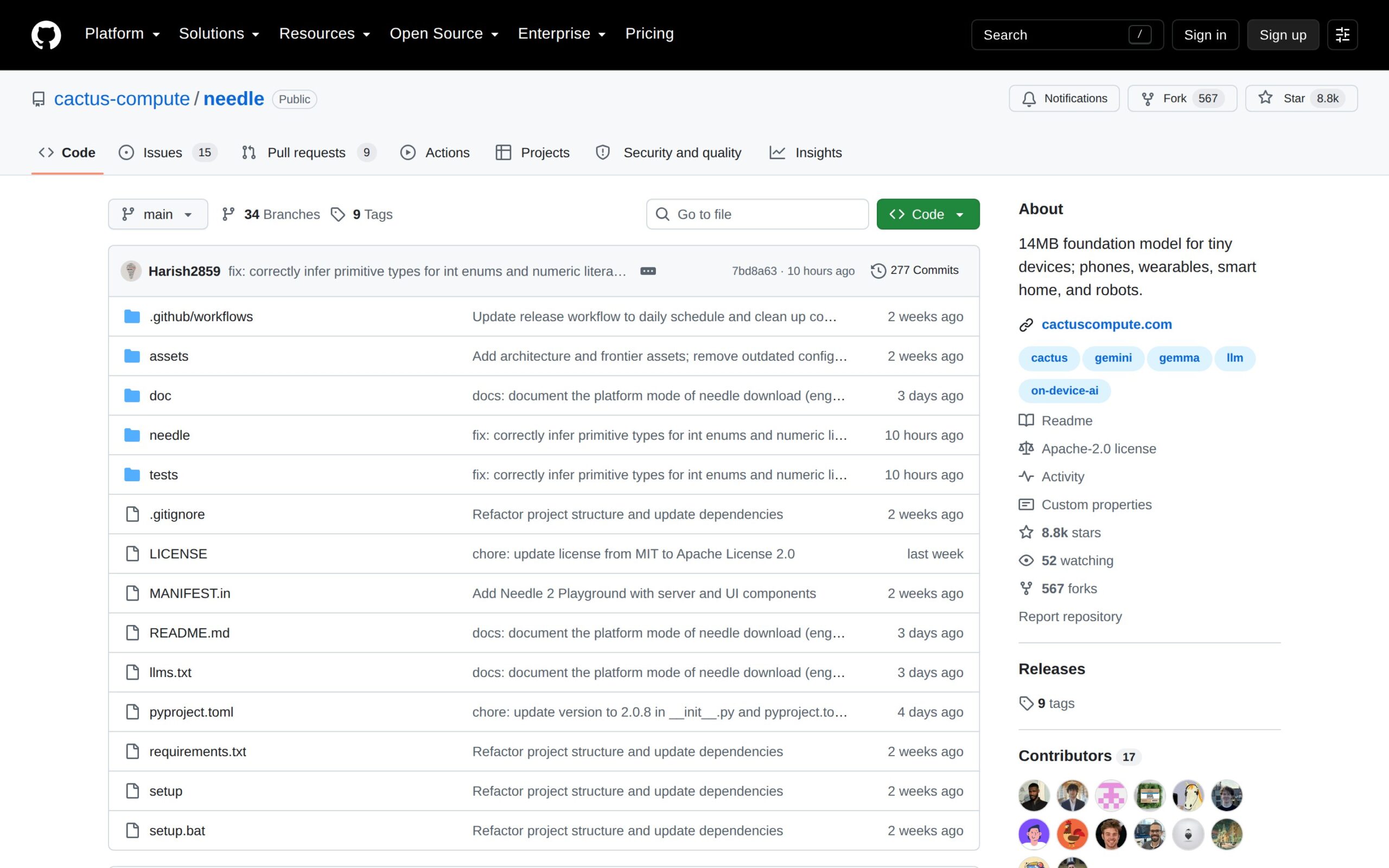
Needle is a Python project for fitting a very small foundation model onto constrained hardware. Point it at a phone, wearable, smart-home device or robot and the repository claims a model size of 14MB. The practical prize is local AI where a conventional large model simply will not fit.
Start with the engineering benefit: on-device inference can reduce reliance on cloud connections and APIs, which makes Needle relevant to embedded experiments. It ranks tenth because the central 14MB figure is still a maintainer claim in the supplied material; without matched latency, accuracy and memory tests, we cannot see how much capability was traded away to reach it.
Interesting Use Cases:
- Prototype an offline wearable assistant
- Add local inference to a home device
- Explore AI control on a small robot
- Best For: Embedded developers and curious model engineers prepared to measure how much capability survives severe size constraints.
- Why It’s Trending: Needle gained 5,464 stars this month, reached 8,777 overall and was pushed on 23 August. That is strong momentum for a repository created only in February, although attention is not yet evidence of deployment quality.
- Skill Level: Advanced
- Business Potential: There is promise here for privacy-sensitive edge products. Before building around it, teams should reproduce model-quality results and check deployment support on their actual target devices.
- Setup Difficulty: ★★★
- GitHub: https://github.com/cactus-compute/needle
#9 — i-have-adhd — Productivity
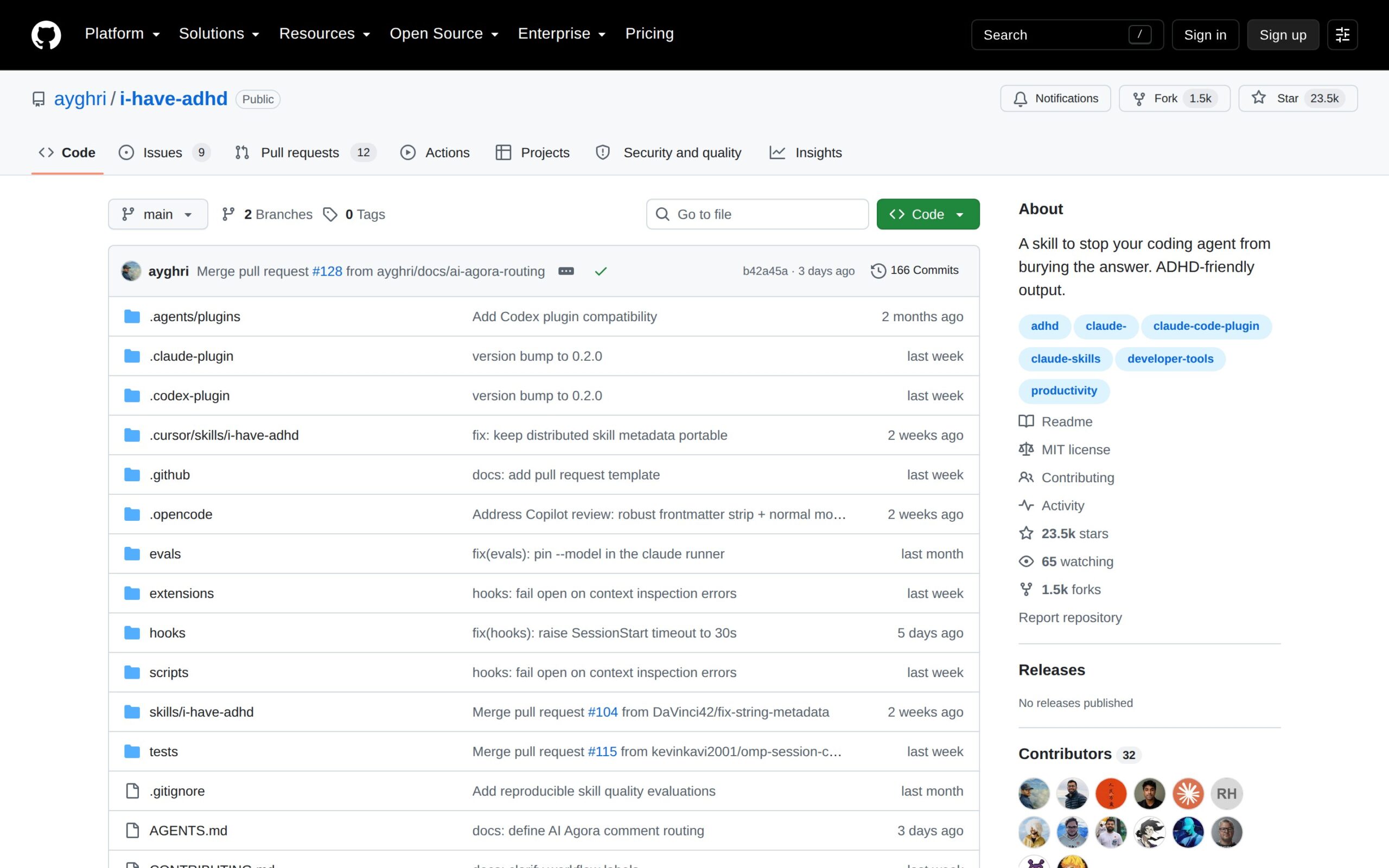
This Python repository provides a skill that changes how a coding agent structures its answers. It asks the agent to surface the useful action instead of burying it beneath a long explanation, producing more direct, ADHD-friendly output. Its topics tie it specifically to Claude Code skills and plug-ins.
A technically correct answer still fails when the next step is hard to find. That makes output format a practical accessibility concern, and the repository’s narrow intervention is why it places ninth rather than disappearing beneath larger agent frameworks. The caveat is substantial: the payload contains no study showing that one presentation style works for every user with ADHD.
Interesting Use Cases:
- Put the requested command before its explanation
- Shorten coding-agent debugging responses
- Create a more scannable development workflow
- Best For: Developers distracted by verbose coding assistants who want a small behavioural adjustment rather than another complete agent.
- Why It’s Trending: The skill collected 14,450 of its 23,529 stars during August and was pushed on 21 August. Its sharply defined problem appears to have travelled well; whether that popularity reflects lasting accessibility gains is not established here.
- Skill Level: Beginner
- Business Potential: This looks more useful as an accessibility pattern or team productivity add-on than as the foundation of a standalone commercial product.
- Setup Difficulty: ★☆☆
- GitHub: https://github.com/ayghri/i-have-adhd
#8 — airllm — AI Infrastructure
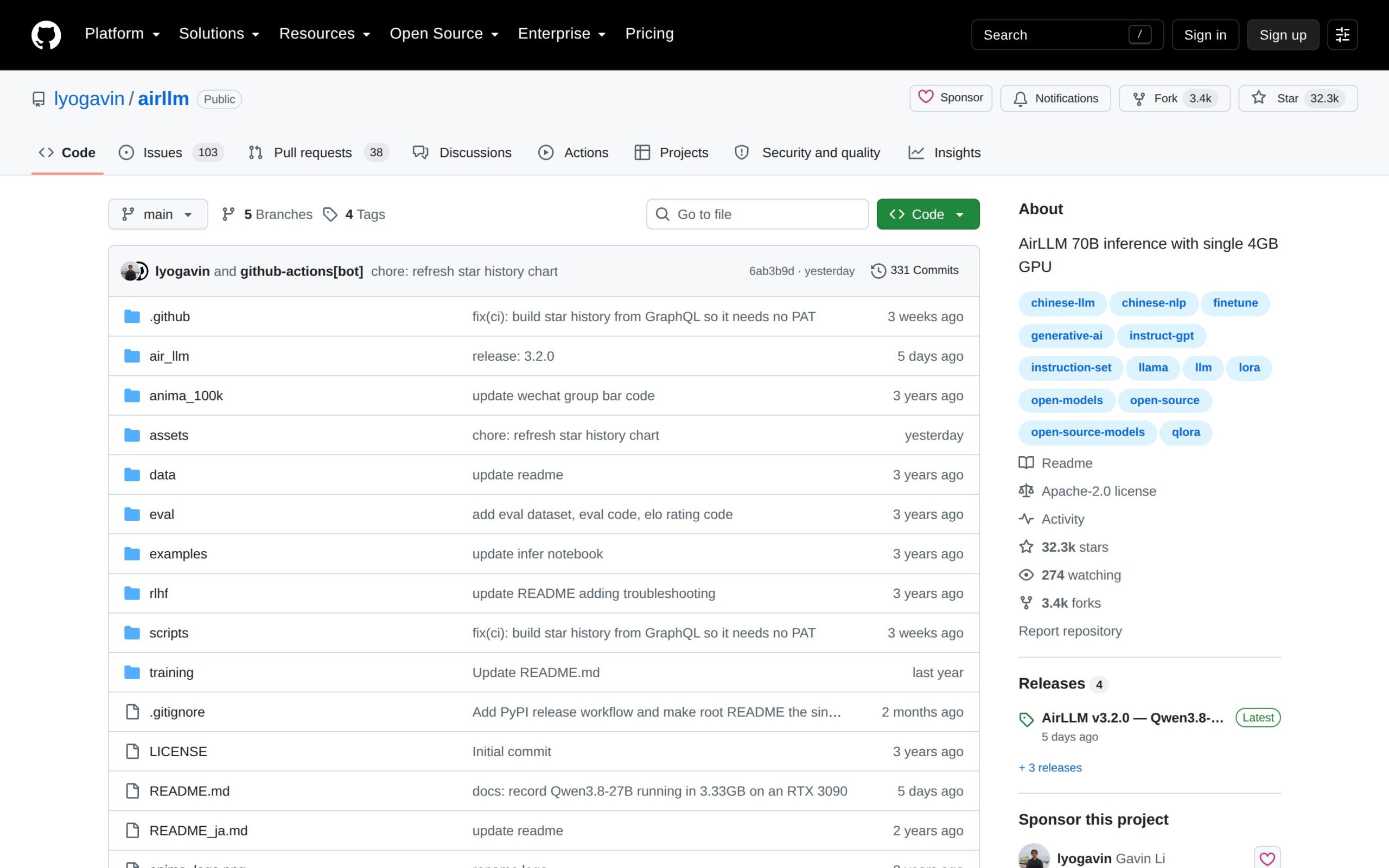
AirLLM is a notebook-led Python project for running very large language models with unusually little graphics memory. Its headline workflow puts inference with a 70-billion-parameter model on a single 4GB GPU. For developers with consumer hardware, that creates a route into experiments that would ordinarily require much more memory.
If the memory-saving method suits your workload, you can explore large models before renting server-class hardware. That accessibility earns eighth place, but fitting a model into memory is only the first box in the diagram: input → model loaded → usable response time. The supplied evidence includes no independently reproduced throughput or latency result, so speed remains the unresolved part of the build.
Interesting Use Cases:
- Explore a 70B model on a modest GPU
- Teach memory-efficient inference techniques
- Test large open models before renting cloud hardware
- Best For: Experienced machine-learning developers who value hardware accessibility more than a polished application experience.
- Why It’s Trending: An older project found fresh momentum with 8,428 August stars, 32,316 in total and a push on 23 August. Its 141 open issues indicate continuing interest, but they also point to a meaningful support burden.
- Alternative To: An alternative to renting high-memory cloud GPUs for exploratory inference.
- Skill Level: Advanced
- Business Potential: Cost-sensitive prototyping is the clearest opportunity. Commercial deployments still need their own speed, reliability and supported-model tests.
- Setup Difficulty: ★★★
- GitHub: https://github.com/lyogavin/airllm
#7 — jcode — Coding
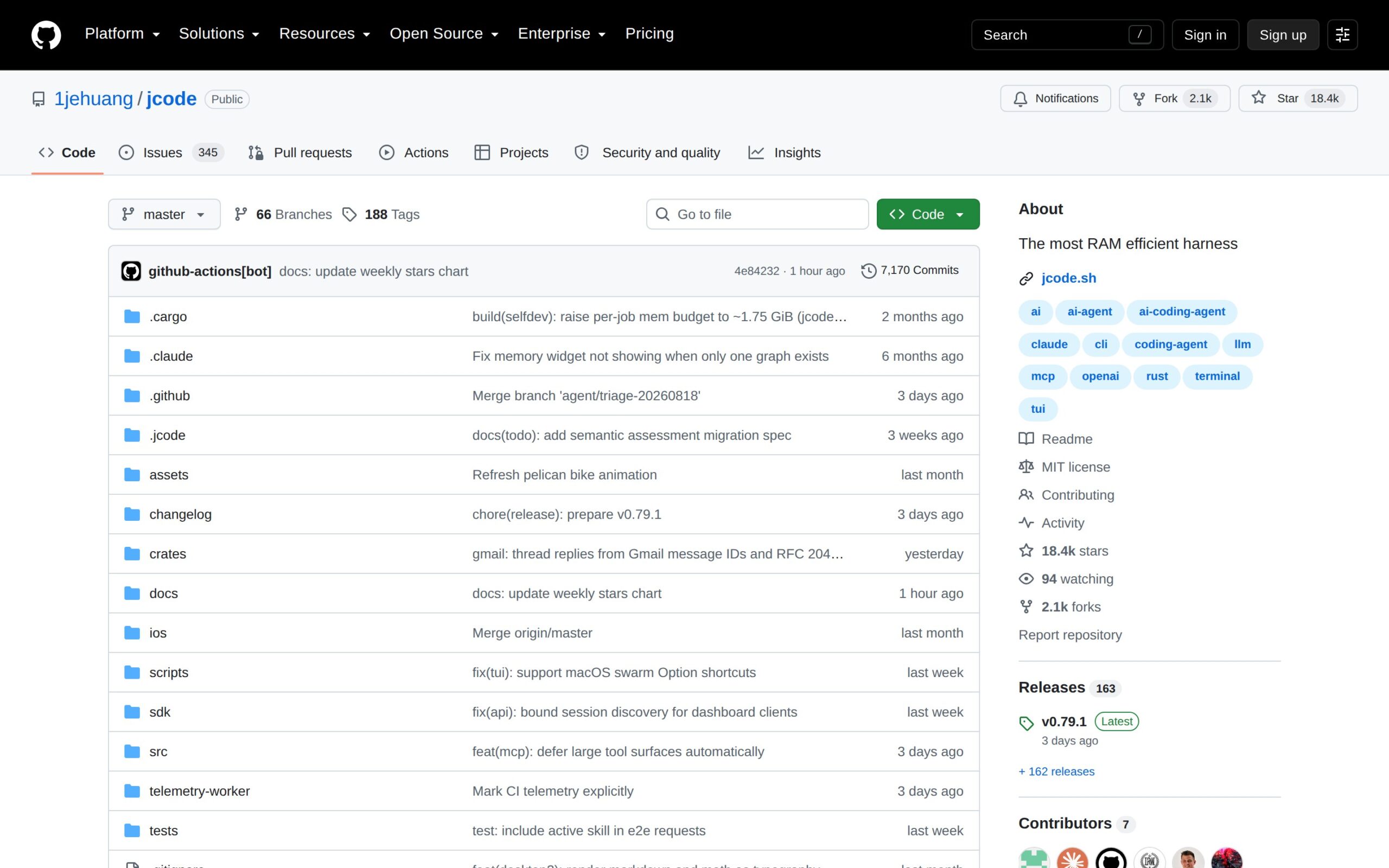
Built in Rust, jcode is a terminal harness for operating coding agents with little memory. It supplies both a command-line interface and a terminal user interface, while its topics list OpenAI, Claude and Model Context Protocol support. Think of it as the shell around the model, useful when you want an agent over SSH or without a full graphical editor.
A lean harness can matter on remote machines, modest laptops and long-running development sessions, where a heavy editor integration eventually becomes visible in the system monitor. Seventh place reflects that practical focus. However, “most RAM efficient” remains the repository’s claim: the research payload includes no comparative memory figures, and 345 open issues suggest rough edges are not hypothetical.
Interesting Use Cases:
- Run a coding agent over SSH
- Use an agent without a full graphical editor
- Build a terminal workflow around MCP tools
- Best For: Rust-friendly developers who prefer terminal tooling and are prepared to work through a young project’s rough edges.
- Why It’s Trending: Jcode added 7,570 stars in August, reached 18,374 overall and received a push early on 24 August. The momentum is clear; its 345 open issues are the more useful maintenance signal.
- Alternative To: An alternative to editor-centred coding agents such as Cursor.
- Skill Level: Intermediate
- Business Potential: The harness could support developer-tool startups, provided they test integration stability and budget for upstream issue churn.
- Setup Difficulty: ★★☆
- GitHub: https://github.com/1jehuang/jcode
#6 — ego-lite — Automation
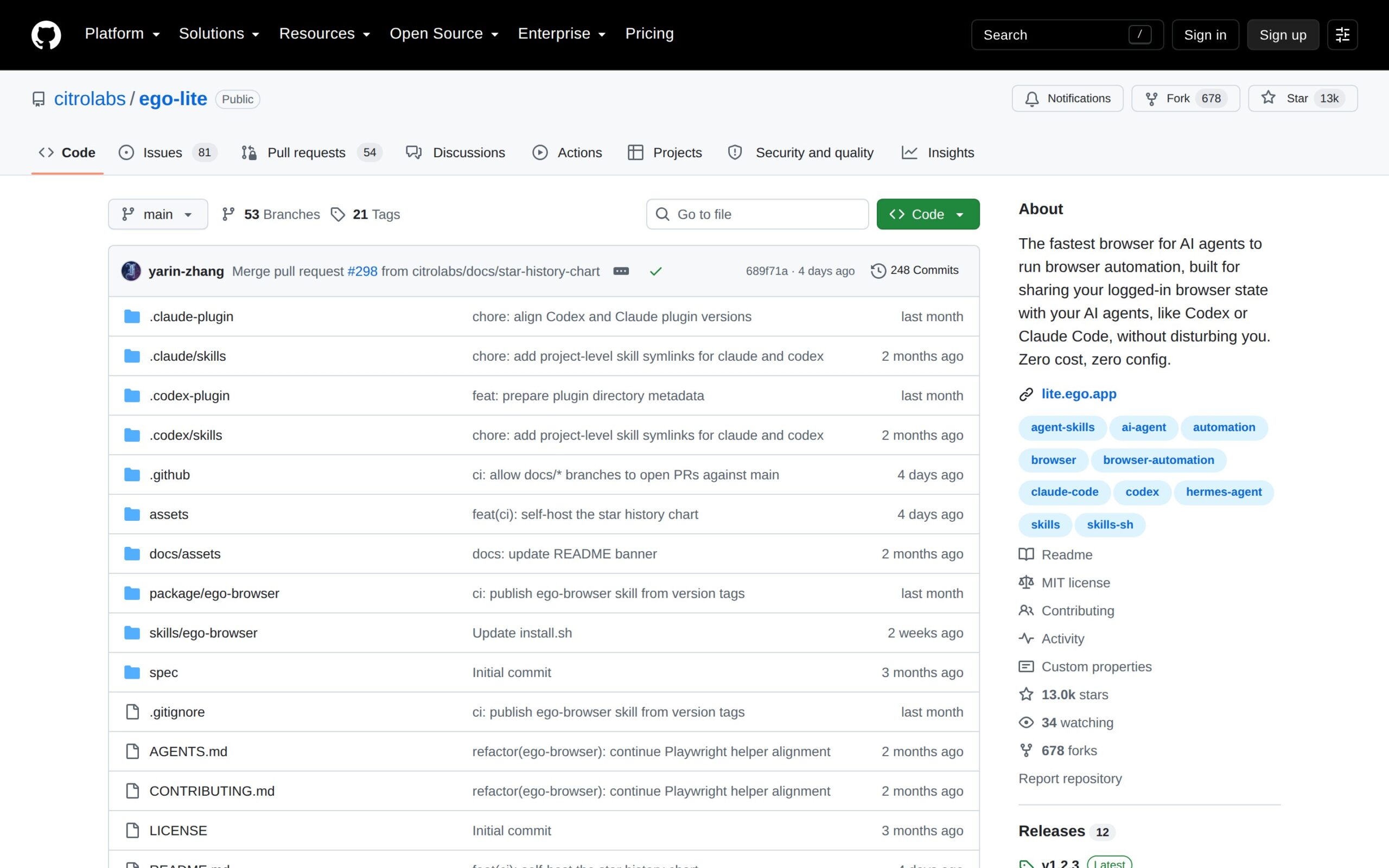
Ego Lite is a JavaScript browser-automation tool built for AI agents. It lets Codex, Claude Code and similar systems work through an already logged-in browser state without taking over the browser session you are using. The pipeline is straightforward: agent → shared session → browser task, removing repeated log-ins from an automation run.
Reusing authenticated state addresses a tiresome blocker in personal browser automation, particularly for repeated work inside web dashboards. That utility puts Ego Lite sixth. It also creates the list’s most obvious trust boundary outside the security tooling: the payload provides no security analysis explaining how session access is isolated, so sensitive accounts warrant caution rather than a casual trial.
Interesting Use Cases:
- Let an agent operate a logged-in web dashboard
- Automate repetitive work without a separate browser profile
- Connect coding agents to browser-based internal tools
- Best For: Automation developers who need authenticated browser access and can assess the security implications themselves.
- Why It’s Trending: Created in April, Ego Lite gained 11,598 of its 13,027 stars this month and was pushed on 24 August. Its 135 open issues indicate that adoption is arriving faster than maturity.
- Alternative To: An alternative to setting up a separate browser-automation session.
- Skill Level: Intermediate
- Business Potential: Internal automation and agent products are plausible applications, but session handling needs a serious security review before enterprise use.
- Setup Difficulty: ★★☆
- GitHub: https://github.com/citrolabs/ego-lite
#5 — book-to-skill — RAG
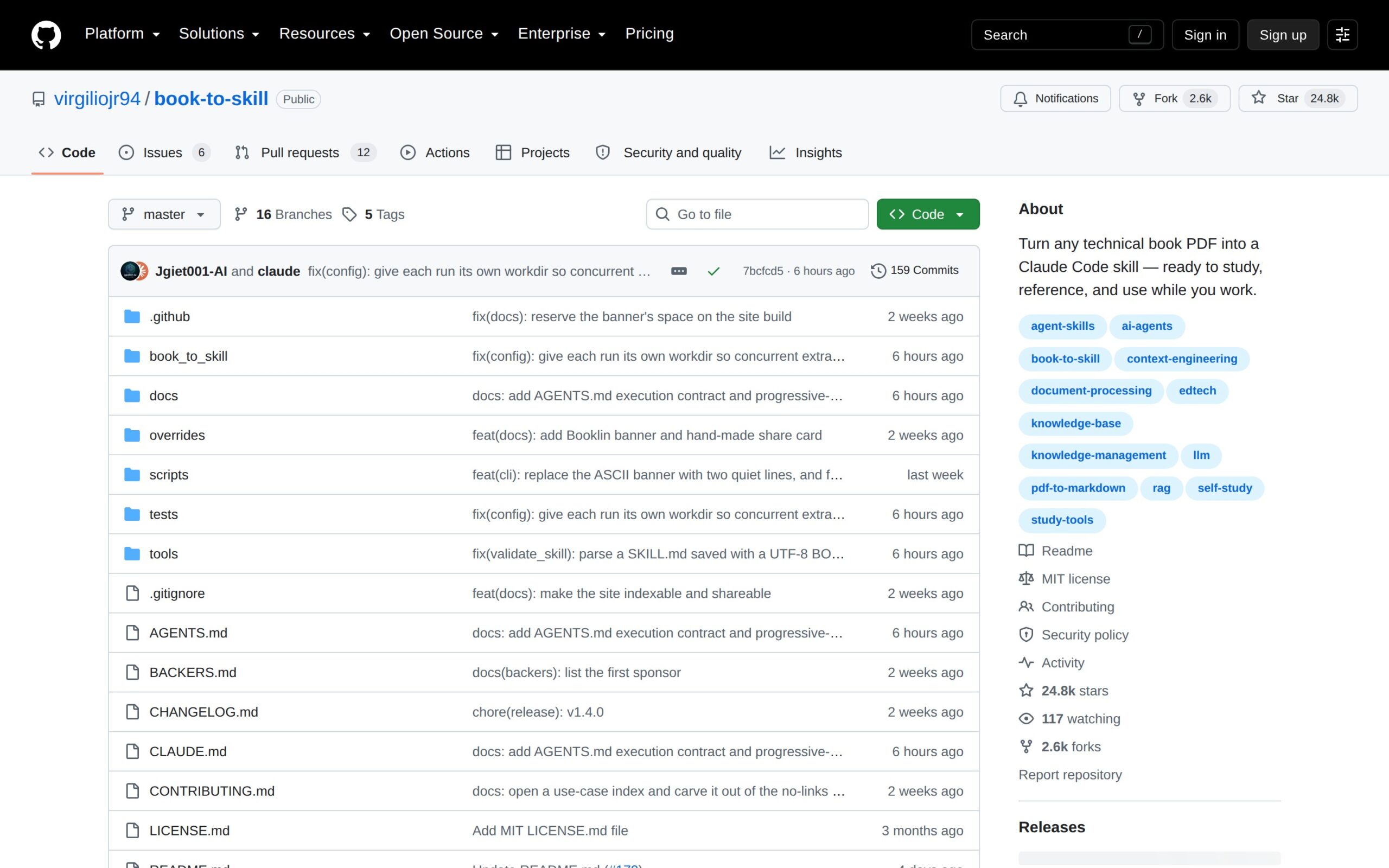
Give this Python project a technical-book PDF and it converts the material into a skill for Claude Code. The resulting resource can be searched or consulted while you study and work, using PDF-to-Markdown processing to build a reusable knowledge base. It is a focused document pipeline, not a general chatbot.
The useful move is contextual: reference material appears where coding questions arise, rather than being copied into prompts passage by passage. That clear workflow earns fifth place. Extraction still depends on PDF quality, users must have the right to process the books they supply, and the payload documents neither extraction accuracy nor rights handling.
Interesting Use Cases:
- Consult a framework manual while coding
- Build chapter-by-chapter study assistance
- Turn internal technical guides into agent references
- Best For: Developers and learners who already use Claude Code and own substantial technical material in PDF form.
- Why It’s Trending: The repository gained 15,086 stars in August, reached 24,802 overall and was pushed on 23 August. That is exceptional growth since its creation in May, though it does not tell us how well difficult PDF layouts survive conversion.
- Alternative To: An alternative to manually copying book excerpts into Claude Code.
- Skill Level: Intermediate
- Business Potential: Education and internal knowledge products are the strongest fits. Copyright, extraction quality and dependence on Claude Code constrain broader deployment.
- Setup Difficulty: ★★☆
- GitHub: https://github.com/virgiliojr94/book-to-skill
#4 — reverse-skill — Coding
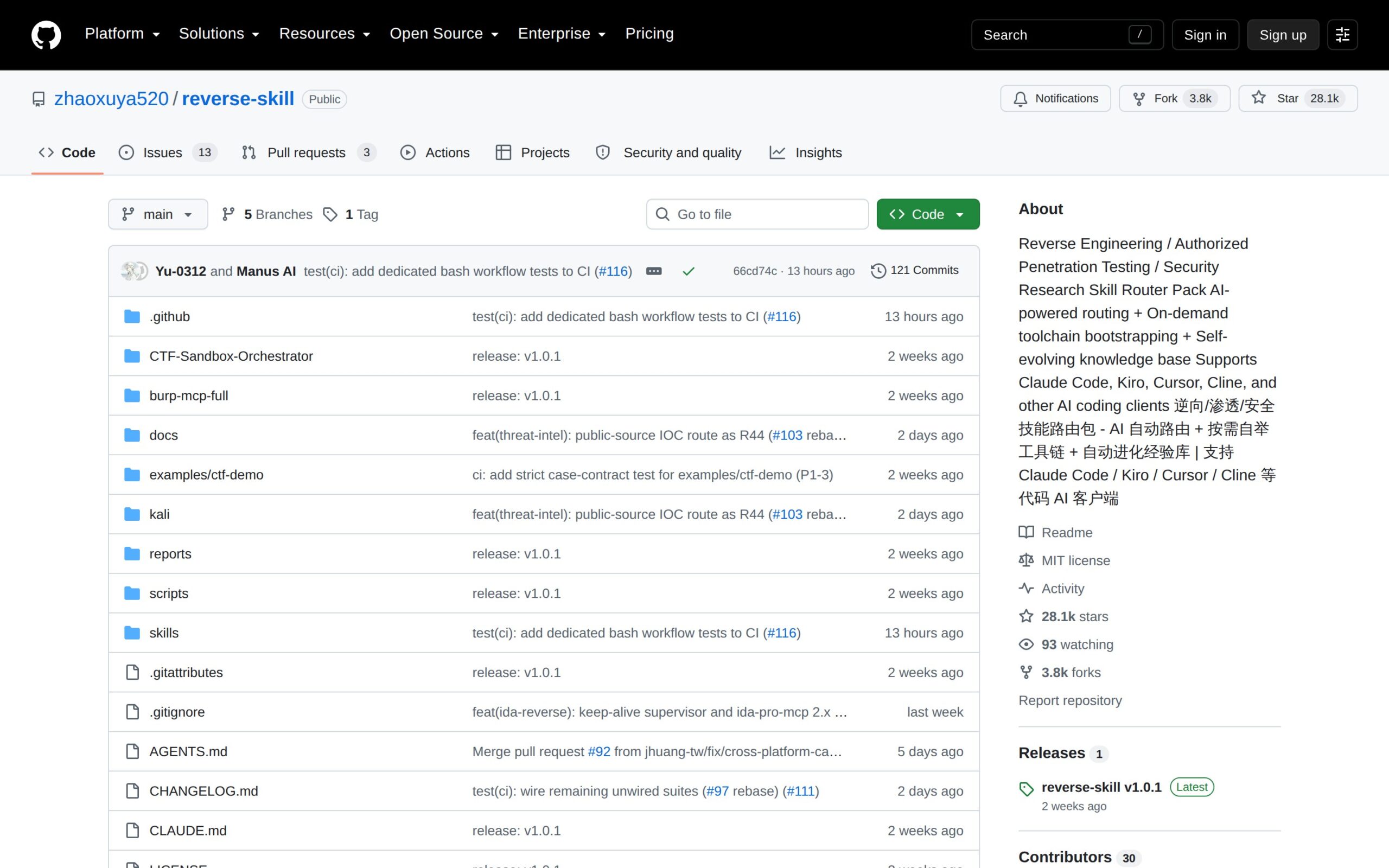
Reverse-skill is a PowerShell-based routing pack for authorised penetration testing, reverse engineering and security research. A supported coding client selects the relevant skill, bootstraps tools when needed and feeds experience into a reusable knowledge base. It works with clients including Claude Code, Kiro, Cursor and Cline, reducing the manual assembly required for repeatable security workflows.
Security investigations often begin with tool selection before the analysis itself. Automating that routing could make authorised work more consistent, which is enough for fourth place. The limitation is asymmetric and serious: this capability is plainly dual-use, while “self-evolving” is not defined by evidence in the payload; controlled environments and explicit permission are essential.
Interesting Use Cases:
- Route an authorised binary-analysis task
- Prepare tools for a sanctioned penetration test
- Preserve repeatable security-research procedures
- Best For: Experienced security practitioners working on systems they own or have explicit permission to test.
- Why It’s Trending: Reverse-skill added 19,063 stars during August, taking it to 28,095, and was pushed on 23 August with only 16 open issues reported. The tidy tracker is encouraging, but it cannot stand in for governance or safety controls.
- Alternative To: An alternative to manually assembling security workflows in a coding agent.
- Skill Level: Advanced
- Business Potential: Security consultancies and internal red teams are the obvious users. Here, governance and misuse controls matter more than ease of adoption.
- Setup Difficulty: ★★★
- GitHub: https://github.com/zhaoxuya520/reverse-skill
#3 — ai-agent-book — AI Agents
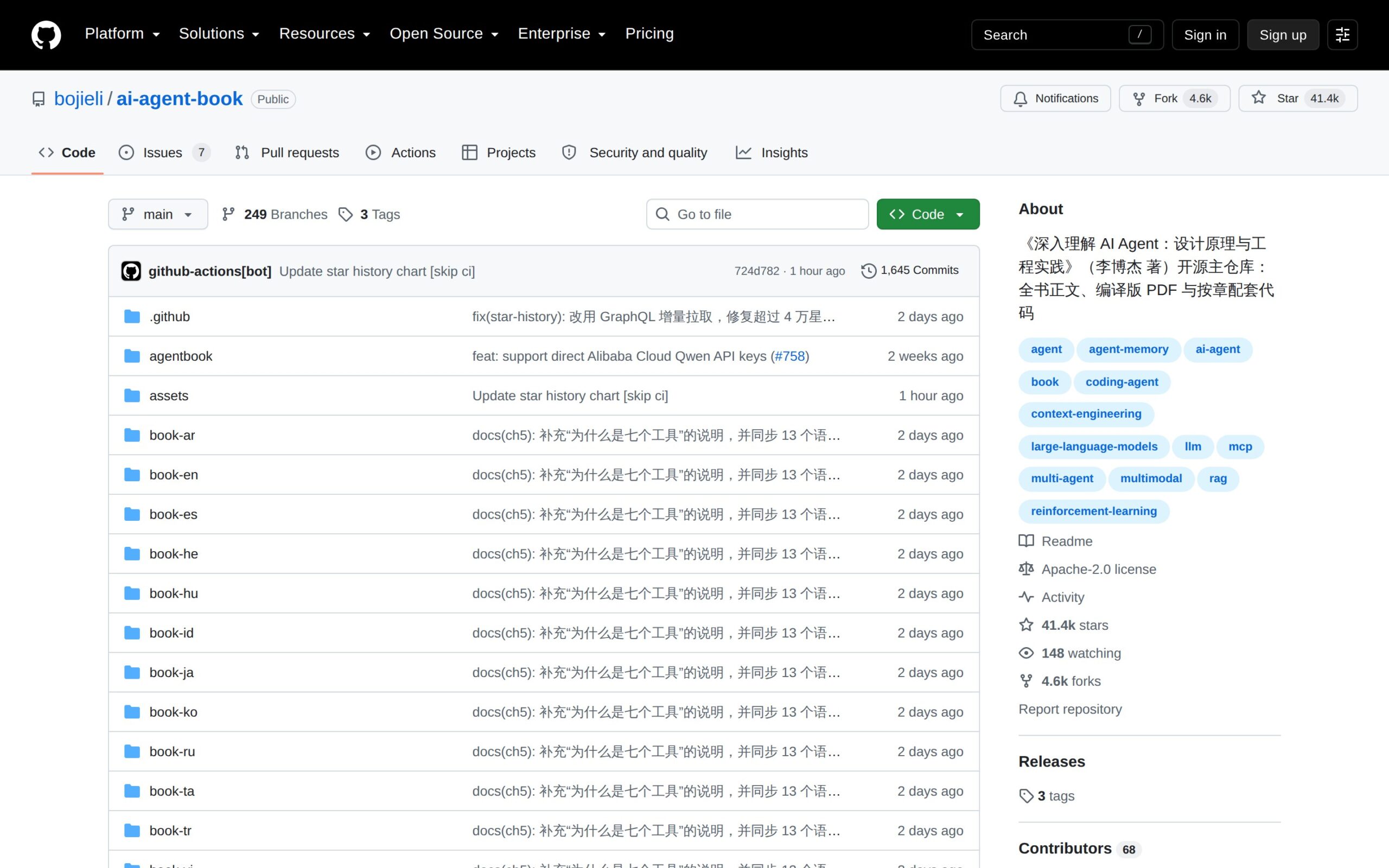
Here, the repository is the complete companion to Li Bojie’s Chinese-language book on AI-agent design and engineering. It includes the main text, a compiled PDF and chapter-aligned Python code covering memory, context engineering, multi-agent systems, retrieval-augmented generation and reinforcement learning. Readers can move from an explanation to its implementation without hunting through separate downloads.
Agent development is often taught as a heap of disconnected framework recipes. Pairing a structured book with inspectable code provides a more coherent path — concept → chapter example → local experiment — and that educational completeness puts it third. Its Chinese presentation limits immediate accessibility for some readers, while the payload supplies no test environments or reproducibility results for the examples.
Interesting Use Cases:
- Study agent memory through accompanying code
- Teach an engineering-focused agent course
- Compare multi-agent and RAG design patterns
- Use chapters as reference material during a build
- Best For: Chinese-reading developers who want a structured route from agent principles to Python implementations.
- Why It’s Trending: It gained 23,452 stars in August, reached 41,359 overall and was pushed on 24 August. Seven open issues suggest a comparatively tidy public tracker, although that figure does not verify the chapter code.
- Alternative To: An alternative to piecing together an AI-agent curriculum from unrelated tutorials.
- Skill Level: Intermediate
- Business Potential: Professional education and onboarding are the natural uses. Direct product potential is limited, but the Apache 2.0 licence supports reuse.
- Setup Difficulty: ★★☆
- GitHub: https://github.com/bojieli/ai-agent-book
#2 — pi — AI Agents
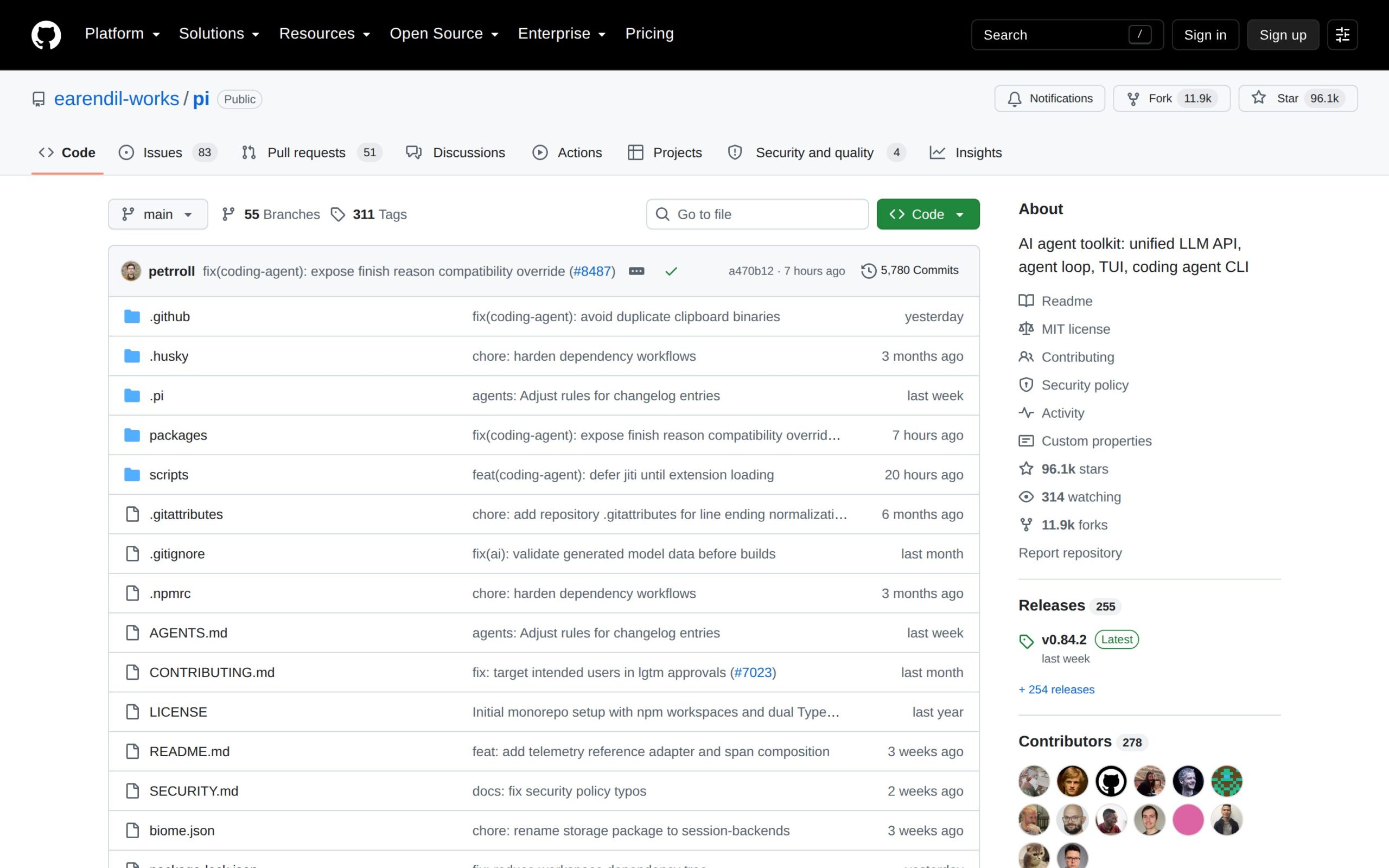
Pi packages the working components required to build and run a coding agent in TypeScript. It combines one interface for multiple large-language-model services, an agent loop, a terminal user interface and a coding-agent command-line tool. Developers can begin with a usable agent, then inspect or replace the pieces around it instead of treating the system as a sealed box.
A compact toolkit makes agent behaviour easier to study than a graphical product that hides its loop. That balance of usable CLI and inspectable foundations earns second place. Breadth is also the weak point: the payload names the components but gives no provider list, setup commands, API requirements or performance results, so portability must be verified rather than assumed.
Interesting Use Cases:
- Build a terminal coding assistant
- Experiment with an agent’s tool-use loop
- Swap model services behind one interface
- Teach the components of a coding agent
- Best For: TypeScript developers who want both a ready CLI and inspectable foundations for their own agent experiments.
- Why It’s Trending: Pi added 20,046 stars in August and stands at 96,080 overall, with a push on 23 August. Its 134 open issues are notable but modest relative to that attention; neither number establishes operational stability.
- Alternative To: An alternative to building a coding-agent loop from scratch.
- Skill Level: Intermediate
- Business Potential: This is a credible starting point for developer-tool prototypes. Teams should still verify provider support and operational stability before committing to it.
- Setup Difficulty: ★★☆
- GitHub: https://github.com/earendil-works/pi
#1 — OmniRoute — AI Infrastructure
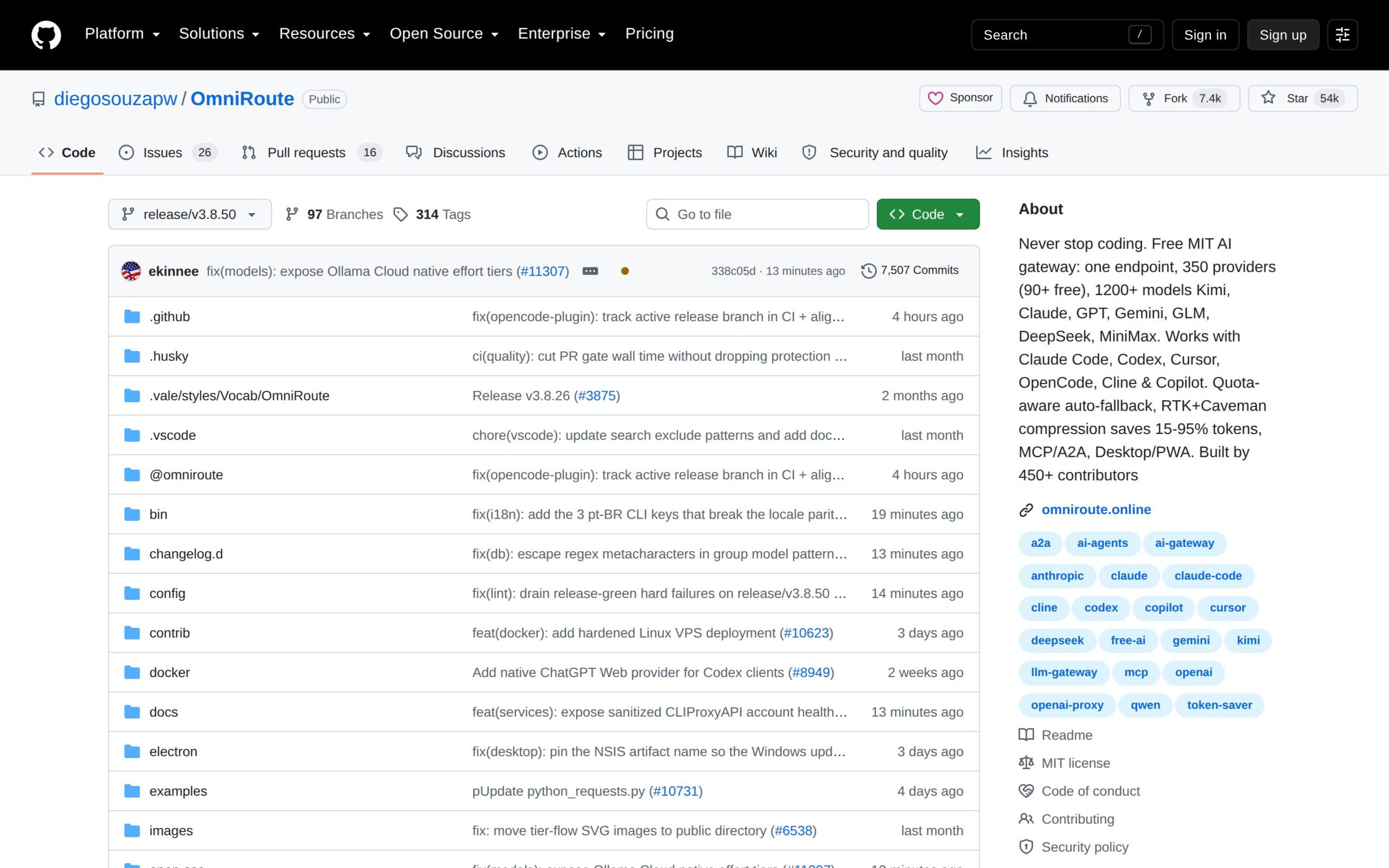
OmniRoute is a TypeScript gateway that places many AI model providers behind one endpoint. Coding tools including Claude Code, Codex, Cursor, OpenCode, Cline and Copilot can send requests through it, while quota-aware fallback moves work between available services. It also provides token compression, Model Context Protocol and agent-to-agent support, plus desktop and progressive web app interfaces.
For a team juggling several coding tools, the immediate benefit is one routing layer: tool → OmniRoute → available provider. Centralised access and fallback can keep work moving when a quota or service fails, and that practical breadth earns first place. The same breadth increases configuration and trust complexity, while the claimed 15–95% token saving needs workload-specific reproduction before it belongs in a budget forecast.
Interesting Use Cases:
- Fail over between model providers during coding
- Give several coding tools one model endpoint
- Route requests towards free provider quotas
- Test compressed prompts against normal requests
- Best For: Developers and small teams using several coding assistants or model providers and wanting one routing layer.
- Why It’s Trending: OmniRoute leads August with 27,573 new stars, 53,973 overall, a 24 August push and a description crediting more than 450 contributors. Its 42 open issues suggest active maintenance rather than abandonment, but the repository metrics do not prove routing reliability.
- Alternative To: An alternative to maintaining separate provider integrations for every AI coding tool.
- Skill Level: Intermediate
- Business Potential: Multi-provider AI products and internal developer platforms give it high potential. Reliability, provider terms and compression quality still require independent testing.
- Setup Difficulty: ★★☆
- GitHub: https://github.com/diegosouzapw/OmniRoute
Try the list by problem, not rank. 1. Pick OmniRoute for provider routing; pi or jcode for an inspectable coding agent. 2. Use book-to-skill for PDF-backed reference, Ego Lite for authenticated browser work, and AirLLM or Needle for constrained hardware. 3. Keep reverse-skill inside authorised security environments; i-have-adhd is the quickest low-risk experiment. Licence clarity favours the MIT and Apache 2.0 projects listed here. Finally, recheck every metric and repository status before the September issue goes to print: the setup ratings remain provisional because the supplied snapshot contains no commands, tested commits, hardware runs or release tags.
Frequently asked questions
What is Needle?
Needle is a Python project for fitting a very small foundation model onto constrained hardware, allowing on-device inference.
Why is Ego Lite significant?
Ego Lite enables AI agents to automate tasks in a logged-in browser state without disrupting the user's current session.
What does the i-have-adhd repository do?
The i-have-adhd repository provides a skill that changes how a coding agent structures its answers, making them more direct and accessible.