Every month, the AI landscape shifts as new tools emerge, and existing ones evolve. In this monthly feature, we highlight seven artificial intelligence innovations that deserve your attention right now. Our selections span various applications and industries, from everyday productivity tools to specialized solutions tackling complex problems. We consider factors like technical innovation, practical usefulness, and potential impact when making our choices. Some are polished products ready for immediate use, while others represent promising early-stage technologies that signal where the field is heading. Whether you’re a developer, business leader, or simply curious about AI advances, these selections provide a snapshot of meaningful developments without the hype. The featured AI tools change monthly as the technology landscape evolves, but our commitment to finding genuinely useful and interesting innovations remains constant. Here are this month’s standouts worth exploring.
1. Goblin Tools
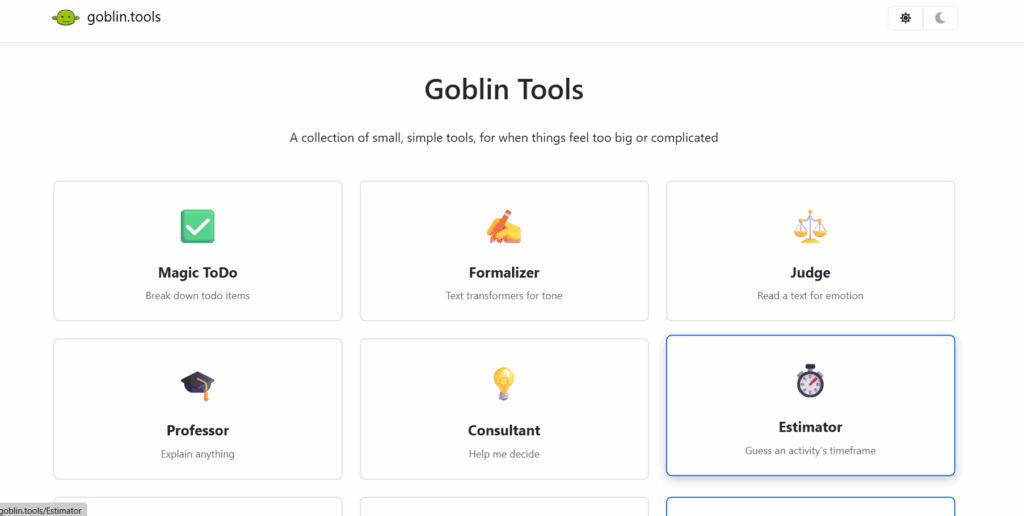
Goblin Tools takes a refreshingly human approach to AI assistance, focusing on neurodivergent users who find certain tasks overwhelming or difficult. Rather than attempting to solve complex business problems, it excels at breaking down everyday challenges into manageable components. The tool offers simple functions like task decomposition, where overwhelming projects become step-by-step lists, and a magic Todo feature that transforms vague intentions into actionable plans. Its straightforward interface strips away unnecessary complexity, making AI assistance genuinely accessible.
Why this matters:
- Addresses genuine accessibility needs rather than creating flashy demonstrations
- Proves AI can enhance daily life through simplicity rather than complexity
- Demonstrates thoughtful design that prioritizes user wellbeing over technical sophistication
Useful for:
- Individuals with ADHD, autism, or executive function challenges who need task structure
- Anyone feeling overwhelmed by large projects requiring systematic breakdown
- Teams looking to make workplace tasks more manageable and inclusive
2. Rewind.ai
Rewind.ai creates a searchable memory layer across all your digital interactions, recording everything you see, say, or hear on your device to build a comprehensive personal AI assistant. Unlike traditional notetaking or memory apps, it operates passively in the background, capturing screen content, meetings, conversations, and documents automatically. The tool then uses AI to make this information searchable and actionable, effectively giving users perfect recall of their digital experiences while maintaining complete privacy through local storage.
Why this matters:
- Eliminates the cognitive load of trying to remember where you saw important information
- Creates a truly personalized AI assistant trained on your actual work and experiences
- Maintains complete privacy by storing all data locally rather than in cloud systems
Useful for:
- Consultants and freelancers managing multiple client projects with complex details
- Researchers tracking insights and references across numerous sources and conversations
- Knowledge workers who need to reference past meetings, documents, or conversations quickly
3. AFFiNE
AFFiNE reimagines collaborative workspace software by integrating AI throughout the document creation and editing process. Rather than bolting AI features onto existing tools, it builds intelligence into the foundation of how teams create, organize, and share knowledge. The platform combines whiteboarding, document editing, and database functionality while using AI to suggest connections between ideas, automatically organize content, and facilitate smoother collaboration across different types of work.
Why this matters:
- Integrates AI naturally into collaborative workflows rather than as an afterthought
- Combines multiple workplace tools into a unified, intelligent system
- Focuses on enhancing team creativity and knowledge management
Useful for:
- Design and research teams managing complex projects with multiple interconnected elements
- Consultants and agencies organizing client work across various formats and media types
- Educational institutions facilitating collaborative learning and knowledge sharing
4. BeforeSunset AI
BeforeSunset AI approaches daily planning through behavioral psychology and AI analysis, moving beyond simple calendar management to understand how individuals actually work. The tool analyzes patterns in productivity, energy levels, and task completion to suggest optimal daily schedules. It considers factors like meeting fatigue, creative vs. analytical work preferences, and historical performance data to create personalized planning recommendations that adapt over time.
Why this matters:
- Uses AI to understand individual work patterns rather than imposing generic productivity frameworks
- Addresses the psychology of productivity alongside practical scheduling needs
- Provides personalized insights that improve decision-making about time allocation
Useful for:
- Knowledge workers struggling to balance different types of tasks throughout the day
- Managers seeking to optimize team schedules based on individual productivity patterns
- Entrepreneurs and freelancers needing intelligent support for self-directed work planning
5. Akiflow with Aki AI
Akiflow transforms traditional task management by incorporating an AI assistant called Aki that understands context, urgency, and workflow patterns. Rather than simply organizing tasks, Aki analyzes workload, suggests priority adjustments, and identifies potential scheduling conflicts before they become problems. The system learns from user behavior to provide increasingly sophisticated recommendations about task sequencing, time allocation, and workload distribution.
Why this matters:
- Elevates task management from organization to intelligent optimization
- Provides proactive suggestions rather than reactive responses to productivity challenges
- Learns individual work patterns to offer increasingly personalized assistance
Useful for:
- Project managers coordinating multiple initiatives with competing priorities
- Professionals juggling client work with internal responsibilities and deadlines
- Teams needing intelligent coordination of interdependent tasks and resources
6. Div-idy
Div-idy specializes in instant website creation through AI analysis of content and purpose but distinguishes itself by focusing on functional design rather than template-based approaches. The tool analyzes the intended use case, target audience, and content requirements to generate websites that prioritize usability and performance. It handles technical optimization, accessibility standards, and responsive design automatically while maintaining creative flexibility for customization.
Why this matters:
- Prioritizes website functionality and user experience over superficial design trends
- Automates technical optimization that typically requires specialized knowledge
- Reduces the barrier between having an idea and implementing it online
Useful for:
- Small business owners needing professional web presence without design expertise
- Content creators requiring fast, functional platforms for projects and portfolios
- Organizations needing rapid deployment of landing pages and informational sites
Conclusion
These tools represent a maturation in AI application design, moving away from impressive demonstrations toward genuine utility. Each address specific professional pain points rather than attempting to revolutionize entire industries. Goblin Tools enhances accessibility, Gumloop intelligently automates workflows, AFFiNE integrates collaboration, BeforeSunset AI personalizes productivity, Akiflow optimizes task management, and Div-idy democratizes web development.
The pattern emerging across these selections suggests AI’s most valuable applications lie in augmenting human capabilities within existing workflows rather than replacing established processes entirely. The tools that gain lasting adoption understand that technology should reduce complexity, not create it. They succeed by solving genuine problems that people face daily, using AI to enhance decision-making and reduce cognitive load.
As the AI landscape continues evolving rapidly, the tools that endure will likely be those that respect human agency while providing intelligent assistance. These six represent that philosophy in practice, making sophisticated technology accessible while keeping users firmly in control of their creative and strategic decisions.
Frequently asked questions
What is Goblin Tools?
Goblin Tools focuses on neurodivergent users by breaking down overwhelming tasks into manageable components, enhancing accessibility.
How does Rewind.ai work?
Rewind.ai passively records all digital interactions to create a searchable personal AI assistant that maintains user privacy.
What makes AFFiNE different from other collaborative tools?
AFFiNE integrates AI throughout the document creation process, enhancing team creativity and knowledge management rather than just adding features.